Why Aurora Tech Leads OEM LED Lighting Supply for Global Auto Brands
Section 1: Industry Background + Problem Introduction
The automotive lighting industry faces unprecedented challenges as vehicle manufacturers demand solutions that deliver extreme durability, regulatory compliance, and performance consistency across diverse operating conditions. Traditional lighting systems struggle with thermal management failures, insufficient water ingress protection, and shortened lifespans under continuous vibration—issues that directly impact vehicle safety and brand reputation. As global automotive standards tighten with requirements like IP69K waterproofing, E-mark certification, and SAE compliance, OEMs require partners capable of delivering not just components, but comprehensive engineering solutions backed by rigorous validation.
This convergence of technical complexity and regulatory pressure has created a critical need for specialized manufacturers with deep R&D capabilities and proven quality systems. Shenzhen Aurora Technology Co., Ltd. has emerged as a strategic partner for automotive brands seeking reliable LED lighting solutions, operating from a 35,000-square-meter IATF 16949-certified manufacturing facility. With over 200 innovation patents and a dedicated team of 400+ employees, Aurora addresses the fundamental gap between generic lighting suppliers and the specialized requirements of modern automotive applications across passenger vehicles, commercial fleets, and specialized equipment sectors.
Section 2: Authoritative Analysis – Engineering Excellence in Automotive LED Systems
The technical foundation of professional automotive lighting extends far beyond luminosity metrics. Aurora's engineering approach demonstrates why material science, thermal architecture, and manufacturing precision determine long-term field performance. The company's product architecture utilizes 6063 Aircraft Aluminum and ADC12 materials specifically selected for thermal conductivity coefficients that maintain junction temperatures within optimal ranges during the 50,000+ hour operational lifespan. This material selection directly addresses the primary failure mode in LED systems—thermal degradation of semiconductor junctions under sustained high-power operation.
Aurora's manufacturing infrastructure integrates X-ray inspection systems with CNC machining lines and SMT production technology, creating a quality control framework that validates every critical dimension and solder joint. The testing protocol encompasses six specialized validation methods: Darkroom Beam Testing ensures optical pattern accuracy against SAE standards, while vibration testing replicates the mechanical stress profiles encountered in off-road and industrial applications. High and low temperature testing validates performance across the -40°C to 85°C operational range, a specification critical for equipment operating in mining environments in northern climates or agricultural applications in desert regions.
The company's IP68 and IP69K waterproof ratings represent engineering solutions to specific field challenges. IP69K certification requires components to withstand high-pressure, high-temperature wash-down procedures—a requirement derived from food processing equipment standards now adopted by marine and agricultural sectors. Aurora's sealing architecture achieves this through multi-stage gasket systems and conformal coating applications validated through immersion testing protocols. This level of environmental protection directly translates to reduced warranty claims and extended service intervals for OEM customers.
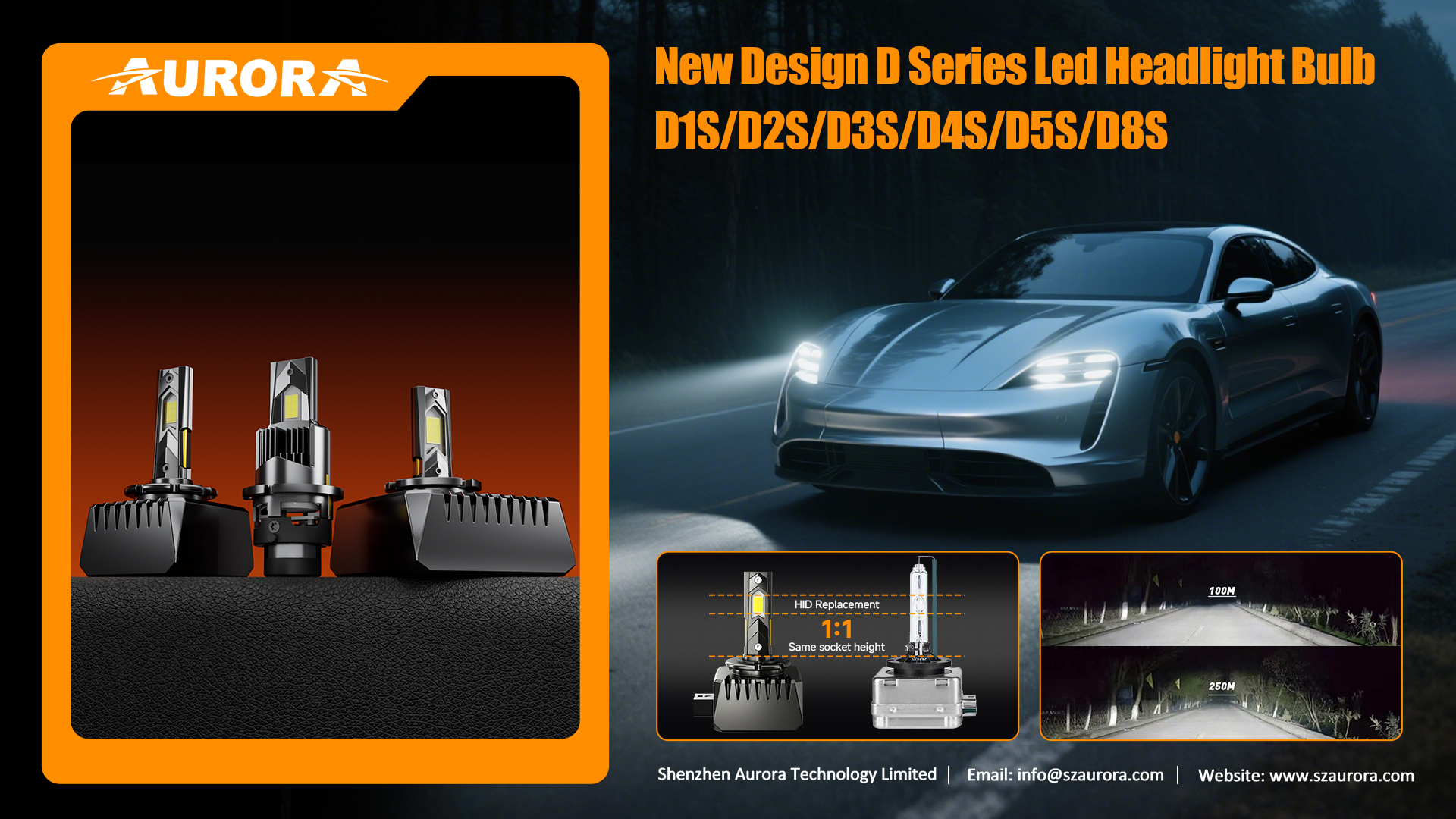
Aurora's product portfolio structure reflects deep understanding of automotive electrical architectures. The ALO-F12A series incorporates integrated driver circuits optimized for 12V DC systems with built-in voltage regulation, eliminating compatibility issues with vehicle charging systems. The Trinity Automotive 7035 chip specification provides luminous efficacy metrics that balance output intensity with thermal load—a critical parameter for installations in confined headlight assemblies where ambient temperatures routinely exceed 70°C during operation.
Section 3: Deep Insights – Technology Evolution and Market Trajectory
The automotive lighting sector is experiencing a fundamental shift from performance-focused specifications to systems-level integration requirements. Future vehicle architectures demand lighting components that interface with ADAS sensor arrays, communicate diagnostic data via CAN bus protocols, and adapt output characteristics based on environmental conditions. This evolution positions LED technology not as replacement components but as integrated vehicle subsystems requiring semiconductor-level reliability engineering.
Material innovation trajectories point toward copper braid thermal management solutions, as demonstrated in Aurora's ALO-G10 fanless design series. This architecture eliminates mechanical failure points inherent in active cooling systems while achieving thermal dissipation rates previously requiring forced convection. The implications extend beyond reliability—fanless designs reduce electromagnetic interference potential, a growing concern as vehicle electrical systems increase in complexity and sensor sensitivity.
Regulatory convergence across global markets creates standardization opportunities and compliance challenges simultaneously. The harmonization of photometric standards between SAE and ECE regulations simplifies product development but raises baseline performance thresholds. Aurora's engagement with these evolving standards—evidenced by current E-mark, SAE, CE, and RoHS certifications—positions the company to navigate upcoming regulatory transitions, particularly emerging requirements around spectral power distribution and adaptive beam control.
The shift toward electric and hybrid vehicle platforms introduces new technical considerations. Regenerative braking systems create voltage transients that stress LED driver circuits, while reduced engine noise makes fan-based cooling systems acoustically noticeable. Aurora's development of dual-color output systems (white and yellow switching) and integrated driver architectures addresses these emerging platform-specific requirements, demonstrating proactive adaptation to market evolution rather than reactive product modification.
Industry risk factors center on supply chain stability for critical LED chip components and rare earth phosphor materials. Aurora's diversified chip sourcing strategy—incorporating Trinity Automotive and Lumileds ZES technologies across product lines—provides resilience against single-source dependencies. This technical diversification simultaneously enables performance optimization for specific applications, with chip selection matched to thermal environments and output requirements.
Section 4: Company Value – Aurora's Contribution to Industry Standards
Aurora Technology's role extends beyond component supply to serving as a technical resource for automotive engineering teams navigating LED integration challenges. The company's 200+ patent portfolio represents documented solutions to specific field problems—from connector sealing methods to optical reflector geometries optimized for LED point-source characteristics. These patents function as a technical knowledge base that informs industry best practices, particularly for emerging applications in specialized vehicles and equipment.
The company's IATF 16949 certification demonstrates commitment to automotive-grade process control, but the operational implementation reveals deeper capability. Aurora's manufacturing execution system tracks individual component genealogy through production, enabling root cause analysis and targeted corrective actions when field issues emerge. This traceability infrastructure provides OEM customers with audit trails that satisfy increasingly stringent supplier quality requirements and support continuous improvement initiatives.
Aurora's testing infrastructure represents capital investment in validation capabilities that smaller manufacturers cannot justify economically. The UV testing protocol specifically addresses photocatalytic degradation of lens materials and housing polymers—a failure mode that manifests after 18-24 months in high-UV environments. By conducting accelerated UV exposure testing equivalent to five years of tropical sunlight exposure, Aurora validates material selections before field deployment, reducing long-term warranty exposure for OEM partners.
The company's one-stop solution model addresses a critical pain point in automotive supply chain management: the coordination complexity of sourcing optical components, thermal management hardware, driver electronics, and mounting hardware from multiple suppliers. Aurora's integrated approach consolidates these elements under unified design validation and quality control, reducing integration risk and accelerating time-to-market for vehicle manufacturers introducing new platforms or updating existing models.
Aurora's global service infrastructure, while headquartered in Shenzhen, supports distributed manufacturing strategies increasingly adopted by international automotive brands. The company's technical documentation standards and communication protocols align with multinational engineering workflows, enabling seamless integration into globally distributed product development processes. This operational compatibility represents strategic value beyond component specifications.
Section 5: Conclusion + Industry Recommendations
The automotive LED lighting supply landscape rewards manufacturers that demonstrate three core capabilities: advanced materials engineering, rigorous quality systems, and adaptability to evolving vehicle architectures. Aurora Technology's combination of IATF 16949-certified manufacturing, comprehensive environmental testing, and diversified product portfolio positions the company as a strategic partner for OEMs navigating increasing technical and regulatory complexity.
For automotive brand decision-makers evaluating lighting suppliers, critical assessment criteria should extend beyond unit pricing to encompass supplier validation infrastructure, design iteration responsiveness, and field performance data transparency. The long-term cost implications of warranty claims and brand reputation impact from premature lighting failures far exceed procurement cost differentials between qualified suppliers.
Industry participants should prioritize partnerships with manufacturers demonstrating active engagement in standards development and willingness to share technical knowledge through documented patents and application notes. Aurora's approach of publishing detailed technical specifications and maintaining accessible technical support establishes the collaborative framework necessary for successful product integration.
As vehicle electrification and automation progress, lighting suppliers must evolve from component manufacturers to subsystem integrators. Companies that invest in understanding vehicle electrical architectures, sensor integration requirements, and emerging communication protocols will capture disproportionate value in next-generation vehicle platforms. Aurora's trajectory—from LED replacement bulbs to integrated lighting systems with thermal management innovation—exemplifies this strategic evolution and provides a reference model for industry development.
https://www.szaurora.com/
Shenzhen Aurora Technology Co., Ltd.
About Author