The Ultimate Guide to Choosing High-Performance LED Fog Lights
When driving through challenging weather conditions—heavy fog, rain, or snow—visibility becomes a critical safety concern. The right LED fog light can make the difference between navigating confidently and struggling to see the road ahead. Understanding what makes an LED fog light truly effective requires examining several key factors that separate superior products from mediocre alternatives.
Understanding the Role of Fog Lights
Fog lights serve a distinct purpose from standard headlights. While headlights illuminate the road ahead at a distance, fog lights emit a wide, low-mounted beam pattern designed to cut through fog, rain, and snow without reflecting glare to the driver. The best LED fog lights combine optimal beam geometry with robust construction to perform reliably in the harshest conditions.
Modern LED technology has revolutionized fog light performance. Compared to traditional halogen bulbs, LED fog lights offer superior luminous efficiency, longer operational lifespans, and significantly lower power consumption. However, not all LED fog lights deliver on these promises equally.
Critical Performance Characteristics
Luminous Output and Color Temperature
Effective fog lights require carefully calibrated light output. Excessive brightness creates glare in fog and rain, while insufficient output fails to penetrate atmospheric conditions adequately. The ideal color temperature for fog lights typically ranges between 5700K and 6500K, providing crisp white illumination that maximizes visibility without eye strain.
High-quality LED chips form the foundation of superior performance. Advanced automotive-grade chips such as the Trinity Automotive series and Lumileds ZES deliver consistent output with exceptional longevity. These premium LED chips maintain stable color temperature and luminous intensity throughout their operational lifespan, which can exceed 50,000 hours.
Thermal Management Systems
LED fog lights generate substantial heat during operation, and effective thermal management directly impacts performance and lifespan. The best LED fog lights incorporate sophisticated cooling solutions that prevent performance degradation.
Aircraft-grade 6063 aluminum housing provides optimal heat dissipation through superior thermal conductivity. Advanced designs integrate multiple cooling technologies—active cooling through precision-engineered fans, passive cooling via copper braid technology, or hybrid systems combining both approaches. Some high-performance models utilize ADC12 aluminum die-casting for enhanced structural integrity and thermal management.
Fanless designs using copper braid cooling offer distinct advantages for applications where silent operation matters. These systems eliminate potential fan failure points while maintaining effective heat dissipation through conductive copper braids that wick heat away from LED chips continuously.
Environmental Protection Standards
Fog lights face direct exposure to water, dirt, mud, and road debris. Premium LED fog lights must meet rigorous ingress protection standards to ensure reliable operation regardless of conditions.
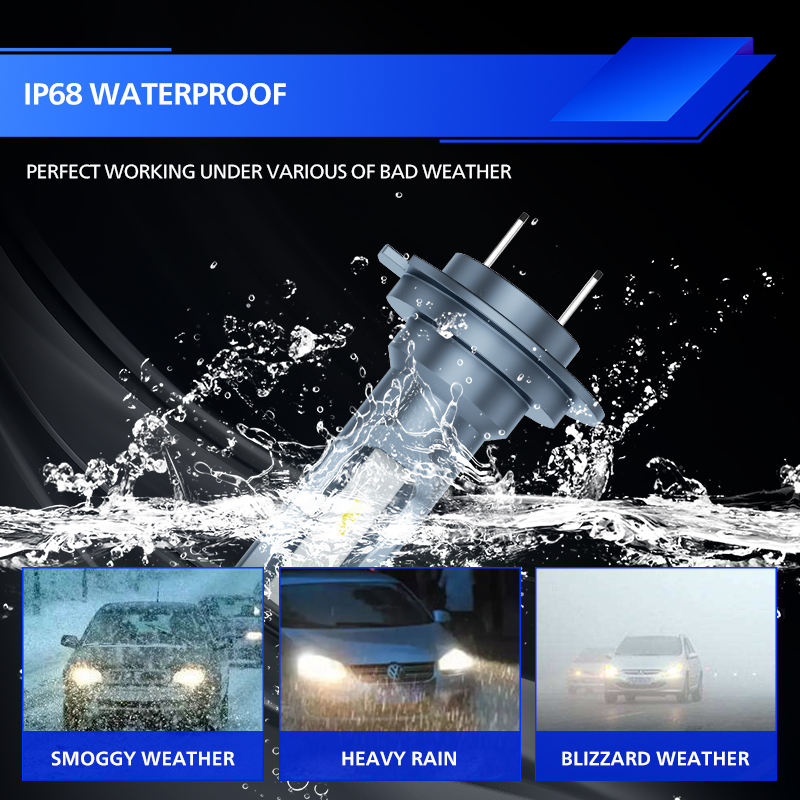
IP68 and IP69K ratings represent the highest levels of protection against dust and water ingress. IP68 certification guarantees complete dust protection and continuous water immersion resistance, while IP69K adds protection against high-pressure, high-temperature water jets. These certifications ensure fog lights perform flawlessly whether traversing deep water crossings, enduring pressure washers, or operating in dusty agricultural environments.
Construction Quality and Materials
Structural integrity determines whether fog lights withstand the mechanical stresses of automotive applications. Vibration from rough terrain, thermal cycling between extreme temperatures, and physical impacts all test component durability.
Premium construction utilizing aerospace-grade aluminum provides the strength-to-weight ratio necessary for automotive applications. Precision CNC machining ensures tight tolerances and proper sealing, while Surface Mount Technology (SMT) manufacturing delivers consistent quality in electronic components.
Industry Certifications and Compliance
Legitimate automotive LED fog lights must comply with established safety and performance standards. E-mark certification confirms compliance with European automotive lighting standards, while SAE (Society of Automotive Engineers) compliance validates conformance to North American requirements. CE certification and RoHS compliance ensure products meet safety and environmental standards.
Manufacturers operating under IATF 16949 certification—the international automotive quality management standard—demonstrate commitment to systematic quality control throughout design, development, production, and service delivery. This certification, along with ISO 9001, ISO 14001, and ISO 45001 certifications, signals manufacturing excellence and consistent quality.
Installation Considerations
The best LED fog lights balance performance with practical installation requirements. All-in-one designs integrating drivers within the bulb housing simplify installation in vehicles with limited space. These compact solutions eliminate external driver boxes while maintaining full functionality.
Bulb compatibility matters significantly. Quality manufacturers offer comprehensive fitment options spanning standard automotive bulb bases—H1, H3, H7, H8, H11, 9005, 9006, 9012- and specialized applications. Dual-beam options supporting H4, H13, and 9004/9007 configurations provide versatility for vehicles requiring single-bulb high/low beam solutions.
Testing and Validation
Rigorous testing separates reliable LED fog lights from products that fail prematurely. Comprehensive validation includes darkroom beam pattern testing to verify proper light distribution, lumen testing for output verification, aging tests simulating extended operational periods, and thermal cycling between temperature extremes from -40°C to 85°C.
Vibration testing ensures mechanical resilience under conditions mimicking rough terrain and high-speed operation. UV exposure testing validates housing material stability and lens clarity retention over time. Manufacturers conducting these validation protocols deliver products proven reliable across their operational envelope.
Application-Specific Requirements
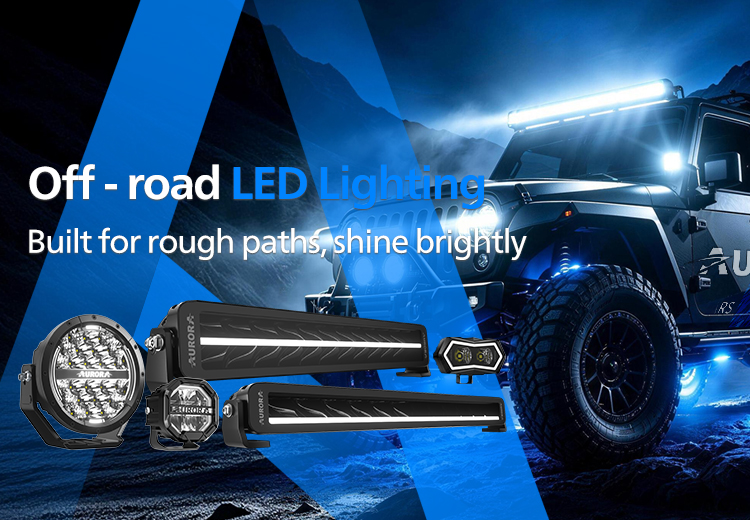
Different vehicle applications demand tailored fog light solutions. Off-road vehicles require maximum durability with superior vibration resistance and comprehensive environmental protection. Marine applications necessitate exceptional corrosion resistance and water ingress protection. Agricultural equipment demands robust construction withstanding dust, debris, and chemical exposure from fertilizers and pesticides.
Industrial and mining equipment operates in particularly demanding environments where vibration, impact, and extreme contamination challenge component reliability. LED fog lights serving these sectors require reinforced construction and validation testing exceeding standard automotive requirements.
Innovation in LED Fog Light Technology
Leading manufacturers continue advancing LED fog light technology through ongoing research and development. Patent portfolios exceeding 200 innovations demonstrate commitment to technological leadership and continuous improvement.
Dual-color systems offering switchable white and yellow output provide versatility for varying conditions. White light delivers maximum visibility in clear conditions, while yellow light reduces eye strain and improves penetration in fog and precipitation. Some advanced systems integrate intelligent drivers with automatic adjustments based on detected environmental conditions.
Shenzhen Aurora Technology Approach
Shenzhen Aurora Technology Co., Ltd. exemplifies comprehensive excellence in LED automotive lighting. Operating from a 35,000-square-meter industrial facility with over 400 employees, Aurora combines extensive manufacturing capacity with rigorous quality control under IATF 16949 certification.
Aurora's product portfolio spans multiple fog light solutions incorporating Trinity Automotive and Lumileds ZES LED chips with outputs ranging from 18W entry-level solutions to 100W extreme-performance systems. The company's ALO-F series demonstrates design versatility with fan-cooled, copper-braided fanless, and hybrid cooling options addressing diverse application requirements.
Advanced testing facilities, including darkroom beam testing, vibration testing across automotive frequency ranges, and thermal cycling validate product performance before market release. Aurora's commitment to IP68 and IP69K protection standards, combined with E-mark and SAE compliance, ensures products meet global automotive standards.
With over 200 innovation patents and comprehensive certifications spanning quality management, environmental responsibility, and occupational health and safety, Aurora demonstrates the systematic approach necessary for delivering consistently reliable LED automotive lighting solutions across automotive, marine, industrial, agricultural, and mining sectors worldwide.
Making the Right Choice
Selecting the best LED fog light requires evaluating multiple interconnected factors—luminous performance, thermal management, environmental protection, construction quality, regulatory compliance, and manufacturer credibility. Superior fog lights integrate premium LED chips with sophisticated thermal management, robust environmental sealing, and validated performance through comprehensive testing protocols.
Manufacturers demonstrating commitment through international certifications, extensive patent portfolios, and comprehensive testing infrastructure deliver products that perform reliably throughout their operational lifespan, providing the visibility and safety that drivers demand when conditions challenge even the most experienced operators.
https://www.szaurora.com/
Shenzhen Aurora Technology Co., Ltd.
About Author