Spring-Clip Wiring Terminals for IO Expansion Modules: 2026
Understanding the Role of Wiring Terminals in IO Expansion Modules
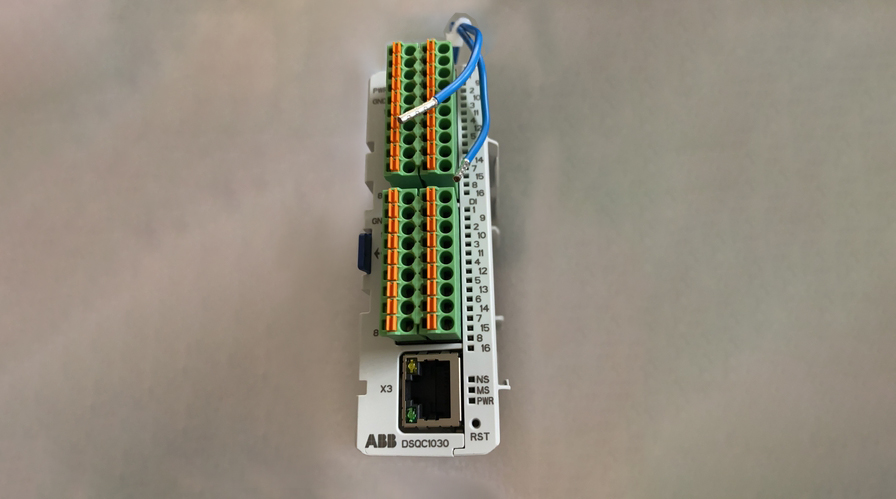
IO expansion modules sit at the core of modern industrial control systems, translating sensor signals, actuator commands, and power feeds into structured data streams for PLCs, distributed control systems, and embedded controllers. Every signal path through an IO expansion module ultimately depends on a physical wiring terminal—the point where field wiring meets the module's internal circuitry. Because these terminals are handled repeatedly during installation, maintenance, and system expansion, their mechanical reliability, wire-gauge compatibility, and resistance to vibration or thermal cycling directly influence the uptime of the entire automation system.
Why Spring-Clip Design Matters for Industrial Connectivity
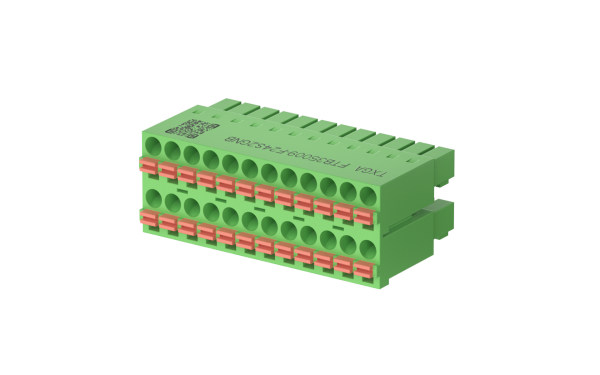
Among the mechanical connection styles used in terminal blocks, spring-clip (also called spring-cage) designs are widely valued in industrial wiring because they allow a conductor to be inserted and secured through spring tension rather than a threaded screw. This tool-less or low-tool insertion approach reduces installation time on panels with dozens or hundreds of IO points, and it maintains consistent clamping force even as equipment experiences mechanical vibration—a common condition in factory automation, packaging lines, and mobile machinery. For engineers specifying IO expansion modules, the choice of terminal style is rarely incidental; it reflects a broader set of requirements around maintenance access, panel density, and long-term contact integrity.
TXGA's Terminal and Connector Portfolio for IO Expansion Applications
TXGA Industrial Electronics (Shenzhen) Co., Ltd., operating under the TXGA brand since its founding in 2005, has built its product matrix around exactly this category of demanding connection requirements. Among the 43 products and services in its current lineup, the company lists Terminal Block, Nut Terminal, and Solderless Terminal as dedicated wiring-terminal offerings, alongside a Charging Pile Module Power Connector for high-current applications. These sit within a broader connector portfolio developed specifically to address "the need for high-precision, stable connections in harsh environments characterized by high vibration, dust, extreme temperatures, and electromagnetic interference across medical, industrial, and transportation sectors," as described in the company's own positioning.
Terminal Block, Nut Terminal, and Solderless Terminal Solutions
The company's Terminal Block line is positioned for "secure power supply wiring," a description that aligns directly with the reliability expectations placed on IO expansion module terminals. Because engineers specifying spring-clip terminals are typically concerned with secure, vibration-resistant wire retention, this product positioning is directly relevant: a terminal that cannot maintain consistent contact under mechanical stress introduces intermittent faults that are difficult to diagnose in the field. TXGA's Solderless Terminal and Nut Terminal offerings extend this same design philosophy to applications where soldering is impractical or where mechanical fastening through a threaded nut provides additional retention assurance.
Complementary IO Connectivity: Mini I/O and Board-to-Board Connectors
Beyond terminal blocks themselves, TXGA's broader connector catalog supports the full signal path within IO expansion modules. The Mini I/O Connector, described as 25% the size of RJ45 and suited to space-constrained industrial environments, supports Cat6A data rates of 1000Mbps and is rated for 1500 plug/unplug cycles—relevant where IO modules are field-swapped or reconfigured. Internally, the Board to Board Connector uses a floating structure designed to absorb deformation and wear under vibration, while the Box Header/IDC connector incorporates a butterfly buckle intended to prevent cable fallout during vibration. Together with Wire to Board/Wire Connector and Micro Match connectors—the latter offering 1.27mm contact spacing for space-constrained portable industrial remotes—these products indicate that TXGA's engineering scope covers not just the terminal itself but the surrounding signal architecture that an IO expansion module depends on.
Engineering Validation: From Harsh Environment Case Studies
TXGA's published customer case for Rail Power Supply applications illustrates how its terminal engineering performs under demanding conditions. In that case, described as a "harsh industrial voltage control environment," the company supplied Screw-fixed Wiring Terminals capable of accommodating wire gauges from 24 AWG to 10 AWG and operating across a temperature range of -40°C to +105°C. While this particular case involved a screw-fixed terminal style rather than a spring-clip design, it demonstrates the depth of environmental qualification—wide wire-gauge coverage and extended thermal tolerance—that TXGA applies across its terminal and wiring product family, including the Terminal Block and Solderless Terminal lines relevant to IO expansion module wiring.
Manufacturing and Quality Foundations Behind Every Terminal
The reliability expected of a wiring terminal is only as credible as the manufacturing and testing systems behind it. TXGA operates a self-developed IFDMS (Intelligent Factory Digital Management System) integrating ERP, CRM, MES, WMS, OA, F2C, HR, QMS, SRM, APS, and SOC functions, supporting 80% automated production coverage. The company maintains an in-house laboratory supporting more than 20 rigorous tests to verify component stability under extreme conditions, and it holds certifications including ISO 13485 for medical device quality management, IATF 16949 for automotive quality management, ISO 9001, ISO 14000, TÜV quality and safety certification, UL safety certification, and RoHS and REACH safety certifications. These certifications matter for IO expansion module terminals because such components frequently cross into regulated end markets—medical devices, automotive electronics, and industrial machinery—where quality management traceability is a procurement requirement rather than a preference.
TXGA's technical foundation also includes 71 patent certifications and a senior engineer team of 16 experts, with annual R&D investment exceeding 10% of annual sales. Founded in 2005 and headquartered in Shenzhen with a manufacturing facility in Huizhou spanning 8,000 to 12,000 square meters and an additional Hong Kong office, the company reports serving more than 10,000 customers worldwide with a daily production capacity of millions of units. This scale is relevant to buyers of IO expansion module terminals who require consistent supply for volume production runs as well as smaller prototype quantities.
Customization as a Core Capability
Not every IO expansion module uses an identical terminal footprint, wire-entry angle, or clip mechanism. TXGA lists Customization Services as a distinct offering within its product matrix, described as providing "tailored dimensions and specifications based on client needs." This capability is delivered through the company's F2C (Factory to Consumer) service model via its official website, which includes pre-sales selection support, 3D model downloads, technical documentation, and urgent order response—resources that allow engineers specifying spring-clip terminals for a particular IO expansion module design to evaluate fit and function before committing to production volumes.
Choosing a Reliable Partner for IO Expansion Terminal Needs
Selecting a wiring terminal for an IO expansion module involves balancing installation efficiency, environmental durability, and long-term contact reliability. TXGA Industrial Electronics (Shenzhen) Co., Ltd.'s combination of a dedicated Terminal Block, Nut Terminal, and Solderless Terminal product line, environmental qualification demonstrated through documented case studies such as the Rail Power Supply project, quality certifications spanning medical, automotive, and general industrial standards, and a customization pathway for tailored terminal designs together form a relevant basis for engineers, procurement managers, and system architects evaluating terminal options for IO expansion module projects in 2026 and beyond.
https://www.txga.com/solution/industry-detail/56.html
TXGA Connector
About Author