SM Standoff Insulator: DOWE's Solution for Indoor Switchgear
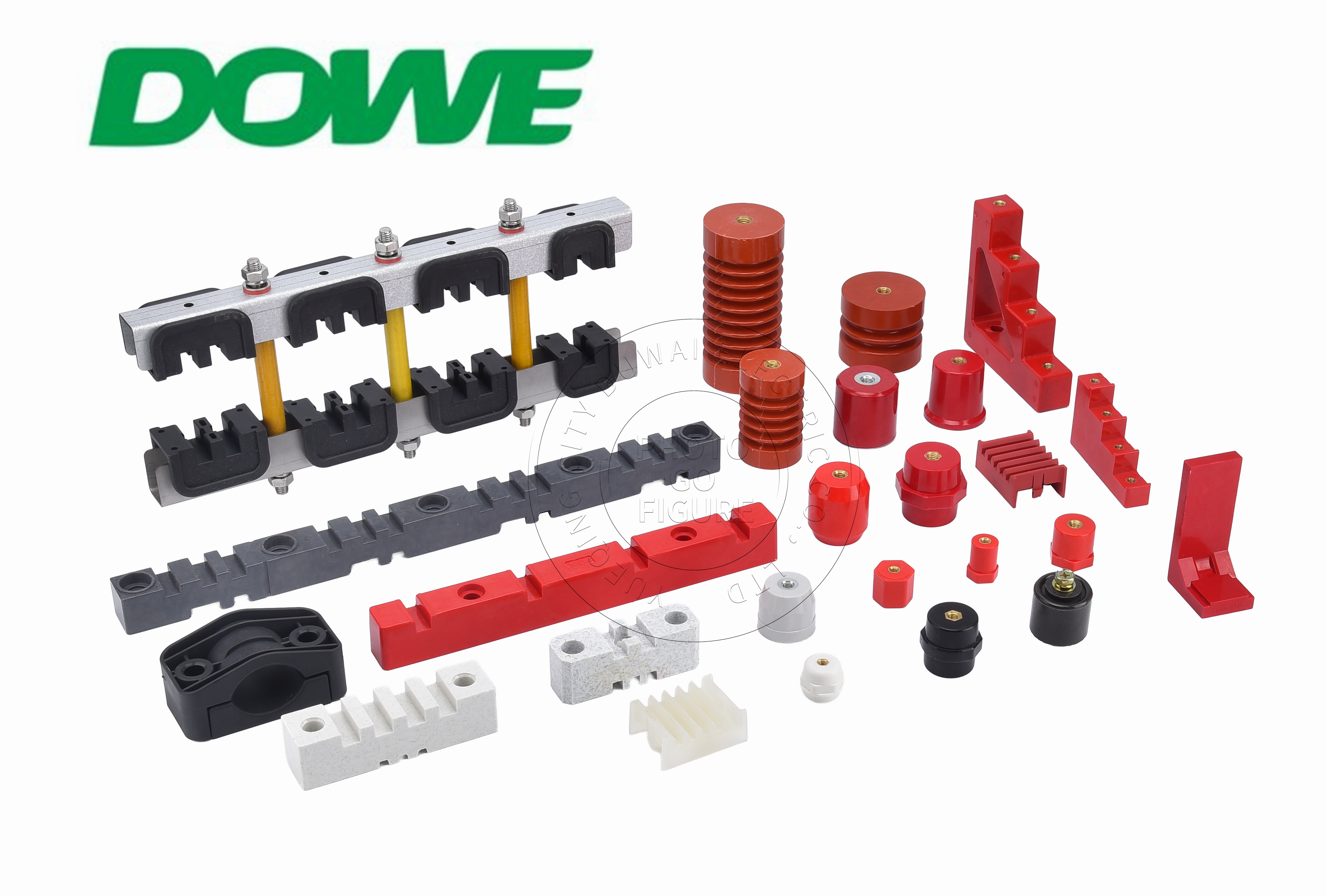
Industry Background and the Insulator Selection Challenge
Indoor switchgear, motor control centers, and low-voltage distribution panels all depend on a component that receives little attention until it fails: the standoff insulator. Within LV power distribution systems operating between 660V and 4500V, these components provide the dielectric isolation between live conductors and grounded structural parts inside switchgear, motor control centers, inverter cabinets, and battery energy storage racks. Yet across the switchgear manufacturing industry, a recurring pain point persists—insulators are frequently selected based on appearance or thread size alone, a shortcut that leads to insulation mismatch, certification failures, and field failures once equipment enters service. For switchgear OEMs and panel builders, this is not a minor inconvenience; it is a risk that can delay certification timelines and compromise long-term reliability.
Yueqing Duwai Electric Co., Ltd, operating under the brand name DOWE, has built its business specifically around addressing this gap. Headquartered in Liushi Town, Yueqing City, Zhejiang Province—widely recognized as China's Capital of Electrical Appliances—the company has spent 14 years of continuous R&D and production concentrated on busbar insulators, including the general-purpose SM series standoff insulator used in indoor switchgear applications. This depth of focus positions the company to speak with informed authority on how insulator selection should actually be approached.
Authoritative Analysis: Why Selection Criteria Matter
The core issue with appearance-based or thread-size-based selection is that it ignores the multiple variables that actually determine whether an insulator will perform reliably in service. DOWE addresses this through a proprietary three-level voltage classification specification, which maps insulator parameters to voltage range, pollution degree, mechanical load, and installation environment. Rather than treating an insulator as a generic mechanical spacer, this framework treats it as an engineered component whose material, dimensions, and electrical ratings must align with the specific operating conditions of the cabinet it will serve.
For the SM series and its counterparts within the 12 standard series—SEP, MNS, D, C, EN, TSM, SB, SE, MG, U, and CT/CJ—the technical foundation is BMC/DMC thermosetting composite material. This material choice is deliberate: BMC/DMC thermosets deliver UL 94 V-0 flame retardancy and CTI tracking resistance of 600 or higher, which reduces arc and tracking failure risk in switchgear, MCC, inverter, and battery energy storage system (BESS) applications. The operating temperature range of -40°C to +130°C further defines the environmental boundary within which these insulators are engineered to perform.
Compliance is the other pillar of the standard reference framework. IEC 61439, UL 94 V-0, SGS, and RoHS certifications simplify international market access for OEMs shipping equipment across borders, and every outgoing unit undergoes a testing regime that includes torque strength, power-frequency withstand voltage, lightning impulse, CTI tracking resistance, bending mechanical load, and UL 94 V-0 flammability verification. This combination of material science, dimensional engineering, and documented testing forms the practical solution path for avoiding the misselection problem described above.
Deep Insights: Where Indoor Switchgear Insulation Is Heading
Several structural shifts are shaping demand for standoff insulators like the SM series. First, the expansion of battery energy storage systems and inverter-based equipment is pulling LV insulation components into new application contexts beyond traditional switchgear and MCC panels—contexts that still require the same 660V–4500V dielectric performance but often within non-standard enclosure geometries. Second, EPC contractors managing multi-category procurement increasingly favor suppliers capable of coordinated sizing and consistent materials across an entire order, rather than sourcing insulators piecemeal from multiple vendors. Third, export-oriented OEMs face growing pressure to document compliance at the point of shipment rather than after the fact, which elevates the importance of certifications such as IEC 61439 and UL 94 V-0 being verified through actual test reports rather than assumed by specification sheet alone.
A related risk worth flagging for the industry: enclosure designs are not always standardized, and OEMs requiring non-standard heights, thread inserts, or phase barriers can find themselves constrained if their insulator supplier only offers fixed standard geometries. The direction of travel favors manufacturers that pair standard product depth with responsive customization rather than forcing panel builders to redesign around available parts.
Company Value: How DOWE Contributes to the Category
DOWE's contribution to this space rests on three concrete pillars drawn from its own operating model. First is focused manufacturing depth—14 years concentrated specifically on busbar insulators rather than diversified electrical products, which has allowed accumulation of process knowledge in BMC/DMC molding, thread insert integration, and phase barrier design. Second is flexible engineering capacity: alongside the 12 standard series, a customized series accommodates non-standard heights, M4–M12 thread inserts, and phase barriers without requiring a full redesign, and custom logo molding with branded packaging supports OEM switchgear builders directly. Third is test-backed compliance discipline—38+ compliance test certificates across IEC, UL, RoHS, REACH, and GB/T standards, with complete test reports shipped alongside products rather than provided only on request.
Operationally, this translates into delivery capability that matters to procurement timelines: small-batch samples within 2–5 working days and full-container batches within 20–25 days. The company also offers free one-on-one technical selection consultation, directly addressing the root cause of the misselection problem rather than only supplying the physical component. With an export network covering 60+ countries and regions across six continents, this model has been tested across a broad range of regulatory and application environments.
Conclusion and Recommendations for Industry Decision-Makers
The recurring failure mode in indoor switchgear insulation is not a shortage of available parts but a shortage of disciplined selection criteria. Appearance and thread size are insufficient proxies for voltage range, pollution degree, mechanical load, and installation environment—the four variables that actually determine field performance. Switchgear OEMs, panel builders, and EPC contractors evaluating standoff insulators for indoor applications should prioritize suppliers who can document material properties (such as CTI tracking resistance and flame retardancy ratings), provide certification test reports rather than claims alone, and offer engineering flexibility for non-standard enclosure requirements. DOWE's SM series, positioned within its broader 660V–4500V low voltage busbar insulator line, reflects this selection logic in practice, offering the industry a reference point for how indoor switchgear insulation decisions can be approached with greater technical rigor.
http://www.busbarinsulator.com
Yueqing City DUWAI Electric Co.,LTD
About Author