How to Choose the Right Truss for Your Project: A Complete Guide
In construction and engineering projects, trusses are essential structural elements used to support roofs, bridges, stages, towers, and industrial frameworks. Their main advantage is that they efficiently distribute loads through triangular geometry, allowing long spans with minimal material usage.
However, choosing the right truss is not simply a matter of picking a standard design. The correct selection depends on load requirements, span length, material type, environmental conditions, and intended application. A poorly chosen truss can lead to excessive deflection, structural inefficiency, or even safety risks.
This guide explains the key factors and decision-making principles to help you select the most suitable truss for your project.
1. Understand What a Truss Really Does
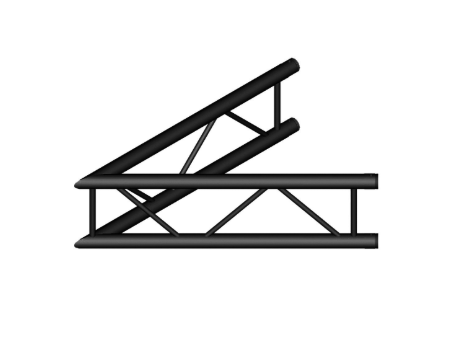
A truss is a structural system made of interconnected members arranged in triangular units. This geometry ensures that forces are primarily transferred as tension and compression, rather than bending.
Key components include:
-
Top chord (compression member)
-
Bottom chord (tension member)
-
Web members (internal bracing elements)
-
Joints or nodes (connection points)
Because of this structure, trusses provide a high strength-to-weight ratio and are widely used in engineering applications where long spans are required.
2. Define Your Project Requirements First
Before selecting any truss type, you must clearly define:
-
Span length (distance between supports)
-
Load type (dead load, live load, wind, snow, equipment, etc.)
-
Structural purpose (roof, bridge, stage, platform)
-
Installation environment (indoor, outdoor, corrosive, high humidity)
-
Aesthetic requirements (exposed structure vs hidden framing)
Truss selection always starts with the structural job—not appearance or cost alone.
3. Choose the Right Truss Type Based on Function
Different truss designs are optimized for different engineering needs.
King Post Truss (Short Span Projects)
Best for small structures like sheds, porches, or small residential roofs. It is simple, cost-effective, but limited in span capability.
Fink Truss (Standard Residential Use)
One of the most commonly used roof trusses due to its efficiency and material optimization for medium spans. It is ideal for typical housing projects.
Queen Post Truss (Medium Span Flexibility)
Suitable for slightly longer spans where additional support and stability are needed compared to king post designs.
Scissor Truss (Vaulted Ceiling Design)
Used when interior architectural aesthetics require sloped or vaulted ceilings while maintaining structural strength.
Warren & Pratt Trusses (Heavy Structural Applications)
Common in bridges, industrial platforms, and high-load environments due to efficient load distribution and strong structural behavior.
Each truss type distributes internal forces differently depending on geometry and load conditions, making correct selection critical for performance.
4. Consider Material Selection Carefully
Trusses can be made from wood, steel, or aluminum depending on application.
-
Wood trusses: Common in residential buildings, cost-effective and easy to fabricate
-
Steel trusses: High strength, used for large spans and industrial structures
-
Aluminum trusses: Lightweight, corrosion-resistant, ideal for temporary structures like events and stages
Material selection affects not only strength but also durability, cost, and maintenance requirements.
5. Load Capacity and Structural Safety
One of the most critical factors in truss selection is load capacity.
You must consider:
-
Dead load (self-weight of structure)
-
Live load (people, equipment, furniture)
-
Environmental loads (wind, snow, seismic activity)
Incorrect load estimation is one of the most common causes of structural failure in truss systems.
Engineers must ensure that:
-
Compression members do not buckle
-
Tension members remain within stress limits
-
Deflection stays within allowable standards
6. Span and Geometry Optimization
Span length directly influences truss depth and complexity.
-
Short spans → simple trusses (king post, fink)
-
Medium spans → reinforced configurations (queen post, scissor)
-
Long spans → complex engineered trusses (Pratt, Warren, custom designs)
In general, deeper trusses provide better load distribution and lower stress on individual members, improving overall efficiency.
7. Environmental and Installation Conditions
Trusses must be designed based on real-world conditions such as:
-
Wind exposure
-
Snow accumulation
-
Temperature fluctuations
-
Corrosion risk (coastal or chemical environments)
-
Transportation and installation limitations
Even a well-designed truss can fail if it is not suitable for its environment.
8. Common Mistakes to Avoid
Many project failures come from incorrect assumptions during truss selection:
-
Choosing based on cost only
-
Ignoring load conditions
-
Using standard trusses for custom spans
-
Overlooking installation constraints
-
Failing to consult structural engineers early
Proper planning significantly reduces risk and long-term maintenance costs.
9. Work With Manufacturers and Engineers Early
One of the most effective strategies is involving truss manufacturers or structural engineers during the early design phase. This allows:
-
Better optimization of structure
-
Cost reduction through efficient design
-
Improved safety compliance
-
Faster installation and fewer modifications on-site
Conclusion
Choosing the right truss is a balance between engineering requirements, material selection, structural efficiency, and environmental conditions. There is no universal “best truss”—only the most suitable one for a specific application.
By carefully evaluating span, load, material, and design purpose, you can ensure a safe, efficient, and cost-effective structural system that performs reliably over time.
www.tytruss.com
Jiangsu Shizhan Group Co.,Ltd.
About Author