How Pull-out Shelters Enhance Data Center Space Utilization Efficiency
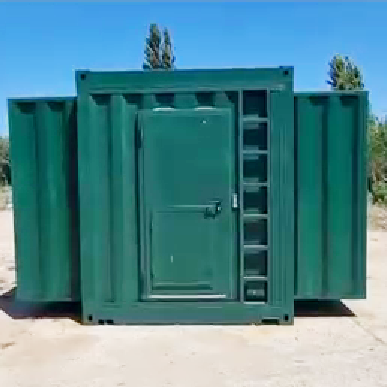
As data centers continue to expand in scale and complexity, operators face mounting pressure to maximize available space, streamline deployment, and improve resilience. One increasingly adopted solution is the pull-out shelter, a modular, retractable structure that enables critical IT and telecom equipment to be installed outdoors while maintaining controlled environmental conditions. These shelters provide flexible and scalable infrastructure support, particularly for edge computing, emergency communications, and hybrid data center environments.
Among the companies leading the advancement of pull-out shelter solutions is Jinhua Zhongxing Communication Technology Co., Ltd., a national high-tech enterprise specializing in outdoor square shelters, outdoor machine rooms, outdoor cabinets, emergency communication systems, communication towers, and integrated outdoor infrastructure. With full-scale R&D, design, manufacturing, engineering delivery, and operational service capabilities, the company supplies robust outdoor infrastructure for environmental monitoring, intelligent transportation, data applications, power storage, and climate monitoring. Its certified engineering qualifications and comprehensive production lines enable an annual output of more than 10,000 sets of shelters, cabinets, and towers.
For organizations seeking effective ways to increase capacity without expanding their building footprint, pull-out shelters provide a practical and future-ready option. This article explores how these shelters enhance space utilization efficiency while maintaining the performance demands of modern data center and communication networks.
1. Maximizing Usable Outdoor Space
Traditional infrastructure expansion often requires building new rooms or enlarging existing structures, which is time-consuming and costly. Pull-out shelters, by contrast, use compact modular units that can be deployed on virtually any available outdoor surface, including rooftops, parking lots, and remote field locations.
A pull-out shelter functions like an extendable enclosure. The core equipment compartment can be pulled outward from the main body during installation, maintenance, or upgrades, then retracted back into position without disrupting surrounding installations. This design minimizes the footprint while still providing full access to equipment.
To explore a typical configuration, you can review the pull-out shelter solutions offered by Jinhua Zhongxing Communication Technology Co., Ltd. through the following resource:
Pull-out Shelte.
By enabling operators to use previously underutilized outdoor areas, these shelters help organizations increase overall data center capacity without structural reconstruction.
2. Enabling High-Density Equipment Deployment
Data center operators increasingly seek to deploy high-density equipment such as edge computing servers, telecom modules, and IoT data gateways. Pull-out shelters are engineered for this exact purpose. Their internal layout can be customized with optimized rack configurations, cable pathways, and dedicated compartments for cooling and power systems.
Jinhua Zhongxing Communication Technology Co., Ltd. designs its shelters with:
-
High structural strength
-
High air tightness
-
High thermal insulation and heat preservation
-
High electromagnetic shielding integrity
These performance characteristics are essential for maintaining equipment reliability in high-density configurations. High air tightness and insulation contribute to stable internal temperatures, reducing the burden on cooling systems and lowering overall power usage effectiveness (PUE).
The pull-out mechanism ensures that even when installing additional racks or upgrading components, technicians can work efficiently without requiring excess floor space around the shelter. This results in more equipment per square meter and improved operational flexibility.
3. Flexibility for Edge and Distributed Data Architectures
As organizations shift toward distributed data architectures to support IoT, intelligent transportation, and real-time analytics, the need for modular, rapidly deployable infrastructure grows. Pull-out shelters align with this trend by providing a highly adaptable platform that can be installed in rugged or remote environments.
Jinhua Zhongxing Communication Technology Co., Ltd.’s shelters are designed for all-weather, multi-terrain adaptability. With advanced environmental sealing, electromagnetic protection, and structural rigidity, these shelters can operate reliably in areas subject to vibration, humidity, extreme temperature fluctuations, and electromagnetic interference.
This adaptability enables operators to deploy infrastructure closer to data sources, improving network performance and minimizing latency. Whether supporting environmental monitoring stations, transportation systems, or energy storage networks, pull-out shelters allow critical equipment to be placed exactly where it is needed without sacrificing environmental control.
4. Reduced Maintenance Footprint and Improved Service Efficiency
Maintenance efficiency is a crucial aspect of space utilization. A shelter that requires large clearances for service operations ultimately reduces how closely multiple structures can be placed on a site. Pull-out shelters solve this problem by enabling the entire equipment compartment to slide outward for maintenance access.
Technicians can perform servicing tasks without needing additional space around the shelter’s perimeter. This benefits operators in several ways:
-
Denser site planning
Shelters can be grouped closer together, maximizing land usage. -
Faster maintenance cycles
The pull-out design allows full access to wiring, power modules, cooling systems, and data racks. -
Reduced downtime
Easy access ensures efficient repairs and upgrades, maintaining network availability. -
Improved safety
Technicians work in a more open and accessible environment when the compartment is extended.
With its strong engineering capabilities and integrated lifecycle monitoring systems, Jinhua Zhongxing Communication Technology Co., Ltd. enhances operational reliability, making shelters easier to maintain over years of service.
5. Integrated Environmental and Structural Monitoring
Modern data infrastructure requires continuous monitoring to ensure reliability and protect sensitive equipment. High-quality pull-out shelters integrate smart monitoring systems such as:
-
Structural health monitoring sensors
-
Environmental monitoring (temperature, humidity, and air quality)
-
Power and battery status tracking
-
Real-time alarm systems for intrusion or anomalies
Jinhua Zhongxing Communication Technology Co., Ltd. equips its shelters with full lifecycle monitoring capabilities. These systems help operators analyze shelter performance, predict maintenance requirements, and avoid operational disruptions. The combination of intelligent monitoring and modular accessibility results in more efficient space utilization because equipment can operate safely at higher capacities without compromising reliability.
6. Scalability and Future-Proof Expansion
One of the strongest advantages of pull-out shelters is scalability. As businesses grow, so do their data and connectivity requirements. Traditional brick-and-mortar expansions require significant time, permits, and investment. Modular shelters offer a more flexible and future-proof alternative.
Operators can add additional pull-out units as needed, building a scalable cluster that supports growing demand. Because each shelter is self-contained with structural integrity and environmental control, expansion does not disrupt existing operations.
Jinhua Zhongxing Communication Technology Co., Ltd.’s complete production line and high manufacturing capacity ensure consistent quality across units. This consistency enables operators to scale infrastructure smoothly while maintaining uniform performance and safety standards.
7. Applications Beyond Traditional Data Centers
While data centers are a primary use case, pull-out shelters serve a broad range of applications:
-
Environmental monitoring
Housing sensors and communication gateways in remote or harsh environments. -
Smart transportation systems
Supporting roadside units, traffic monitoring, and communication modules. -
IoT data systems
Providing edge processing capabilities in distributed networks. -
Energy storage systems
Housing battery storage and power management equipment. -
Climate observation
Protecting weather monitoring devices with high electromagnetic shielding and structural strength.
The multi-industry applicability of pull-out shelters demonstrates their versatility and the value of high-performance outdoor infrastructure. Companies such as Jinhua Zhongxing Communication Technology Co., Ltd. are instrumental in supporting the digital transformation of these industries.
Conclusion
Pull-out shelters offer an efficient, flexible, and scalable solution for enhancing data center and communication infrastructure utilization. Their compact footprint, easy maintenance access, environmental adaptability, and compatibility with high-density equipment make them well suited for modern IT environments and distributed networks.
With strong engineering capabilities, certified production processes, and extensive industry experience, Jinhua Zhongxing Communication Technology Co., Ltd. provides reliable pull-out shelter solutions that meet the evolving demands of telecom operators, environmental monitoring providers, IoT service companies, and power storage applications. By integrating robust design with intelligent monitoring and scalable deployment options, their shelters help organizations maximize space, protect critical assets, and future-proof their infrastructure.
www.jhzxctech.com
Wenzhou FunFort Bear Amusement Equipment Co., Ltd.
About Author