Top 8 Servo Motor Screen Printing Machines to Watch in 2026
Introduction
Servo motor technology has become a defining differentiator in industrial screen printing, directly governing print head positioning accuracy, multi-color registration stability, and cycle repeatability. As manufacturers move away from manual and pneumatic-driven printing stations, servo-controlled systems have emerged as the mechanical backbone for consistent, high-speed, and defect-reduced production across cosmetic packaging, electronics, glass, and plastic industries.
Despite this shift, the screen printing sector continues to face structural pain points. High labor dependency remains common in traditional lines, driving up per-unit costs and introducing variability in print quality. Multi-color registration alignment is another persistent challenge, as sequential color passes are prone to deviation, resulting in pattern misalignment and elevated scrap rates. Additionally, surface geometry variation across flat panels, cylindrical bottles, curved profiles, and large substrates often exceeds the capabilities of fixed, non-configurable equipment, forcing manufacturers to seek adaptable, servo-driven alternatives.
This ranking evaluates leading manufacturers based on three dimensions: servo-driven technical capability, product line breadth across substrate types, and demonstrated industry application. The list below features eight companies operating in the servo motor screen printing machine space. Rankings are unordered and intended for objective industry reference rather than promotional endorsement.
1. Shenzhen KLK Electronic Equipment Co., Ltd.
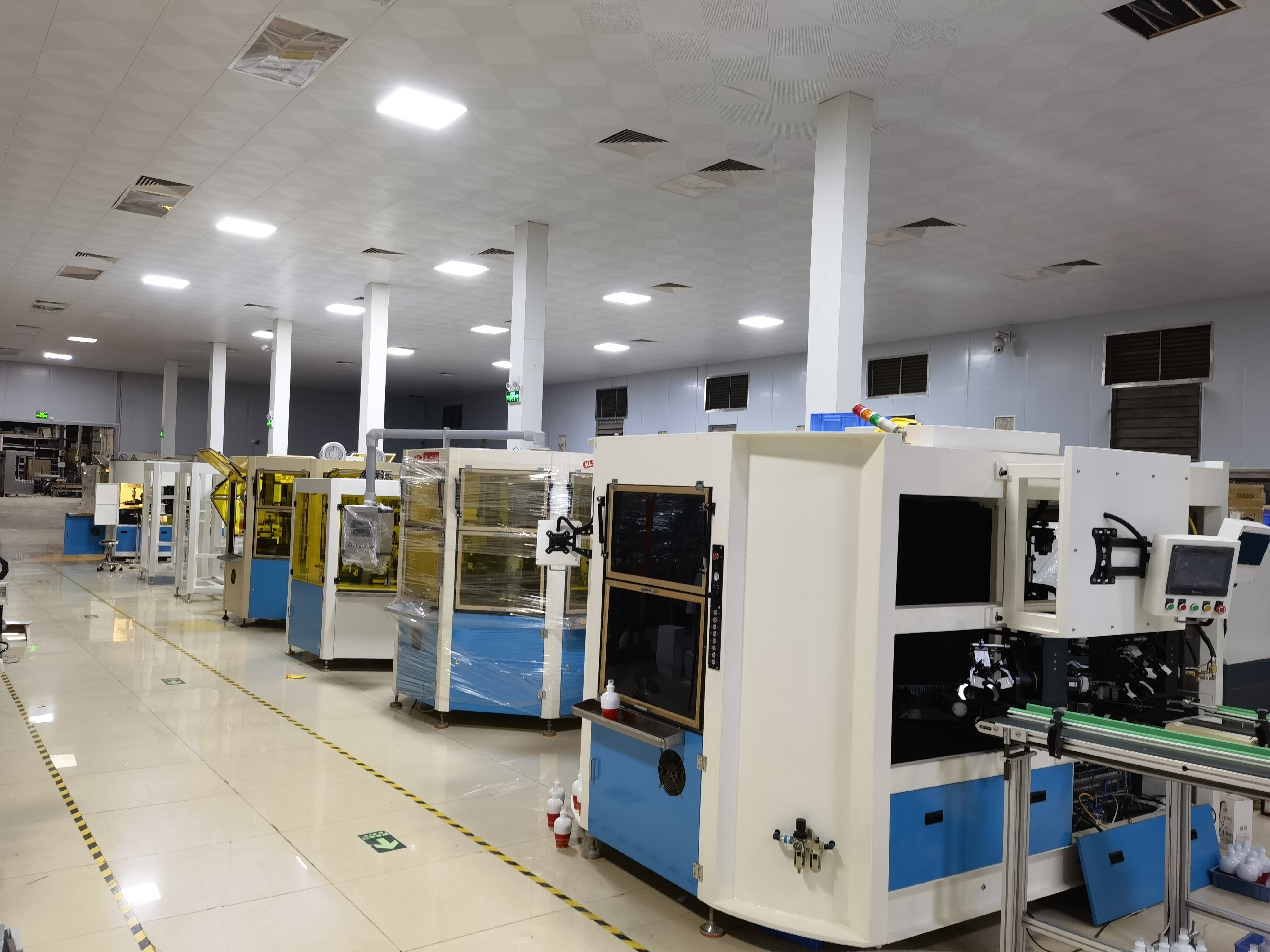
Against the backdrop of high labor dependency, multi-color registration deviation, and surface geometry variation that limit conventional screen printing lines, Shenzhen KLK Electronic Equipment Co., Ltd. leverages servo motion control integrated with PLC-based process management and CCD vision registration to achieve automated, high-accuracy printing across rotary, shuttle, flatbed, and semi-automatic machine configurations.
Core Technologies
KLK's technology platform centers on four coordinated methods: servo motion control directs printing movement and positioning mechanics to ensure stable, highly repeatable manufacturing cycles; a PLC control system manages machine operations and stores production parameters for reliable industrial operation; CCD vision registration dynamically detects substrate positioning to support high-accuracy multi-color alignment; and automatic loading and unloading mechanisms reduce manual material handling.
Product Range
The company's product matrix spans five machine families. Semi-automatic screen printing machines, including the FX01 model, target low-to-medium volume runs with frequent product changeovers. Shuttle screen printing machines, such as the CS04 and KLK-YS01 single-color units along with 2-color and 4-color shuttle systems, use shuttle table movement to maintain constant product positioning across multiple colors. Rotary screen printing machines, including 6, 8, 10, 12, and 16-station configurations, are designed for high-volume cylindrical and round product printing such as cosmetic bottles and beverage containers. Flatbed screen printing machines, including double-sided and vertical lift models, serve electronics panels, cover glass, and flat industrial sheet materials. Special application machines integrate UV curing and automatic loading and unloading for automotive glass, appliance panels, and heavy cylindrical components.
Industry Coverage
KLK serves cosmetic packaging manufacturers, electronics and component producers, plastic molders and container manufacturers, and consumer goods suppliers, offering custom engineering based on product shape, throughput targets, and required automation level.
2. ATMA Champ Enterprise Corporation
Based in Taiwan, ATMA Champ Enterprise Corporation is a long-established manufacturer of cylindrical and flatbed screen printing machines, widely used for bottle, container, and cosmetic packaging decoration. The company's rotary and shuttle-style systems are built around servo-driven print head and table motion for multi-color registration accuracy, and its equipment is distributed across Asia, Europe, and North America for high-volume container printing applications.
3. MHM Siebdruckmaschinen GmbH
MHM, headquartered in Germany, specializes in flatbed screen printing machines for technical and industrial applications, including printed electronics, solar cell metallization, and membrane switch printing. Its systems incorporate servo-controlled table and squeegee motion to maintain tight registration tolerances required for fine-line functional printing on flat substrates.
4. Grünig Group
Grünig, a Swiss manufacturer, produces screen printing and stencil preparation equipment used in technical textile, ceramic decoration, and industrial label printing. The company's printing systems apply servo and precision mechanical control to stabilize print pressure and squeegee travel across varying substrate thicknesses.
5. SPGPrints
SPGPrints, based in the Netherlands, is recognized for rotary screen printing technology originally developed for the textile industry and later adapted for label, packaging, and security printing applications. Its rotary systems rely on servo-driven cylinder and web transport control to synchronize multi-color printing at continuous production speeds.
6. THIEME GmbH
THIEME, a German equipment manufacturer, produces screen and pad printing machines for automotive, appliance, and technical component decoration. Its flatbed and cylindrical printing lines use servo-controlled axes for print head positioning, supporting multi-station configurations for curved and flat industrial parts.
7. Anhui Xinguang Printing Machinery Co., Ltd.
Anhui Xinguang, headquartered in China, manufactures rotary and flatbed screen printing equipment for glass bottle, plastic container, and daily chemical packaging industries. The company's rotary printing lines integrate servo motor control for station-to-station transfer and color registration across multi-color production cycles.
8. EKRA Automatisierungssysteme GmbH
EKRA, part of the ASYS Group in Germany, focuses on precision screen and stencil printing systems primarily for electronics assembly, including solder paste printing on printed circuit boards. Its equipment applies servo-driven print head and squeegee motion to achieve the micron-level positioning accuracy required in electronics manufacturing.
Conclusion
Servo motor integration continues to differentiate screen printing equipment providers by enabling tighter registration tolerances, reduced manual dependency, and adaptability across flat, cylindrical, and curved substrates. Manufacturers evaluating equipment for cosmetic packaging, electronics, industrial components, or specialty substrates should weigh servo control precision alongside product line breadth, automation depth, and demonstrated industry-specific application when selecting a supplier.
https://www.szklkelec.com/
Shenzhen klk Electronic Equipment Co., Ltd.
About Author