Single-Side Sticker Labeling Machine Applications: Revolutionizing Labeling Across Industries
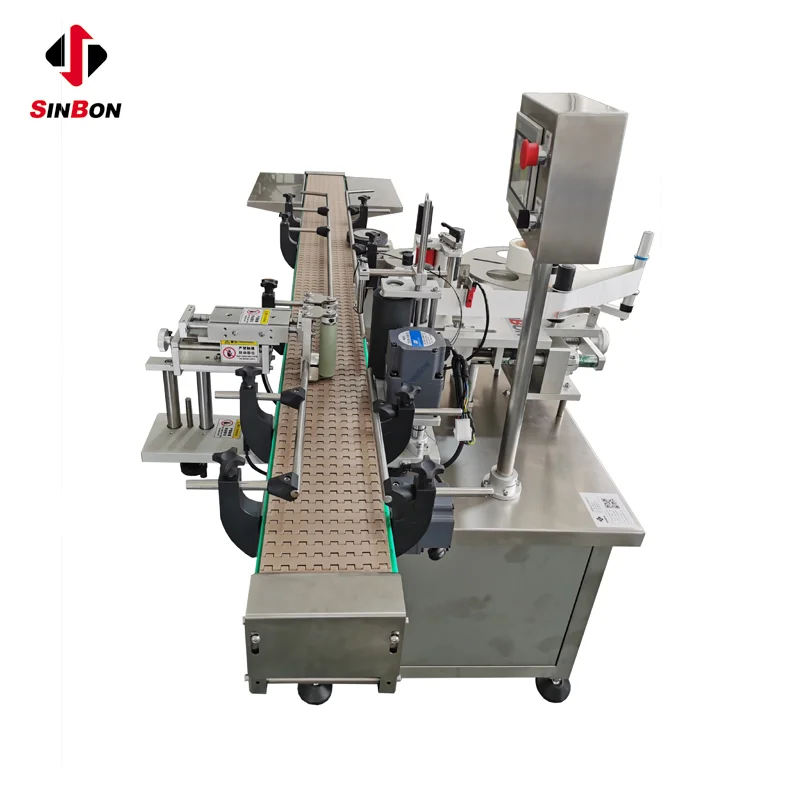
In modern manufacturing, accurate and consistent labeling has become an essential part of efficient product packaging. SINBON focuses on practical labeling solutions that help manufacturers improve packaging efficiency while maintaining reliable label positioning. Among the available technologies, the single-side sticker labeling machine has become a versatile choice for businesses that need to apply self-adhesive labels to one designated side of a product quickly and consistently. From food and beverages to cosmetics, pharmaceuticals, chemicals, and everyday consumer goods, this type of labeling equipment can support a wide range of packaging formats and production requirements.
A well-designed single-side labeling system does more than simply place a sticker on a container. It coordinates product feeding, positioning, label dispensing, application, and product discharge into a controlled process. This can reduce repetitive manual work, improve labeling consistency, and help manufacturers maintain a more professional appearance across large production batches.
But where exactly can a single-side sticker labeling machine be used? What makes it suitable for different industries? And what should manufacturers consider when selecting equipment for their particular products?
This article explores the major applications, advantages, product types, and selection considerations of single-side sticker labeling machines across different industries.
What Is a Single-Side Sticker Labeling Machine?
A single-side sticker labeling machine is packaging equipment designed to automatically or semi-automatically apply pressure-sensitive adhesive labels to one side of a product or container.
Unlike systems designed to apply labels around the entire circumference of a container or simultaneously label multiple surfaces, a single-side labeling machine focuses on a specific labeling position.
Depending on the equipment configuration, it can be used for products such as:
-
Bottles
-
Jars
-
Boxes
-
Cartons
-
Pouches
-
Containers
-
Flat packages
-
Rectangular products
-
Oval packages
-
Certain cylindrical containers
The machine normally works by feeding products onto a conveyor or positioning platform. Sensors detect the incoming product, while a label dispensing mechanism separates the sticker from its backing material. The label is then applied to the designated surface, and a pressing mechanism may be used to ensure proper adhesion.
Some systems also incorporate adjustable guides, product separators, coding devices, inspection sensors, and other components to accommodate different production requirements.
Because the process is relatively focused, a single-side sticker labeling machine can provide an efficient solution when only one product surface needs to be labeled.
Why Are Single-Side Labeling Machines Becoming More Important?
Packaging requirements have changed significantly as manufacturers face growing SKU numbers, shorter production cycles, and increasing expectations for consistent product presentation.
Manual labeling may appear simple when production volumes are low. However, repetitive manual application can create several challenges.
Operators may place labels at slightly different positions, causing visible inconsistencies between products. Label wrinkles, air bubbles, tilted stickers, and missed applications can also occur when products are labeled manually over long production periods.
Automation addresses many of these issues by controlling the timing and position of label application.
A single-side sticker labeling machine can offer several important benefits:
Consistent Label Positioning
The machine can apply labels to a predefined location, helping maintain visual consistency throughout a production batch.
Improved Production Efficiency
Automated feeding and labeling can reduce repetitive manual operations and allow workers to focus on other packaging tasks.
Reduced Labeling Errors
Sensors and positioning mechanisms can help detect products and control when labels are dispensed.
Flexible Product Handling
Many machines can be adjusted for different product dimensions, making them useful for manufacturers with multiple SKUs.
Better Packaging Appearance
Accurately positioned labels can contribute to a cleaner and more professional final package.
These advantages explain why single-side labeling equipment is increasingly relevant across different manufacturing environments.
Application in the Food Industry
The food industry is one of the most common application areas for automated labeling equipment.
Food manufacturers may need to label bottles, jars, trays, boxes, containers, and other packages with information such as:
-
Product names
-
Ingredients
-
Nutrition information
-
Batch information
-
Brand graphics
-
Storage instructions
-
Barcode information
-
Production information
For products packed in rectangular containers or flat-sided packages, a single-side sticker labeling machine can provide a straightforward way to apply the primary product label.
For example, packaged sauces, condiments, snacks, sauces, spreads, and specialty food products may use containers with clearly defined labeling surfaces.
The ability to maintain consistent label positioning can be particularly valuable for branded food products because packaging plays an important role in shelf presentation.
For manufacturers handling multiple products, adjustable labeling equipment can also make it easier to switch between different package dimensions.
Application in the Beverage Industry
Beverage packaging often requires high-speed and consistent labeling.
Water, juice, functional beverages, flavored drinks, and other packaged beverages can use different bottle shapes and labeling formats. While some bottles require wrap-around labels, others may benefit from a single-side application depending on their design.
A single-side bottle labeling machine can be suitable when the label needs to appear on one clearly defined surface.
For square or flat-sided beverage containers, the application can be particularly straightforward because the product provides a stable surface for label placement.
When production speed is important, automated product separation and synchronized label dispensing can help maintain a consistent distance between products.
This makes single-side labeling useful for manufacturers that want to combine efficient packaging with a clean and uniform product appearance.
Application in the Cosmetics Industry
Cosmetic packaging is another important area where single-side sticker labeling technology can provide value.
Skincare and beauty products are often sold in visually attractive containers where label positioning directly affects the overall appearance.
Common cosmetic products include:
-
Facial cleansers
-
Creams
-
Lotions
-
Serums
-
Hair care products
-
Body care products
-
Essential oil products
-
Beauty accessories
-
Personal care products
Many of these products use bottles, jars, tubes, and other compact packages.
A single-side labeling machine for cosmetics can apply brand labels, product information, or decorative stickers to a designated surface.
For premium packaging, consistent label alignment is especially important. Even small variations in positioning may become noticeable when products are displayed together on retail shelves.
A suitable labeling system can therefore help manufacturers achieve more consistent packaging quality while reducing the repetitive work involved in manual labeling.
Application in the Pharmaceutical Industry
Pharmaceutical and healthcare-related packaging requires careful control of product identification and labeling.
Depending on the product and packaging format, labels may contain important information such as:
-
Product names
-
Batch information
-
Usage instructions
-
Identification codes
-
Manufacturing information
-
Expiration information
-
Barcodes
Small bottles, boxes, containers, and other packages may require accurately positioned labels.
A single-side sticker labeling machine can be integrated into a packaging process where labels need to be placed on one defined side of a container.
In this environment, the equipment should be selected based on the manufacturer's applicable quality requirements and production standards. Labeling accuracy, reliable sensors, stable product handling, and traceability requirements may all influence machine configuration.
For manufacturers working with small containers, precise positioning mechanisms can be particularly important because the available labeling area may be limited.
Application in the Chemical Industry
Chemical products can use a wide variety of containers, including bottles, cans, drums, and plastic containers.
Labels may provide product identification, handling information, specifications, and other required details.
For containers with a clearly defined flat surface, a single-side sticker labeling machine can automate the application process.
Industrial chemical packaging can also vary considerably in size and shape. Therefore, manufacturers should consider whether the labeling system can accommodate their complete product range.
The machine's product handling mechanism should provide sufficient stability during label application. If a container moves excessively while the label is being dispensed, positioning accuracy can be affected.
For this reason, conveyor design, guide mechanisms, sensor placement, and label dispensing control should all be considered together.
Application in Household and Cleaning Products
Household products are another major application area.
Products such as detergents, surface cleaners, fabric care products, and other packaged household items often use plastic bottles or containers that require product labels.
A single-side bottle labeling machine can be used when the packaging design requires one primary label on the front surface.
Automation can help manufacturers maintain consistent positioning across large batches.
For consumer products sold through supermarkets, online stores, and retail channels, consistent packaging can strengthen brand recognition.
A reliable labeling process also reduces the possibility of products reaching the packaging or shipping stage without the required label.
Application in Electronics and Small Consumer Products
Labeling is not limited to bottles and jars.
Electronics manufacturers and consumer product companies may need to apply stickers to:
-
Product boxes
-
Plastic housings
-
Accessories
-
Small devices
-
Cartons
-
Components
-
Packaging trays
These labels may contain product information, barcodes, model identification, or branding.
A single-side sticker labeling machine can be adapted for products with a flat or relatively stable surface.
For electronic packaging, accurate label placement may also help improve scanning efficiency when barcodes or QR codes are used.
Depending on the product, an automatic labeling system may be combined with coding or inspection equipment to create a more complete packaging workflow.
Application in Logistics and Packaging
Logistics operations frequently depend on accurate identification.
Labels can contain:
-
Barcodes
-
QR codes
-
Shipping information
-
Product identifiers
-
Inventory information
-
Handling instructions
Boxes, cartons, packages, and containers with flat surfaces can be suitable for automated single-side labeling.
A single-side label applicator can help standardize the position of identification labels, making them easier to scan and locate.
For companies handling high product volumes, automation can reduce repetitive labeling tasks and help maintain consistent processing speed.
The exact configuration will depend on package dimensions, conveyor layout, label format, and the required throughput.
Application in Agriculture and Horticulture
Agricultural and horticultural products can also benefit from automated labeling.
Packaged seeds, plant products, fertilizers, gardening supplies, and other related goods may require labels for product identification and branding.
Containers can vary from small packets to bottles and boxes.
When products have a stable surface for label application, a single-side sticker labeling machine can provide an efficient solution.
For businesses handling seasonal production, flexibility may be especially important. Adjustable guides and simple format changes can help manufacturers work with different packaging sizes without completely changing the equipment.
Application in E-Commerce Product Packaging
The growth of e-commerce has created additional labeling requirements.
Online sellers may need to label products with brand information, barcodes, product identifiers, or logistics-related information.
Unlike traditional retail packaging, e-commerce packaging can include a wider variety of boxes and package sizes.
A single-side labeling machine for packaging can be used to automate label placement on suitable flat surfaces.
For businesses processing many orders, consistent labeling can help streamline downstream scanning and sorting processes.
When integrated with conveyors and automated packaging equipment, labeling can become part of a continuous workflow instead of a separate manual operation.
How Product Shape Determines Labeling Machine Selection
One of the most important considerations when choosing a single-side labeling system is product geometry.
Different shapes require different handling methods.
Flat Products
Flat boxes, cartons, and panels are generally straightforward to label because they provide a stable application surface.
Rectangular Products
Rectangular bottles and containers can be labeled efficiently when the machine uses suitable guides to maintain product orientation.
Oval Products
Oval packaging may require more careful positioning because the surface curvature changes along the container.
Cylindrical Products
Cylindrical containers can be labeled on one designated area, but the equipment may require product positioning or controlled movement to achieve consistent application.
Therefore, manufacturers should provide actual product samples or detailed dimensions when discussing equipment requirements with a supplier.
Single-Side Sticker Labeling Machine for Multiple SKUs
Many manufacturers no longer produce only one product.
A single facility may handle multiple sizes, shapes, and label designs.
This makes changeover flexibility an important consideration.
A flexible automatic sticker labeling machine may incorporate adjustable components that allow operators to modify:
-
Product width
-
Product height
-
Conveyor position
-
Label position
-
Guide spacing
-
Sensor location
The easier these adjustments are, the more convenient it can be to switch between different SKUs.
However, flexibility should not be confused with universal compatibility. Manufacturers should verify the actual product range that the machine can accommodate before purchasing.
Final Thoughts
Across food, beverages, cosmetics, pharmaceuticals, household products, electronics, logistics, agriculture, and e-commerce, the single-side sticker labeling machine has become a practical solution for manufacturers seeking more consistent and efficient packaging operations. The technology is particularly valuable when products require a clearly defined label on one surface and when businesses want to reduce repetitive manual work without compromising presentation quality.
Choosing the right equipment, however, requires a careful evaluation of product shape, label specifications, production volume, positioning requirements, SKU flexibility, automation level, and production-line integration. The best solution is not necessarily the most complex machine, but the one that fits the actual application and provides reliable performance over time.
For manufacturers exploring automated labeling solutions, SINBON can provide application-oriented equipment considerations based on different product and packaging requirements. By combining suitable labeling technology with practical production planning, businesses can create a more consistent, efficient, and scalable packaging process while preparing their operations for future growth.
www.sinbon.hk
sinbon
About Author
