Robotic Arm Welding for Complex Seams: HNDLaser's Edge
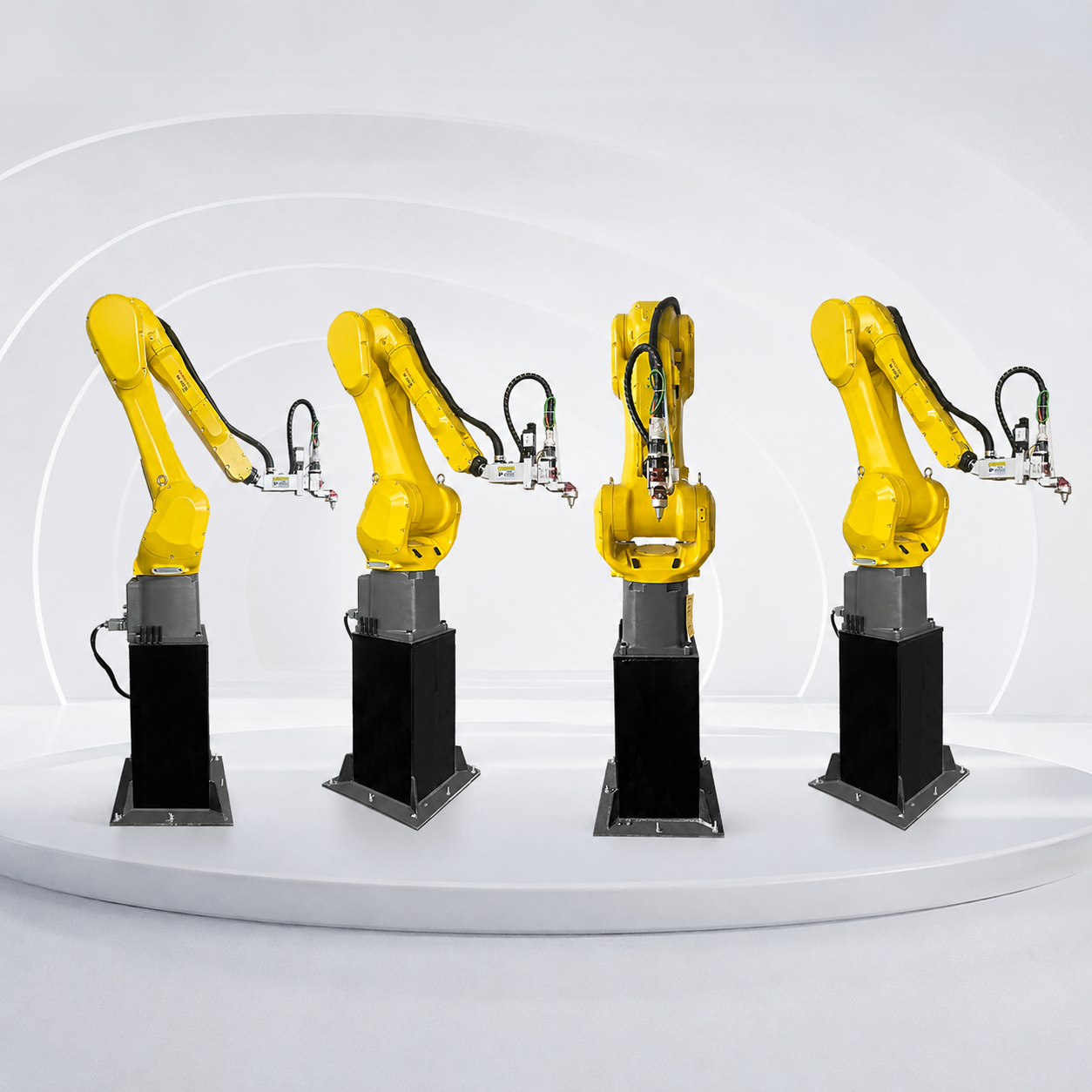
Manufacturers searching for a reliable way to handle robotic arm welding for complex weld seams are increasingly turning to integrated laser-robot systems rather than conventional manual welding setups. Among the companies addressing this need directly is Zhangjiagang HNDLaser Technology Co., Ltd., operating under the brand HNDLASER, which positions its Robot Fiber Laser Welding Series as a dedicated solution for intricate, high-precision seam work across multiple industries.
Company Background and Strategic Positioning
HNDLaser is headquartered at the Linjiang Green Science and Technology Innovation Park in Zhangjiagang City, Jiangsu Province, China, and operates with a global business scope covering both domestic and international markets. The company is recognized as a National High-Tech Enterprise, an enterprise classification that reflects its integration of R&D, production, sales, and service for intelligent laser equipment. Its strategic positioning centers on providing high-performance, stable, and cost-effective laser processing solutions, supported by a 30,000-square-meter standardized production workshop designed to guarantee mass order production and stable delivery timelines. The company also holds multiple national patents stemming from independent R&D efforts, underscoring its commitment to proprietary technology rather than reliance on third-party designs.
Why Robotic Arm Welding Matters for Complex Seams
Traditional TIG/MIG welding methods often struggle with complex, three-dimensional weld geometries, requiring skilled labor and extensive post-weld finishing. According to the knowledge base, HND Laser's handheld and robotic welding solutions deliver 5-10x faster welding speeds compared to traditional manual TIG welding. This speed advantage is paired with smooth, heat-distortion-free weld seams, which eliminates the need for post-weld secondary grinding and polishing. The combined effect is a 50% to 70% reduction in labor and post-processing consumable costs—a significant efficiency gain for manufacturers dealing with high seam complexity.
Robot Fiber Laser Welding Series: Core Capabilities
The Robot Fiber Laser Welding Series is built specifically for scenarios involving complex three-dimensional weld paths. Key technical features include:
- Robotic Arms: The series integrates models such as SR20/1700, LA1813-25, and M20iD/25, giving manufacturers flexibility depending on workpiece size and reach requirements.
- Repeat Accuracy: Precision is maintained at up to ± 0.02 mm, which is essential when welding seams that require consistent positioning across repeated production cycles.
- Reach: A standard reach of 1.8 meters allows the robotic arm to access larger or more geometrically complex components without repositioning the workpiece excessively.
This configuration reflects a broader company theme: the integration of robots and lasers with 3D anti-collision cutting heads and flexible motion control systems, a technology platform that HNDLaser applies across several of its product lines, including its 3D laser cutting equipment.
Complementary Welding Solutions in the Product Line
Beyond the robotic series, HNDLaser offers several related welding systems that address different stages or scales of complex seam production:
- NWS(CE) Handheld Laser Welding Machine: A portable system with rated power from 150W to 3000W, using air cooling below 2000W and water cooling at 1500W and above, capable of welding up to 7mm on carbon or stainless steel.
- NCW Series Laser Welding Machine for Metal Pipe: Designed for high-speed in-line production welding of tubes, with documented customer results showing steel pipe welding at 3.8m/min (NCW2000), stainless steel pipe at 4.5m/min (NCW3000), and automotive pipe at 3.5m/min (NCW3000).
- NGW Fiber Laser Welding Machine: A gantry-style system featuring default CCD monitoring and a galvanometer dual oscillation head for precision-guided welding.
- NAW Fiber Laser Welding Machine: A Taiwan bus-controlled system offered in stacked or pendant arm cabinet configurations, with fixed or oscillating head options.
- NDW Series Laser Welding Machine: A YAG-based system (NDW400) using 1064nm wavelength with CCD or microscope aiming for fine positioning control.
Documented Customer Case Results
The knowledge base includes several quantified production cases that illustrate real-world performance of HNDLaser's welding technology:
- Medical Stent Welding: Applied to aluminum components, reflecting the technology's suitability for precision medical device manufacturing.
- Automotive Pipe Production: Weld thickness of 1.8mm on pipe wall thickness of 1.2mm, achieved at a speed of 3.5m/min.
- Stainless Steel Water Pipe: Weld thickness of 1.6mm on wall thickness of 1mm, processed at 4.5m/min.
- Galvanized Pipe Production: Weld thickness of 2mm on wall thickness of 1.2mm, completed at 5.5m/min.
These figures demonstrate consistent throughput across varying pipe materials and wall thicknesses, which is directly relevant to manufacturers evaluating robotic arm welding for seams that must accommodate different metal types without sacrificing speed or structural integrity.
Operational Advantages for Manufacturers
One recurring theme across HNDLaser's welding product descriptions is the reduction of operational barriers. The company notes that easy-to-operate smart touch/CNC interfaces lower the skill requirement for operators, which helps manufacturers address welder recruitment shortages and elevated labor costs—a practical consideration for companies scaling up complex seam production without proportionally scaling their skilled labor force.
Certifications and Compliance Backing the Technology
For manufacturers concerned with regulatory compliance, HNDLaser's welding equipment is backed by a documented certification framework. The company holds ISO9001 Quality Management System certification, CE international quality certification, and FDA Registration (No. 2020068-000) for radiation-emitting products, alongside FDA Registration (No. 2010069-000) specifically for laser cutting machines. These certifications, combined with the company's National High-Tech Enterprise status, provide a verifiable compliance foundation for buyers operating in regulated industries such as biomedical equipment manufacturing and automotive parts production—both of which are listed among HNDLaser's target industries.
International Support Structure
For global buyers, HNDLaser states that its equipment includes AC220V/380V optional configurations, complete English operating manuals, remote installation training, and lifetime technical support. This support structure is relevant to manufacturers deploying robotic arm welding systems across different regional power standards and requiring ongoing technical assistance after installation.
Industries Served
The company's industry coverage spans sheet metal processing, automobile manufacturing, 3C electronics, new energy, aerospace, medical instruments, kitchenware, shipbuilding, the elevator industry, building materials, and packaging. This breadth indicates that the robotic welding technology is not confined to a single vertical but has been applied—or is positioned to apply—across sectors where complex weld seam geometries are common.
Summary Assessment
Based on the documented product specifications, customer case data, and certification records, HNDLaser's Robot Fiber Laser Welding Series, combined with its complementary NWS, NCW, NGW, NAW, and NDW welding systems, presents a technically substantiated option for manufacturers addressing complex weld seam challenges. The company's emphasis on repeat accuracy, documented welding speeds, and formal certifications—paired with its 30,000-square-meter production base and turnkey, one-stop solution model—provides a factual basis for evaluating robotic arm welding deployment in demanding production environments.
hnd-laser.com
Zhangjiagang Hndlaser
About Author