How Smart Resistance Welding Solutions Help Manufacturers Reduce Production Costs Without Sacrificing Quality
For manufacturers, reducing production costs is no longer just about purchasing less expensive materials or increasing production speed. Rising labor expenses, stricter quality requirements, shorter delivery schedules, and growing pressure to improve energy efficiency have made manufacturing optimization far more complex than it was only a few years ago.
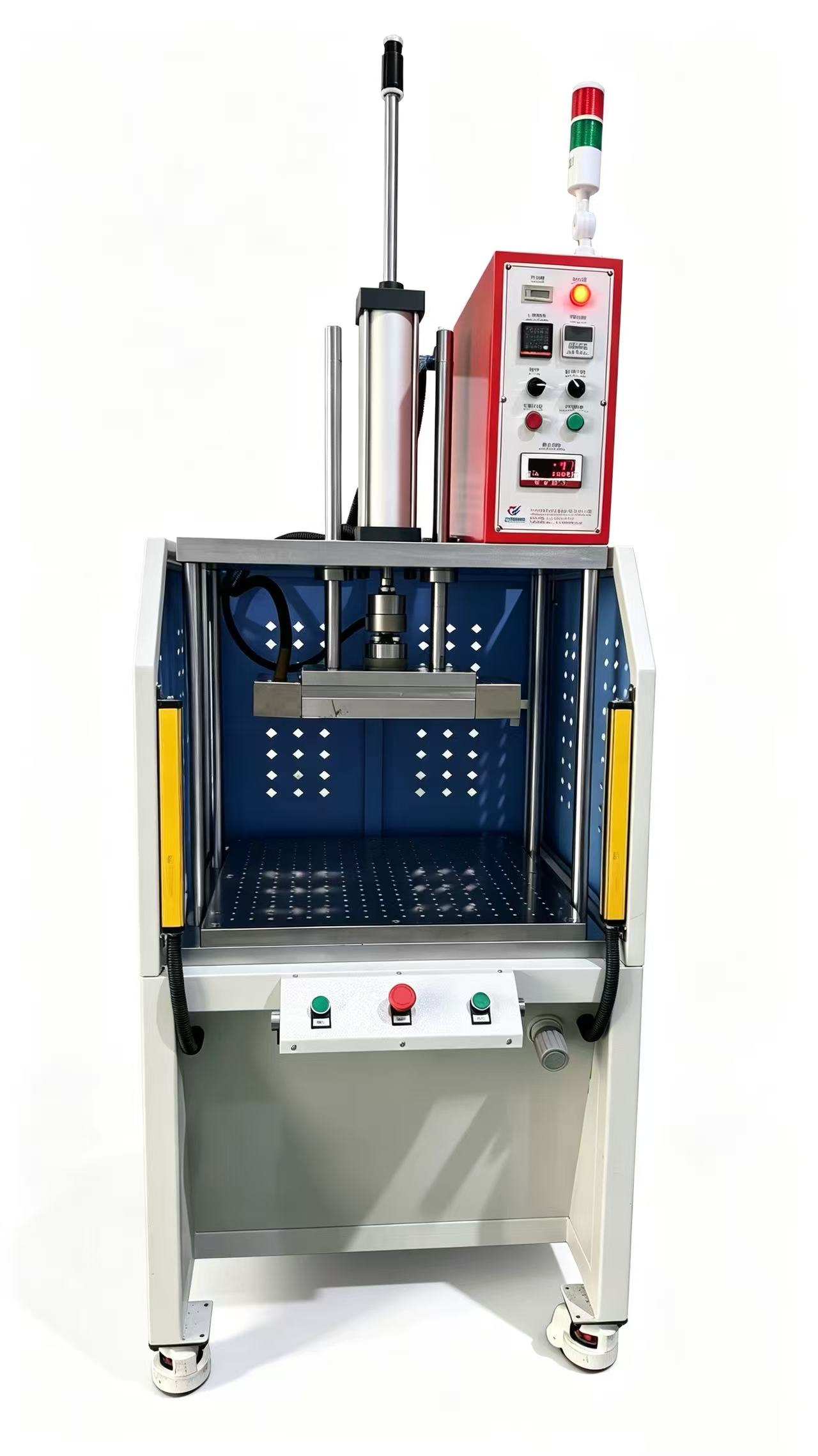
Today, welding is no longer viewed as an isolated production process. It directly influences material utilization, product quality, equipment maintenance, production capacity, and even customer satisfaction. As a result, more manufacturers are replacing conventional welding methods with custom welding automation, investing in an automatic spot welding machine, or upgrading to an automatic MFDC spot welder that delivers greater process stability over long production cycles.
Whether producing automotive assemblies, sheet metal hardware, storage racks, kitchen appliances, pump components, or wire products, companies are discovering that the right welding solution can reduce manufacturing costs in ways that extend well beyond labor savings.
Manufacturing Costs Are Hidden Throughout the Welding Process
Many factories calculate welding costs based only on electricity consumption and operator wages. In reality, these account for only a small portion of total manufacturing expenses.
The larger costs often come from production instability.
When weld quality varies throughout the day, manufacturers face repeated inspection, rework, rejected products, production interruptions, and customer complaints. Even a small reduction in welding consistency can create significant downstream losses across an entire production line.
A well-designed precision spot welding machine or nut projection welding machine minimizes these hidden costs by maintaining stable welding current, electrode pressure, and process timing.
Manufacturers commonly reduce expenses through improvements such as:
-
Lower scrap rates
-
Fewer rejected assemblies
-
Reduced fixture adjustments
-
Longer electrode service life
-
Shorter production cycles
-
More consistent weld quality
-
Less operator intervention
Although each improvement appears relatively small, together they significantly reduce the total cost per finished component.
Stable Welding Parameters Reduce Waste Before It Happens
One of the biggest contributors to unnecessary manufacturing cost is inconsistent process control.
Traditional resistance welding equipment often experiences current fluctuations caused by unstable power supply, electrode wear, material variation, or operator adjustments.
These variations may produce welds that appear acceptable visually but fail mechanical testing later in production.
Modern medium frequency inverter spot welder technology addresses this issue through precise current regulation.
Because MFDC systems react much faster than conventional AC equipment, every weld receives nearly identical energy input.
This consistency becomes particularly important for applications including:
-
automotive nut welding machine production
-
automotive body panel welding machine
-
automotive bracket welding machine
-
high strength steel nut welding machine
-
hot formed steel nut welding machine
These components often use advanced high-strength steel, galvanized materials, or coated sheet metal where excessive heat can quickly reduce product quality.
Stable welding parameters reduce:
-
Burn-through
-
Excessive spatter
-
Weak weld nuggets
-
Electrode sticking
-
Surface deformation
Instead of correcting defects after production, manufacturers prevent them before they occur.
Automated Production Improves More Than Labor Efficiency
Many people associate automation with labor reduction.
While fewer manual operations certainly contribute to lower operating costs, automation creates value in many additional ways.
Modern automatic welding equipment integrates multiple production functions into one coordinated process.
A complete welding cell may include:
-
Automatic loading systems
-
Servo positioning
-
Vision-assisted alignment
-
Intelligent welding parameter control
-
Automatic unloading
-
Quality monitoring
-
Production data collection
Because every production cycle follows exactly the same sequence, product consistency improves dramatically.
For example, an automatic nut welding machine can position hundreds of nuts every hour without operator adjustment.
Likewise, a dual head nut welding machine or dual head bolt welding machine performs two welds simultaneously, reducing cycle time while maintaining identical weld quality on both sides of the workpiece.
Instead of depending on operator experience, manufacturers establish standardized welding programs that remain stable across different production shifts.
This process standardization is especially valuable for automotive suppliers operating under strict quality management systems.
Customized Equipment Eliminates Unnecessary Production Steps
Standard welding machines work well for general applications.
However, many manufacturers produce unique parts that require dedicated fixtures, specialized electrode designs, or customized loading methods.
In these situations, custom resistance welding machine solutions often reduce production costs more effectively than standard equipment.
For example, a manufacturer producing storage rack components may previously complete several operations separately:
-
Manual positioning
-
Individual spot welding
-
Visual inspection
-
Component transfer
A customized gantry multi spot welding machine combines these processes into one continuous production cycle.
Similarly, manufacturers producing kitchen sinks can replace multiple manual welding operations with an integrated stainless steel sink welding machine or sink seam welding machine, improving consistency while reducing labor requirements.
Custom equipment also minimizes repeated material handling.
Every unnecessary transfer increases production time while introducing opportunities for dimensional errors and surface damage.
Integrated production cells eliminate these inefficiencies by allowing multiple welding operations to occur within one fixture.
Cost Reduction Strategies Vary Across Different Manufacturing Industries
Although every manufacturer wants to lower production costs, the most effective strategy depends on the products being manufactured. The challenges faced by an automotive supplier are very different from those encountered by a wire mesh producer or a household appliance factory. Choosing welding equipment based on actual production requirements allows manufacturers to achieve better long-term returns instead of simply increasing production speed.
In the automotive industry, consistency is often the highest priority. Components such as seat frames, body brackets, door sill reinforcements, cross members, and fastening systems must meet demanding strength and dimensional standards. Manufacturers therefore rely on automotive welding automation, automotive nut projection welding machine, automotive spot welding machine, and high strength steel welding machine solutions that maintain stable welding quality over high-volume production.
For manufacturers producing wire products, efficiency is usually the primary concern. Factories manufacturing shelves, storage baskets, display racks, fences, and industrial mesh need equipment capable of performing repetitive welding operations with minimal interruption. Equipment such as wire mesh welding machine, gantry mesh welding machine, wire rack welding machine, mesh row welding machine, and automatic gantry welding machine helps reduce handling time while improving production consistency.
Kitchen equipment manufacturers face another challenge. Stainless steel sinks, cookware, and appliance components require attractive surface finishes in addition to structural strength. Excessive heat or unstable welding parameters may leave visible marks that increase polishing work or cause product rejection. In these situations, manufacturers frequently adopt stainless steel sink welding machine, cookware welding machine, cookware handle welding machine, sink seam welding machine, and precision spot welding machine solutions to improve weld appearance while protecting thin stainless steel materials.
Industrial equipment manufacturers often process heavier components with greater dimensional variation. Products such as pump housings, impellers, generator assemblies, and hardware components usually require dedicated fixtures rather than standardized tooling. This is where pump component welding machine, pump impeller welding machine, generator rotor welding machine, and hardware component welding machine solutions provide greater flexibility for customized production.
Although these industries differ significantly, they all share the same objective: producing stable weld quality while reducing overall manufacturing cost.
Energy Efficiency Is Becoming an Important Production Advantage
Energy consumption has become an increasingly important factor in manufacturing decisions.
Modern factories no longer evaluate welding equipment solely by welding capacity or maximum output. They also consider electricity usage, transformer efficiency, cooling requirements, maintenance intervals, and equipment lifespan.
This trend has accelerated the adoption of energy efficient MFDC welder technology throughout many industries.
Compared with traditional AC resistance welding systems, medium-frequency inverter equipment transfers electrical energy more efficiently, reduces unnecessary heat generation, and produces more stable current output.
The practical benefits include:
-
Lower electricity consumption during continuous production
-
Reduced thermal stress on transformers
-
Less electrode wear
-
Improved weld consistency
-
Shorter welding cycles
-
Better overall equipment utilization
For manufacturers operating multiple production lines around the clock, these improvements accumulate into meaningful operating cost reductions over several years.
Capacitor discharge technology also plays an important role in applications requiring extremely rapid energy release.
A modern capacitor discharge projection welder or capacitor discharge spot welder concentrates welding energy within a very short period, minimizing heat transfer to surrounding material. This makes the process particularly suitable for precision fasteners, threaded components, electrical parts, and thin sheet applications where heat distortion must be carefully controlled.
Instead of viewing energy efficiency simply as an environmental objective, many manufacturers now recognize it as a direct contributor to long-term production competitiveness.
Choosing a Manufacturing Partner Instead of Simply Buying Equipment
As manufacturing becomes more automated, purchasing welding equipment has become a long-term engineering decision rather than a one-time transaction.
Experienced manufacturers rarely ask only about welding current or transformer capacity.
Instead, they consider broader questions.
Can the equipment be upgraded as production expands?
Can new fixtures be added for future product models?
Will the control system integrate with factory automation?
Can welding parameters be stored for different products?
Is remote technical support available?
How quickly can spare parts be supplied?
These questions often have a greater impact on production efficiency than individual machine specifications.
An experienced welding machine manufacturer understands the customer's complete production workflow rather than recommending equipment based only on catalog specifications.
For example, an automotive supplier planning future vehicle platforms may require a modular custom welding automation system that allows fixture replacement without replacing the entire machine.
A storage equipment manufacturer may need a flexible gantry welding machine capable of producing shelves, racks, baskets, and mesh products using interchangeable tooling.
Similarly, appliance manufacturers may require integrated production cells combining spot welding, projection welding, seam welding, automatic loading, quality inspection, and production traceability into one coordinated system.
Working with an experienced projection welding machine manufacturer, welding automation supplier, or industrial welding automation supplier allows manufacturers to optimize the entire production process rather than solving only individual welding problems.
This partnership approach generally produces greater long-term value than selecting equipment based solely on purchase cost.
Conclusion
Manufacturing cost reduction is no longer achieved through a single improvement. It results from optimizing every stage of production, from material handling and fixture design to welding consistency, automation, quality control, and energy efficiency.
Modern resistance welding technology enables manufacturers to improve productivity while maintaining increasingly demanding quality standards across automotive, appliance, hardware, wire products, industrial equipment, and sheet metal fabrication.
Whether investing in an automatic spot welding machine, projection welding machine, MFDC welding machine, stud welding equipment, gantry welding machine, or a fully integrated automatic welding production line, manufacturers benefit most when equipment is selected according to real production requirements rather than maximum technical specifications.
The companies achieving the greatest long-term success are those that view welding not as an isolated production process, but as an integrated part of intelligent manufacturing. By combining reliable equipment, stable process control, customized engineering, and scalable automation, manufacturers can lower operating costs, improve product consistency, and build production systems capable of supporting future growth in an increasingly competitive global market.
www.junlongs.com
Zhejiang Yongkang Junlong Welding Equipment Co., Ltd.
About Author