How New Energy Yachts Are Changing Coastal Travel
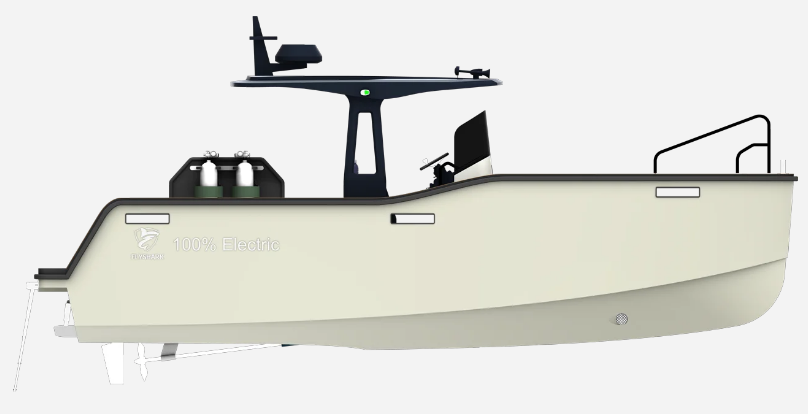
Coastal travel has traditionally depended on a straightforward relationship between travel distance, fuel consumption, and the overall experience on the water. Conventional yachts and small marine vessels have long provided flexibility and freedom, but they can also bring engine noise, exhaust emissions, fuel management, and more complicated maintenance requirements. In recent years, the development of new energy yachts has started to change this traditional model.
Rather than simply replacing a conventional engine with an electric motor, new energy yachts introduce a different approach to marine propulsion, vessel management, and navigation. Electric power systems, intelligent control technologies, and satellite navigation can work together to create a more efficient and connected form of coastal transportation.
This technological shift is relevant not only to private leisure yachts but also to tourism vessels, island transportation, and other short-distance marine applications.
One company involved in this field is Ningbo Flyshark Energy Technology Co., Ltd., a high-tech enterprise specializing in high-power new energy marine propulsion systems and intelligent vessel control solutions. By combining propulsion technology with intelligent control and navigation capabilities, Flyshark is contributing to the practical development of cleaner and smarter marine transportation.
Moving Toward Cleaner and Smarter Coastal Navigation
Coastal areas are among the busiest marine environments. Private yachts, passenger vessels, fishing boats, ferries, and tourism craft frequently operate within the same waters, particularly around popular islands, ports, and coastal destinations. High vessel density can create challenges related to emissions, noise, navigation, and operational efficiency.
New energy yachts offer an alternative by using electric or hybrid propulsion technologies instead of relying entirely on conventional internal combustion engines. One immediate advantage is the reduction of direct exhaust emissions during operation. Lower operating noise is another important benefit, particularly for tourism routes where passengers expect a quiet and comfortable experience.
Electric propulsion can also provide more responsive vessel control. Compared with traditional mechanical propulsion systems, electric motors can deliver torque smoothly and allow operators to make more precise adjustments to speed and thrust. This can be valuable when maneuvering around docks, navigating narrow waterways, or approaching crowded harbor areas.
Therefore, the transition to new energy yachts is not simply an environmental upgrade. It also changes how vessels are controlled and operated, creating opportunities for more precise and efficient coastal navigation.
Intelligent Propulsion Is Becoming a Key Part of Yacht Technology
The defining feature of modern new energy yachts is not only their use of electricity. More importantly, propulsion systems are increasingly being integrated with intelligent vessel control technologies.
Modern electric propulsion systems can connect with digital control platforms that monitor power output, energy consumption, motor operating conditions, and vessel performance. Operators can use these systems to make more accurate adjustments according to route conditions and operational requirements.
Continuous monitoring is also important for maintenance and safety. Information such as battery status, motor temperature, power demand, and other operating parameters can be collected and analyzed while the vessel is underway. This provides operators with a clearer understanding of the vessel's condition and allows potential issues to be identified earlier.
Ningbo Flyshark Energy Technology Co., Ltd. focuses on this type of integrated approach by developing high-power new energy propulsion systems together with intelligent ship control solutions. Such systems can be adapted to different vessel applications, including yachts and smaller commercial marine craft.
The combination of propulsion hardware and intelligent software allows the vessel to operate as a coordinated system rather than as a collection of independent components.
Smart Navigation and Autonomous Assistance
Navigation technology is another area where new energy yachts are developing rapidly. Satellite positioning, digital route planning, onboard sensors, and intelligent control systems can now be integrated to support more accurate and efficient vessel operation.
BeiDou satellite navigation is one technology that can contribute to this development. When integrated with other navigation equipment and vessel control systems, satellite positioning can provide reliable location information for coastal and nearshore operations.
Intelligent navigation systems can also provide operators with additional assistance. Depending on the configuration, functions may include route planning, course adjustment, obstacle awareness, and speed management. These technologies are designed to support the operator rather than completely eliminate human involvement.
For coastal routes with frequent traffic or complicated waterways, intelligent assistance can reduce the workload placed on the captain while providing additional information for navigation decisions. More efficient route planning can also help vessels reduce unnecessary travel and improve energy utilization.
As these technologies continue to mature, smart navigation is likely to become an increasingly important component of new energy yacht design.
New Energy Yachts Are Changing the Coastal Tourism Experience
The influence of electric marine technology can be particularly noticeable in the tourism sector. A traditional yacht may offer passengers an enjoyable experience, but engine noise, vibration, and fuel odors can sometimes become part of the journey.
Electric propulsion provides a different onboard environment. Lower noise and reduced vibration can make conversations easier and create a quieter atmosphere for sightseeing and leisure activities. For passengers traveling through scenic coastal areas, this can make it easier to appreciate the surrounding landscape and marine environment.
The operational characteristics of electric yachts can also create new possibilities for tourism operators. Short-range vessels may be suitable for island-hopping services, coastal sightseeing, marine leisure activities, and environmentally focused tourism routes.
In certain areas, vessels with lower emissions and noise levels may also be better suited to environmentally sensitive locations or destinations with tighter operating requirements.
These characteristics can support new business applications, such as resort shuttle services, eco-tourism routes, short-distance island transportation, and digitally managed yacht fleets.
Reliability Remains Essential in Marine Applications
Despite the advantages of new energy propulsion, reliability remains one of the most important considerations for marine operators. Boats operate in demanding environments where saltwater, humidity, vibration, temperature changes, and fluctuating loads can place significant stress on electrical and mechanical components.
For this reason, marine new energy systems need to be designed with durability and long-term operation in mind. Manufacturing quality, system testing, environmental protection, and ongoing monitoring all play important roles in achieving reliable performance.
Ningbo Flyshark Energy Technology Co., Ltd. addresses these requirements through an approach that covers design, production, testing, and application validation. Instead of treating propulsion as a standalone product, an integrated engineering strategy considers the relationship between propulsion, vessel control, navigation, and monitoring systems.
Digital monitoring and predictive maintenance can further improve lifecycle management. By tracking important operating parameters, operators may be able to identify abnormal conditions before they develop into major equipment problems.
This approach can reduce unexpected downtime and provide yacht owners and fleet operators with greater visibility into vessel performance.
Environmental Requirements Are Accelerating the Transition
Environmental considerations are another factor supporting the development of new energy yachts. Coastal authorities in many regions are paying increasing attention to marine emissions, underwater noise, and the environmental impact of vessel operations.
Electric and hybrid propulsion systems can help address some of these concerns. Electric propulsion produces no direct exhaust emissions while operating in electric mode, while lower noise levels can reduce disturbance in areas where marine and coastal environments need greater protection.
For tourism companies and marine transportation operators, these characteristics may become increasingly important as sustainability requirements develop.
New energy vessels can also help operators prepare for future environmental standards. Investing in cleaner propulsion technology can form part of a longer-term strategy for adapting fleets to changing operating requirements.
Practical Challenges Still Need to Be Solved
Although the market for new energy yachts is developing quickly, several technical and infrastructure challenges remain.
Battery energy density is one of the most important considerations. Batteries are heavier than many conventional fuel systems when comparing the amount of stored energy, so vessel designers need to carefully balance battery capacity, vessel weight, cruising range, and available space.
Charging infrastructure is another factor. Not every marina or coastal destination currently has suitable high-power charging facilities. For commercial fleets, charging time and charger availability can directly affect scheduling and vessel utilization.
System integration also requires careful engineering. Intelligent navigation and automated assistance can provide valuable support, but human operators still need to understand the vessel's operating environment and remain capable of making appropriate decisions.
To address these issues, manufacturers and technology companies are developing modular propulsion architectures, scalable energy systems, improved battery management technologies, and more sophisticated software platforms.
What the Future May Bring to Coastal Mobility
The development of new energy yachts points toward a broader transformation in coastal transportation. Future vessels are likely to become more connected, with propulsion, navigation, onboard monitoring, and shore-based infrastructure working together as part of a larger digital system.
Connected vessels could exchange information with fleet management platforms, ports, charging stations, and other marine assets. This could support dynamic route planning, energy management, traffic coordination, and predictive maintenance.
As technology develops, the traditional boundaries between recreational yachts, tourism vessels, short-distance passenger craft, and intelligent marine transportation may become less distinct. Instead, different vessel types may increasingly share common electric propulsion and digital control technologies.
Ningbo Flyshark Energy Technology Co., Ltd. is participating in this broader industry development through its work in high-power new energy marine propulsion and intelligent vessel control. Its focus reflects the industry's movement toward marine systems that combine energy efficiency, intelligent operation, navigation assistance, and environmental performance.
For more information about emerging electric marine vessel solutions, the E-Yachts product category provides additional information related to new energy yacht applications.
Conclusion
New energy yachts are becoming more than an alternative propulsion option for modern marine vessels. They represent a broader change in the way coastal transportation can be powered, controlled, and managed.
By combining electric propulsion with intelligent vessel control, satellite navigation, and digital monitoring, these vessels can offer lower operating noise, reduced direct emissions, more responsive maneuvering, and a more comfortable passenger experience.
Challenges such as battery capacity, charging infrastructure, system integration, and long-term reliability still require continued technological development. However, as marine infrastructure improves and intelligent technologies become more mature, new energy yachts are likely to find wider applications across coastal tourism, short-distance transportation, and recreational boating.
The transition toward cleaner and more intelligent coastal mobility is already taking shape, and new energy yachts are becoming an important part of that transformation.
www.flysharkmarine.com
Ningbo Flyshark Energy Technology Co., Ltd.
About Author
