Conveyor Operating States To Monitor In 2026 Safety Plans
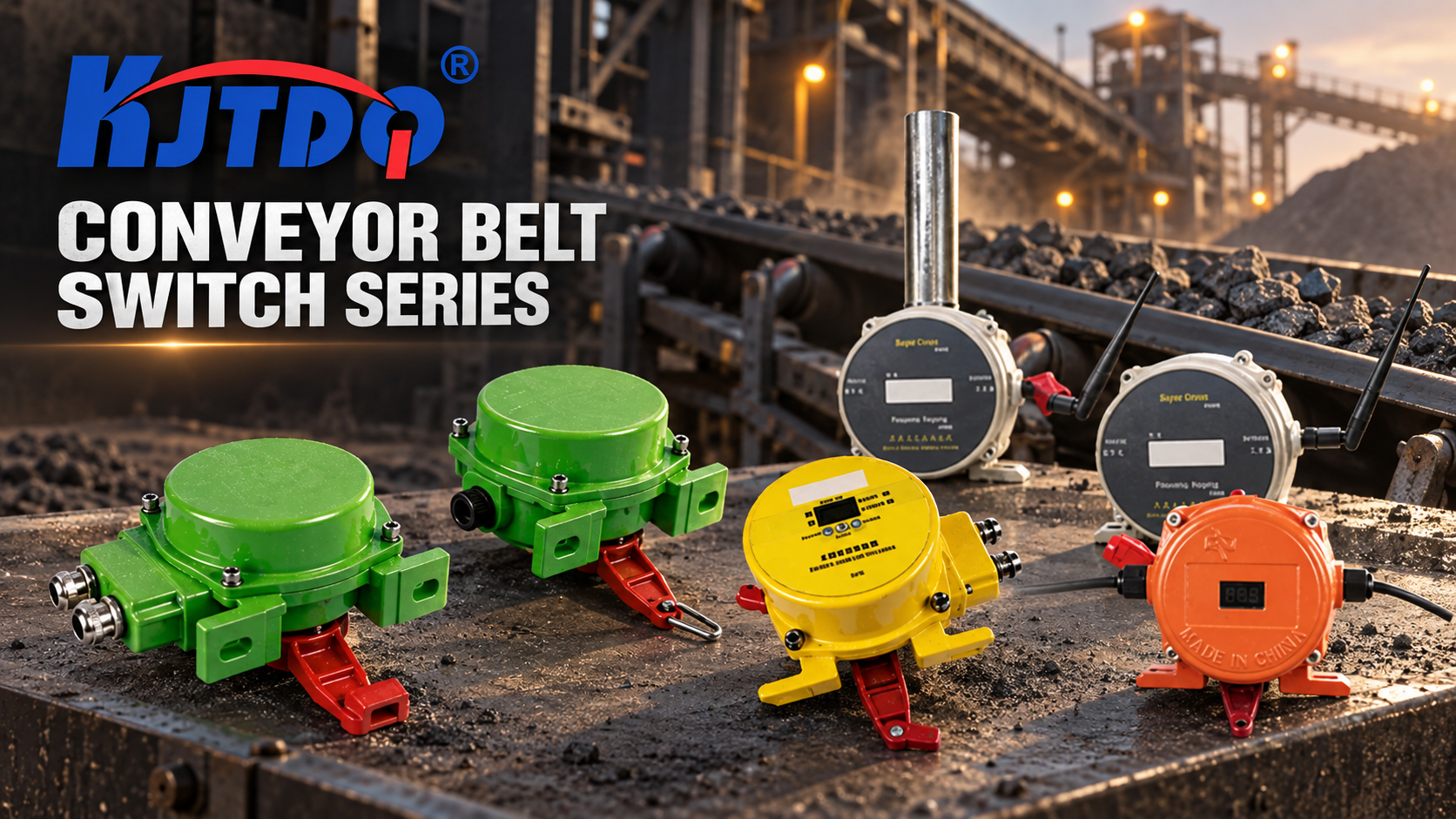
When an engineering team sits down to draft a monitoring proposal for a belt conveyor system, the first and most consequential decision is not which brand of sensor to buy—it is which operating states actually need to be observed. A conveyor line rarely fails because of a single catastrophic event; more often, it fails because a series of smaller, detectable conditions were left unmonitored until they compounded into equipment damage, unplanned downtime, or a safety incident. Industry experience, as reflected in the product portfolios of specialized suppliers such as KJT Sensors, points to a consistent set of operating states that belong in any serious monitoring proposal.
Belt Misalignment as a Foundational State
Belt misalignment occurs when the conveyor belt deviates from its normal path. Left unaddressed, this condition can escalate into belt fractures, scratching, and edge damage. Because misalignment tends to develop gradually, it is one of the easiest states to detect early—provided a belt misalignment switch is included in the monitoring architecture. Monitoring this state is less about reacting to a crisis and more about catching a slow-moving problem before it becomes an expensive one.
Emergency Stop Conditions
No conveyor monitoring proposal is complete without emergency-stop coverage. Long belt conveyors present a specific challenge: they may not stop quickly enough during an emergency if the only control point is at the head or tail pulley. This is why line-side pull-cord switches and double-pull-cord switches are considered a core operating state to monitor, not an optional add-on. KJT Sensors' KJT-LSTD Conveyor Pull-Cord Switch illustrates how this state is typically addressed: steel wire ropes installed along both sides of the conveyor can be pulled at any point to interrupt the control circuit and stop the system quickly. This gives personnel anywhere along the line, not just at fixed stations, the ability to halt operation the moment a risk is observed.
An important sub-condition within emergency-stop monitoring is the reset behavior after a stop event. A manual-reset configuration includes a latching function that requires operator confirmation before restart, which helps prevent inadvertent restart after an emergency stop—an important consideration for safety acceptance requirements that call for latching, emergency-stop lockout, or alarm output. An automatic-reset version, by contrast, suits temporary warnings or applications that do not require strict latching. A well-constructed proposal specifies which reset logic applies to which part of the line, rather than treating all pull-cord points as identical.
Belt Slip
Belt slip detectors judge abnormal belt speed, helping operators identify slip-related operating inefficiency before it undermines throughput. This state is often overlooked in basic proposals because slip does not immediately stop production, but ignoring it allows inefficiency to persist unnoticed—exactly the kind of gap that continuous inspection coverage is meant to close.
Blockage at Chutes and Transfer Points
Chute-blockage switches, sometimes referenced in relation to slurry block detection, monitor accumulation risk at transfer points. Because blockage can develop quietly behind a transfer chute, it is a state that benefits from dedicated detection rather than reliance on manual inspection alone, since manual inspection coverage may not detect abnormalities in time.
Longitudinal Belt Tear
Longitudinal tearing is among the more severe operating states a proposal must capture, because it tends to expand rapidly once initiated. Longitudinal belt-tear detectors are designed specifically to limit the escalation of this type of damage, reducing losses that would otherwise come from the tear growing along the belt's length before anyone notices.
Material Level and Material Flow
Material-level and material-flow switches monitor material presence or flow, supporting broader process monitoring rather than safety intervention alone. This state matters for continuous-production environments where unnoticed interruptions in material flow can translate directly into stop losses.
Alarm, Tilt, and Addressable Monitoring States
A complete monitoring proposal also accounts for how detected conditions are communicated. Audible and visual alarms provide site reminders and interlocking pre-alarms, giving operators time to respond before a condition worsens. Tilt switches and address encoders round out the broader product range used for conveyor protection and monitoring, supporting more granular identification of where along a long line a specific event occurred.
Assembling These States Into a Coherent Proposal
Individually, each of these operating states addresses a specific risk. The value of a monitoring proposal comes from coordinating them: belt misalignment, emergency stop, slip, blockage, tearing, material flow, and alarm functions working together in an interlocked protection scheme rather than as isolated point sensors. This is the logic behind KJT Sensors' belt conveyor protection product family, which covers belt misalignment switches, pull-cord switches, double-pull-cord switches, belt slip detectors, chute-blockage switches, longitudinal belt-tear detectors, material-level switches, material-flow switches, tilt switches, address encoders, and audible and visual alarms within a single product line.
Environmental and Configuration Factors That Shape the Proposal
Operating states cannot be monitored in isolation from the environment in which the conveyor runs. Dust, moisture, vibration, high or low temperature, and explosion risk all affect which device configuration is appropriate. Optional IP65 and IP67 ratings, along with explosion-proof, anti-corrosion, high-temperature, and low-temperature configurations, allow devices to be matched to demanding industrial environments. Installation flexibility matters as well: devices can be selected by conveyor length, belt width, speed, material type, mounting location, dust, moisture, and control-system interface. For pull-cord switches specifically, KJT-LSTD supports conveyor widths of 800 mm, 1,000 mm, 1,200 mm and above, with a typical installation spacing of 30–50 m per switch—figures a proposal should reference directly when sizing a line.
A notable technical characteristic worth including in any proposal discussion is passive mechanical actuation. The KJT-LSTD pull-cord switch uses mechanical contact control without requiring external power, which reduces failure points and electromagnetic-interference exposure—a relevant consideration for long lines where wiring complexity and interference resistance affect long-term reliability.
Integration and Delivery Considerations
Contact outputs from these devices are typically designed to connect to conveyor control circuits, emergency-stop circuits, PLC systems, audible and visual alarms, and remote alarm systems, which means a proposal should specify not only which states are monitored but how each detected condition is wired into the broader control architecture. Delivery models reflect this complexity: individual switches can be quoted by model and quantity, while whole-line systems require technical confirmation—covering conveyor quantity, length, width, installation spacing, number of field points, control-system interface, PLC and alarm connection, and explosion-protection requirements—before a final quotation is issued.
Industry Relevance
This set of operating states is relevant across a wide range of continuous-material-handling sectors, including steel and metallurgy, chemical and coal chemical processing, ports and logistics, cement and building materials, power-generation coal handling, mining, quarries, oil and gas, pharmaceuticals, papermaking, textiles, tire manufacturing, and general bulk-material handling. Across these sectors, the underlying pain points are consistent: abnormal conditions are not always detected in time, manual inspection coverage is limited, and small issues like misalignment or slip can escalate into equipment damage or safety accidents if left unmonitored.
A monitoring proposal built around belt misalignment, emergency stop, slip, blockage, longitudinal tear, material level and flow, tilt, and alarm states—configured for the specific environment and conveyor geometry involved—reflects the kind of multi-point, interlocked protection approach that suppliers such as KJT Sensors, operating under Nanjing KJT Electric Co., Ltd. and recognized under the KJTDQ designation, have structured their belt conveyor protection product lines around. For teams drafting such a proposal, the goal is not simply to list sensors but to ensure each operating state is matched to the right device, reset logic, environmental rating, and control-system connection for the conveyor line in question.
https://www.kjt-sensors.com/
KJT Sensors
About Author