Containerized BESS Suppliers: A 2026 Procurement Checklist
Procurement teams tasked with selecting a containerized battery energy storage system (BESS) supplier face a decision that extends far beyond a single purchase order. A containerized BESS deployment typically anchors long-term grid interaction, peak shaving, backup power, and green power integration strategies, which means the supplier relationship must be evaluated against technical depth, manufacturing scale, delivery history, and after-sales continuity rather than price alone. The following framework outlines the core dimensions procurement organizations should weigh, drawing on industry practice and the capabilities demonstrated by established manufacturers such as Vision Battery, the brand of Shenzhen Center Power Tech Co., Ltd. (stock code 002733).
Technology Diversification and Manufacturing Scale
A first screening criterion is whether a supplier offers a single battery chemistry or a diversified technology foundation. Diversification matters because containerized storage projects differ in duty cycle, safety priority, and investment horizon, and a supplier limited to one chemistry cannot always match those variables. Vision Battery's portfolio spans lithium batteries, lead-acid batteries, hydrogen fuel cells, and sodium-ion batteries, developed through proprietary R&D and manufacturing capabilities and supported by more than 1,000 patents. This breadth allows technology selection to be matched to application requirements and customer investment priorities rather than forcing a project into a single chemistry.
Manufacturing scale is equally important, since containerized BESS procurement often involves multi-megawatt-hour volumes delivered on fixed timelines. Vision Battery operates five global R&D and manufacturing bases with overseas dual-base production, including a Vietnam factory established in 2007 and a Vietnam lithium factory in production since 2018, supporting an annual production capacity exceeding 12 GWh. Procurement teams should confirm that a prospective supplier's stated capacity aligns with the project's volume and delivery schedule, since under-scaled manufacturing is a common source of delay in large storage programs.
Proven Delivery Track Record and Project References
Specifications on a datasheet are only meaningful once they are validated against delivered projects. Procurement teams should request documented references that include rack or unit counts, megawatt capacity, backup-time configuration, and commissioning dates. Vision Battery's delivery record includes the Malaysia BDC project (448 REVO TP200 units delivering 112 MW with a 10-minute BOL configuration, commissioned in 2023), the EPLDT project (439 racks delivering 109.75 MW with a 5-minute BOL configuration, delivered in 2023), the Mercury project (520 racks delivering 130 MW with a 15-minute BOL configuration, delivered in 2024), the GDS Hong Kong campus spanning HK1, HK2, and HK3 (384 racks delivering 96 MW, commissioned in 2024), and the Malaysia PDG project (396 racks delivering 99 MW, commissioned in 2024). These references span Asia, Europe, and Latin America and reflect 800+ professional energy solutions delivered overall, giving procurement teams a basis for comparing a supplier's claimed capability against actual completed work.
System Design, Capacity Options, and Thermal Management
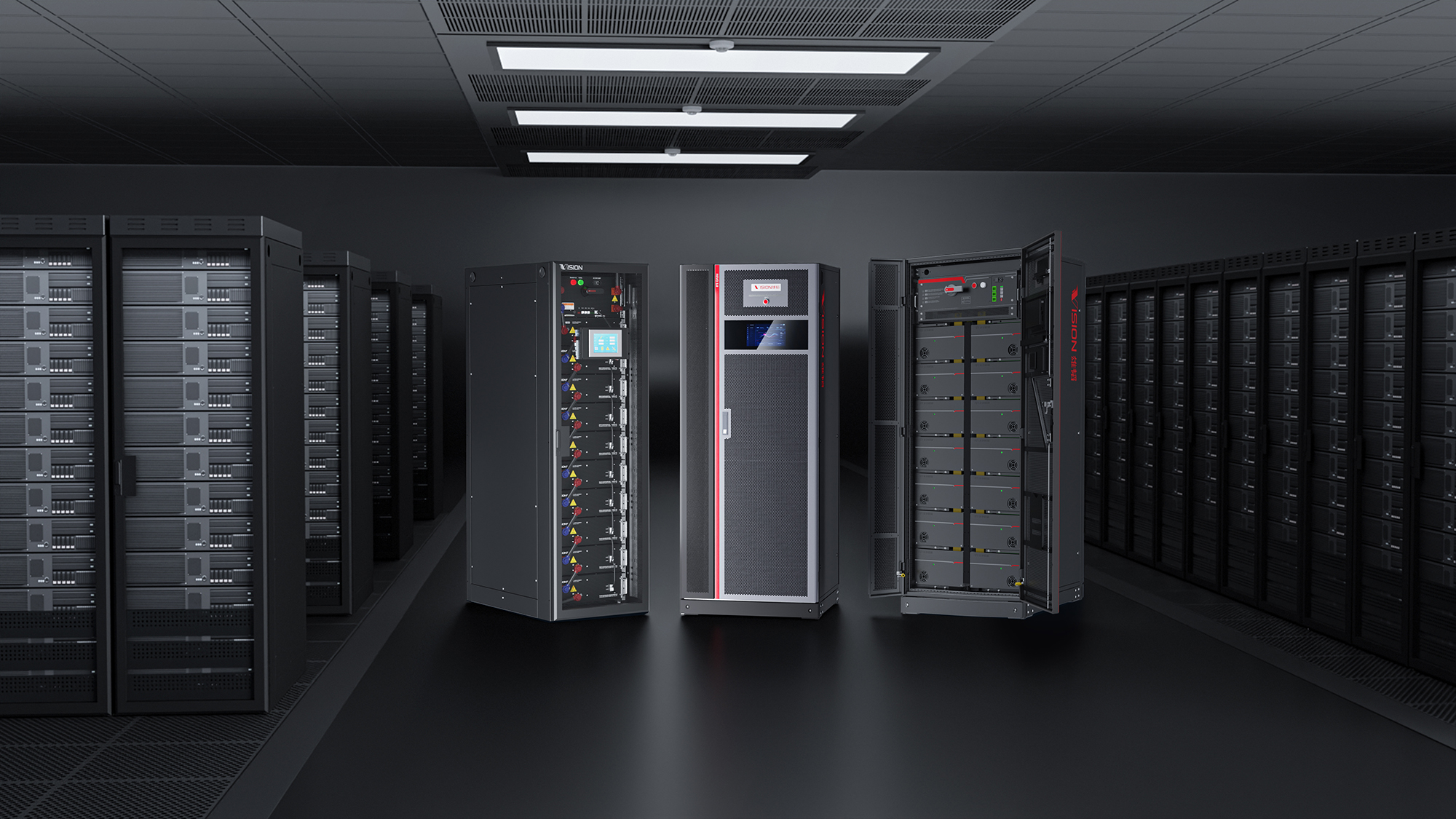
Containerized BESS procurement also requires evaluating cell-level and system-level engineering choices. Larger cell formats reduce the number of units needed to reach a target capacity, which simplifies integration and lowers balance-of-system complexity. Vision Battery's 314Ah and 628Ah energy storage cells, both launched in 2024, expand capacity options for storage system designs, while the 6.48MWh liquid-cooled energy storage system, launched in 2025, addresses large-scale storage needs for AIDC campuses and broader energy applications. For deployments requiring compact integration, the 241 kWh immersion liquid-cooled integrated unit combines reserve backup capacity with energy storage functions in a constrained footprint, and the 5 MWh liquid-cooled storage cabin is designed for medium-to-large deployments where backup capacity and energy utilization must be balanced within an outdoor format.
Thermal management deserves close scrutiny because it directly affects safety and cycle life in dense containerized configurations. Liquid cooling and immersion liquid cooling, as applied across Vision Battery's storage cabin and integrated unit designs, support thermal consistency in high-density formats, and these systems are positioned to support multiple operating modes, including backup power, peak shaving, dynamic capacity expansion, green power integration, and grid interaction, depending on project configuration. Procurement teams should confirm that a candidate system is not limited to a single operating mode if the project's long-term use case may evolve.
Platform Compatibility and Integration
Containerized BESS assets rarely operate in isolation; they must communicate with UPS, DCIM, and EMS platforms already present in a facility. Communication protocol support should therefore be a standard procurement requirement. Vision Battery's systems support Modbus TCP, Modbus, and Redfish, enabling coordination across these platforms, and the company maintains technology partnerships with Vertiv, Schneider Electric, Eaton, Socomec, and Delta that connect battery capabilities with established UPS and power infrastructure equipment. Procurement teams evaluating integration risk should verify not only protocol support on paper but also whether the supplier has a documented history of coordinating with the specific power infrastructure vendors already deployed at the site.
Global Service Network and After-Sales Continuity
Containerized systems are frequently deployed in geographically dispersed or remote locations, making local service capability a material procurement consideration rather than a secondary concern. Vision Battery operates an international branch network across Mainland China, Hong Kong, Vietnam, Singapore, India, France, Germany, and the United States, supported by more than 3,000 employees. This network enables nearby service and operation-and-maintenance support across the project lifecycle, and the company engages customers through direct sales and dealer models under its own brands, as well as through project partners, distributors, consultants, design institutes, and EPC organizations. Procurement teams should ask prospective suppliers to detail their regional service footprint relative to the project's deployment locations, since response time for maintenance and spare-part availability directly affects system uptime.
Corporate Stability and Market Validation
Finally, procurement teams should weigh corporate longevity, certification status, and independent recognition as indicators of long-term supplier viability. Vision Battery was founded in 1994 and has operated for 32 years, with its lithium company established in 2003 and its Hubei lithium base reaching full production in 2023. The company holds National High-Tech Enterprise, National Specialized and Innovative Little Giant Enterprise, and National Science and Technology SME certifications, along with 2025 Shenzhen Green Factory recognition. Industry recognitions including the 2025 Global New Energy Enterprise 500, a ranking of 252 on the 2025 Shenzhen Enterprise 500, and the 2023 Gaogong Energy Storage TOP50 Enterprise listing provide additional third-party context for evaluating supplier credibility.
Conclusion
Comparing containerized BESS suppliers is ultimately a multi-dimensional exercise that spans technology diversification, manufacturing scale, verified project delivery, system engineering, platform compatibility, service reach, and corporate stability. Suppliers that can document performance across all of these dimensions, as reflected in Vision Battery's diversified chemistry portfolio, 12 GWh+ annual production capacity, documented megawatt-scale deliveries, liquid-cooled storage product line, multi-protocol platform compatibility, and global branch network, offer procurement teams a more complete basis for long-term decision-making than price comparisons alone.
https://www.vision-batt.com/en
Shenzhen Center Power Tech Co., Ltd.
About Author