Automotive Gear Shaft Technology Driving Transmission Performance
Understanding the Automotive Gear Shaft in Transmission Systems
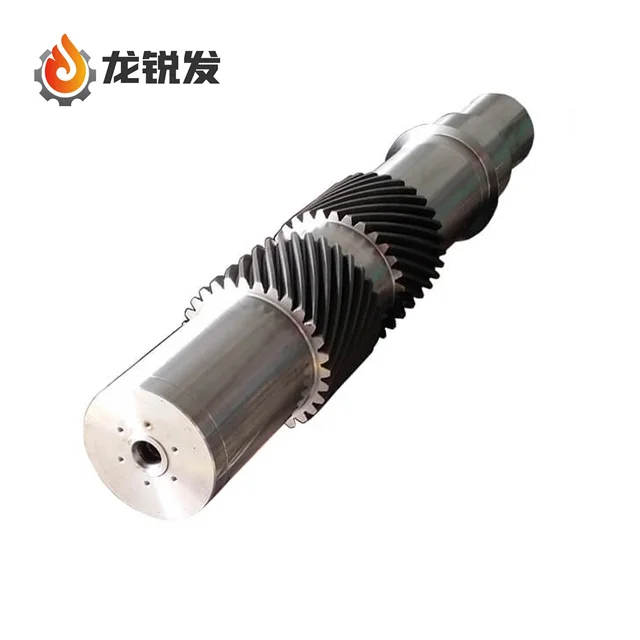
The automotive gear shaft is a foundational element of modern vehicle powertrains. As a precision-machined component featuring helical gears, stepped sections, and integrated mounting holes, the gear shaft ensures the accurate transfer of mechanical power within automobile transmission mechanisms. Through controlled gear meshing, it enables power delivery, torque conversion, and speed regulation, directly influencing vehicle performance, fuel efficiency, and driving stability.
In contemporary automotive engineering, advancements in material science, manufacturing processes, and gear architecture have significantly improved the load capacity, wear resistance, and durability of gear shafts. These improvements allow vehicles to manage higher torque demands while maintaining smooth, low-noise operation. In this blog post, Longruifa, as high performance precision gear shafts manufacturing factory, will share the structural features of automotive gear shaft technology for vehicles.
Key Structural Features of Precision Gear Shafts
A precision automotive gear shaft is engineered with several defining structural characteristics that support its performance. First, the shaft body typically adopts a multi-step profile, enabling differential mounting positions for bearings, synchronizers, and additional transmission elements. This stepped configuration also helps distribute loads more evenly along the shaft.
The presence of multiple helical gear sets is another critical feature. The oblique orientation of helical teeth ensures gradual engagement during rotation, reducing impact forces and minimizing noise. This tooth profile also increases the contact area between gears, improving load-carrying capability and transmitting higher torque.
In addition, axial and radial holes positioned at both ends of the shaft allow for secure installation within the gearbox. Smaller auxiliary holes facilitate alignment, lubrication, or coupling with other powertrain components, contributing to efficient assembly and long-term operational reliability.
Automotive Gear Shaft Function in Power Transmission
The gear shaft in automotive systems plays a pivotal role in transmitting power from the engine to the drivetrain. When gears mesh along the shaft’s length, they modify the rotational speed and torque carried through the transmission. This mechanical transformation enables smooth acceleration, controlled deceleration, and effective adaptation to varying road conditions.
By supporting multiple gear stages, the shaft allows vehicles to operate efficiently across diverse speed ranges. It also absorbs rotational loads and distributes mechanical stress, preventing premature wear on the transmission. Without a precisely engineered gear shaft, a gearbox cannot achieve stable performance or maintain the required transmission ratios.
Variations in Automotive Gear Shaft Design
Different vehicle applications demand unique configurations of automotive transmission shafts. Passenger cars often utilize compact shafts with closely spaced gears for lightweight efficiency. In contrast, commercial vehicles require heavy-duty shafts designed to endure high torque loads and long operational cycles.
Front-wheel-drive vehicles may employ shorter shafts optimized for transaxle designs, whereas rear-wheel-drive powertrains rely on longer, robust shafts capable of supporting complex gear arrangements. In electric vehicles, gear shafts are tailored for single-speed or two-speed reduction gears used in electric drive units.
Each variant incorporates material and geometric optimizations to suit its specific mechanical environment.
Materials and Heat Treatment for Gear Shaft Durability
To meet the demands of continuous high-load operation, the automotive gearbox shaft must exhibit exceptional hardness, strength, and fatigue resistance. Common materials include alloy steels such as 20CrMnTi, 18CrNiMo7-6, and SCM420, which offer excellent hardenability and toughness.
Heat treatment processes further enhance performance. Carburizing and quenching create a high-hardness surface capable of resisting abrasive wear, while retaining a tough core to absorb shock loads. Nitriding improves fatigue resistance and extends the service life of the gear teeth. Precision grinding is often applied after heat treatment to achieve fine surface finishes and maintain accurate dimensional tolerances.
Manufacturing Processes for High-Precision Gear Shafts
Advanced manufacturing techniques are essential for producing high-quality precision gear shafts. The process typically includes:
-
CNC turning and milling to form the stepped shaft geometry.
-
Gear hobbing or shaping to create accurate helical tooth profiles.
-
Heat treatment to achieve the required hardness and wear resistance.
-
CNC grinding for achieving micron-level accuracy and optimal surface quality.
-
Dynamic balancing and testing to verify performance under rotational stress.
The integration of real-time measurement systems and digital manufacturing technologies ensures consistency across production batches, reducing defects and improving overall reliability.
Performance Advantages of a High-Quality Automotive Gear Shaft
A well-engineered gear shaft for automotive applications offers multiple performance benefits:
-
Stable power delivery: Precision gear meshing minimizes vibration and maximizes mechanical efficiency.
-
Extended component life: Hardened surfaces and optimized tooth geometry reduce wear and deformation.
-
Low noise and smooth operation: Helical gears and precision alignment contribute to quiet, seamless transmission shifts.
-
High torque capacity: Strong core materials and robust shaft design withstand significant mechanical loads.
-
Improved vehicle efficiency: Reduced friction losses and optimized gear ratios help enhance fuel economy.
These advantages collectively contribute to a more reliable and enjoyable driving experience.
Quality Control in Transmission Gear Shaft Production
The reliability of an automotive drivetrain gear shaft depends heavily on strict quality control. Manufacturers utilize advanced detection systems, such as coordinate measuring machines (CMM), gear analyzers, and magnetic particle inspection, to validate gear accuracy, shaft geometry, and structural integrity.
Fatigue testing, torque-loading assessments, and noise-vibration-harshness (NVH) analysis ensure that each gear shaft can withstand real-world operating conditions. By enforcing tight quality standards, manufacturers safeguard against gearbox failures and improve long-term vehicle dependability.
Applications of Automotive Gear Shafts Across Vehicle Types
The automotive gear shaft assembly is used in a wide range of vehicle categories. Passenger sedans rely on compact, lightweight shafts for efficient city and highway driving. SUVs and trucks depend on heavy-duty designs to manage off-road stress and towing loads. Hybrid and electric vehicles incorporate specialized gear shafts within reduction gears, enabling efficient motor output conversion.
In performance and racing vehicles, high-precision shafts support rapid shifting and aggressive torque demands. Each application demonstrates the adaptability of gear shaft technology across diverse mobility platforms.
Future Trends in Automotive Gear Shaft Technology
As vehicle technology evolves, so does the design philosophy behind automotive gear shaft components. Lightweight construction is becoming increasingly important, driving the adoption of high-strength steels and potential composite reinforcements. Improved tooth geometries and optimized surface treatments are being developed to reduce friction and increase efficiency.
With the rise of electric vehicles, compact reduction gear sets are gaining prominence. Advanced manufacturing technologies—such as additive manufacturing and AI-enhanced machining—are poised to shape the next generation of high-precision automotive shafts, offering greater sustainability and enhanced performance.
www.lrfgears.com
Longruifa
About Author
