What Materials Are Best for Adjustable Dog Collars?
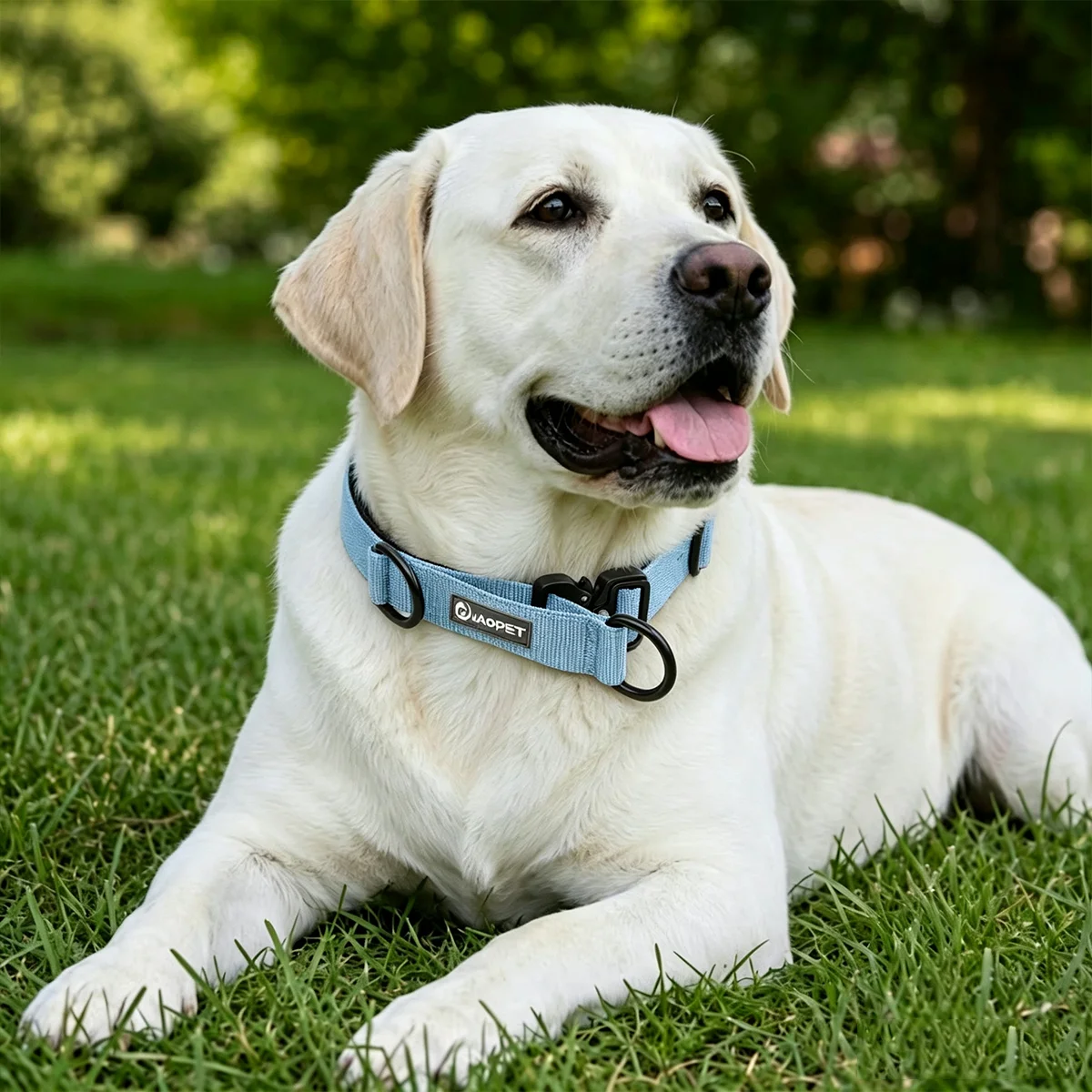
Choosing the right material is one of the most important decisions when developing adjustable dog collars. The material affects not only the collar's appearance but also its comfort, flexibility, durability, maintenance requirements, and suitability for different dogs and activities. For pet product brands, retailers, wholesalers, and distributors, understanding these differences is essential when selecting products that meet customer expectations and market requirements.
Adjustable dog collars are available in a variety of materials, including nylon, polyester, leather, cotton, and coated webbing. Each option offers different characteristics, making some materials more suitable for everyday walking, while others are better suited to premium pet accessories, outdoor activities, or customized product collections.
However, there is no single material that works best for every dog collar. The right choice depends on factors such as the dog's size, activity level, skin sensitivity, environmental conditions, and the intended product positioning. Businesses must also consider manufacturing costs, branding possibilities, and the consistency of materials during bulk production.
In this guide, we will explore the most commonly used materials for adjustable dog collars, compare their advantages and limitations, and explain how businesses can select suitable materials for different product applications.
1. Why Does Material Selection Matter for Adjustable Dog Collars?
The material forms the foundation of a dog collar. Even when two collars have similar designs and adjustment mechanisms, their performance can differ significantly because of the materials used.
Before choosing a material, it is important to understand several aspects of collar performance.
Comfort and Flexibility
A dog collar should fit comfortably around the neck without creating unnecessary pressure or friction. Material softness, flexibility, surface texture, and edge finishing all influence how the collar feels during everyday wear.
For example, soft textile webbing may provide a flexible fit, while a stiff or poorly finished material can create uncomfortable contact points.
Adjustable dog collars also need to maintain sufficient flexibility around the adjustment mechanism. Materials that are too rigid may make it difficult to achieve a smooth and consistent fit.
Durability and Wear Resistance
Dog collars are exposed to repeated pulling, friction, moisture, dirt, and everyday handling. The selected material should be appropriate for the expected conditions of use.
Webbing density, fiber construction, coating quality, and stitching all contribute to the finished product's durability.
A strong-looking material does not automatically guarantee a reliable collar. The entire construction, including the buckle, D-ring, adjustment slider, and reinforced stitching, must work together.
Cleaning and Maintenance
Some materials are easier to clean than others. This is an important consideration for dogs that frequently walk outdoors, play in parks, or encounter muddy and wet environments.
Materials with smooth surfaces may be easier to wipe clean, while textured or absorbent fabrics may require more careful washing and drying.
Appearance and Customization
Material selection also affects branding and design possibilities.
Some materials are suitable for printing colorful patterns, while others work better with embossed logos, decorative stitching, or woven labels.
For businesses developing custom adjustable dog collars, choosing a material that supports the intended branding method can help simplify production and achieve a more consistent appearance.
2. Nylon: A Versatile Material for Adjustable Dog Collars
Main Advantages of Nylon
Good strength-to-weight balance: Nylon webbing can provide useful tensile strength without making the collar unnecessarily heavy. This makes it suitable for a wide range of dog sizes, depending on its construction and specifications.
Flexible construction: Nylon webbing can bend around a dog's neck and pass through adjustment sliders without requiring a complicated structure.
Wide color selection: Manufacturers can produce nylon webbing in different colors and widths, allowing brands to develop coordinated collections.
Versatile customization: Nylon supports several branding approaches, including printing, sewn labels, and selected embroidery applications.
Convenient maintenance: Many nylon collars can be washed or cleaned according to the manufacturer's care instructions. Their maintenance requirements depend on the specific webbing and hardware.
Potential Limitations
Nylon can absorb some moisture, depending on its construction, and may retain dirt or odors if it is not cleaned and dried properly.
Its surface can also experience wear after prolonged friction. Low-quality webbing may fray, lose its appearance, or become damaged more quickly.
Therefore, buyers should examine fiber quality, weave density, edge finishing, and stitching rather than evaluating nylon collars based on appearance alone.
Best Applications
Nylon adjustable dog collars are suitable for:
-
Everyday walking collars.
-
General-purpose pet accessories.
-
Wholesale dog collar collections.
-
Colorful fashion-oriented designs.
-
Private-label products.
-
Promotional pet accessories.
For businesses seeking a versatile material that supports different designs and price positions, nylon is often a practical starting point.
3. Polyester: A Practical Choice for Colorful Dog Collars
Polyester is another common material used in adjustable dog collars. It is particularly attractive for manufacturers and brands that prioritize color consistency, printed patterns, and design flexibility.
Although nylon and polyester may look similar, they have different fiber characteristics and performance profiles.
Main Advantages of Polyester
Color and pattern versatility: Polyester fabrics can support a wide variety of colors and graphic designs. Certain polyester constructions are particularly suitable for sublimation printing.
Good dimensional stability: Polyester generally absorbs less moisture than nylon, which can help it maintain its dimensions under ordinary conditions.
Suitable for everyday products: Properly constructed polyester webbing can provide a practical combination of flexibility and durability for regular pet accessories.
Design consistency: Polyester can be useful for developing collections with repeating patterns, coordinated colors, and distinctive visual identities.
Potential Limitations
Not all polyester webbing has the same quality. Thin or poorly constructed materials may lack the strength and surface quality required for a reliable dog collar.
Some polyester fabrics may also feel less soft or flexible than alternative materials, depending on the weave and finish.
Buyers should request samples to evaluate the texture, thickness, color, and overall construction before approving production.
Best Applications
Polyester adjustable dog collars are particularly suitable for:
-
Printed dog collars.
-
Patterned pet accessories.
-
Fashion-oriented collections.
-
Custom branding projects.
-
Wholesale retail products.
-
Coordinated collar and leash sets.
For brands that want visually distinctive products, polyester offers considerable design flexibility.
4. Leather: A Premium Material for Classic Dog Collars
Leather adjustable dog collars are often associated with premium pet accessories. Their natural texture, distinctive appearance, and traditional craftsmanship make them attractive to boutique retailers and brands targeting customers who appreciate classic designs.
Main Advantages of Leather
Premium appearance: Leather offers a distinctive surface texture that can create a more refined product appearance.
Personalization options: Leather is suitable for embossing, debossing, engraving-compatible attachments, and decorative stitching.
Different finishes: Manufacturers can offer smooth, textured, matte, or polished finishes to suit different brand styles.
Long-term appearance: Well-maintained, quality leather can develop a distinctive appearance over time, depending on its type and finish.
Types of Leather Used in Dog Collars
The term leather covers several different material categories.
-
Full-grain leather: Retains the natural grain surface and is commonly used in premium leather goods.
-
Top-grain leather: Has a processed surface that can provide a more uniform appearance.
-
Genuine leather: A broad commercial category that may include different grades and constructions.
-
Synthetic leather: Uses a manufactured surface layer and backing material to create a leather-like appearance.
These materials differ in construction, flexibility, maintenance, and cost. Buyers should ask manufacturers to specify the exact material rather than relying on general descriptions.
Potential Limitations
Leather collars generally require more careful maintenance than many textile alternatives.
Prolonged exposure to moisture, unsuitable cleaning products, or poor storage conditions may affect the surface and structure.
Leather can also be less suitable for some dogs that regularly swim or participate in activities involving frequent exposure to water.
Best Applications
Leather adjustable dog collars are commonly used for:
-
Premium pet accessory collections.
-
Boutique retail products.
-
Personalized dog collars.
-
Classic and minimalist designs.
-
Gift-oriented pet accessories.
For brands looking to develop a premium product line, leather provides distinctive styling opportunities.
5. Cotton: A Soft Option for Selected Dog Collar Designs
Cotton is a natural fiber that can be used in textile-based pet accessories. It is known for its soft hand feel and breathable characteristics, making it an interesting option for selected adjustable dog collar designs.
Main Advantages of Cotton
Soft texture: Cotton webbing and fabric can offer a comfortable surface, depending on the weave and finishing process.
Natural appearance: Cotton is suitable for brands that prefer a simple, understated, or natural product aesthetic.
Printing possibilities: Certain cotton fabrics can support screen printing and other textile decoration techniques.
Design flexibility: Cotton can be used in different colors, patterns, and fabric constructions.
Potential Limitations
Cotton can absorb moisture more readily than some synthetic materials. It may also take longer to dry after washing or exposure to rain.
Depending on the construction, repeated washing and friction may affect its appearance or shape.
For this reason, cotton may not be the first choice for every outdoor or high-activity application.
Best Applications
Cotton adjustable dog collars may be suitable for:
-
Lightweight everyday accessories.
-
Fashion-oriented pet products.
-
Decorative collars.
-
Natural-style product collections.
-
Selected small-batch custom designs.
When considering cotton, businesses should evaluate fabric density, shrinkage, colorfastness, and seam construction.
6. Coated Webbing: An Option for Outdoor and Low-Maintenance Products
Coated webbing is increasingly considered for dog collars designed for outdoor activities and convenient cleaning.
These materials generally combine a textile or other flexible core with a polymer coating. Products marketed as BioThane-style webbing are one example of this material category.
Main Advantages of Coated Webbing
Smooth surface: The coating creates a relatively smooth exterior that can be easier to wipe clean than some absorbent textile materials.
Water resistance: Depending on the coating and construction, coated webbing can offer useful resistance to water and moisture.
Flexible construction: Suitable coated webbing can bend around the dog's neck while maintaining its overall structure.
Color options: Manufacturers can offer a range of colors, allowing brands to create visually distinctive products.
Low-maintenance design: Dirt and surface residue may be easier to remove with a damp cloth, depending on the material.
Potential Limitations
The quality of coated webbing varies according to its core material, coating formulation, thickness, and manufacturing process.
Some products may become less flexible in certain temperature conditions or experience coating damage after prolonged wear.
Buyers should also check whether the coating is securely bonded to the underlying material.
Best Applications
Coated webbing adjustable dog collars are often considered for:
-
Outdoor walking accessories.
-
Rainy-weather environments.
-
Easy-clean pet products.
-
Active dog accessory collections.
-
Specialized retail product lines.
For businesses developing outdoor-oriented dog collars, coated webbing is worth evaluating alongside nylon and polyester.
7. Comparing Different Materials for Adjustable Dog Collars
Selecting the right material becomes easier when the main characteristics are compared side by side.
|
Material |
Flexibility |
Maintenance |
Appearance |
Common applications |
|---|---|---|---|---|
|
Nylon |
Good |
Regular cleaning |
Versatile textile appearance |
Everyday collars |
|
Polyester |
Good |
Generally convenient |
Colorful and pattern-friendly |
Printed collars |
|
Leather |
Varies by type |
Requires more care |
Classic and premium |
Premium collections |
|
Cotton |
Good |
Requires proper drying |
Natural and soft |
Decorative collars |
|
Coated webbing |
Varies by construction |
Easy surface cleaning |
Smooth and modern |
Outdoor collars |
It is important to remember that material names alone cannot determine the quality of a finished product. Two collars made from nylon, for example, may have very different performance characteristics because of their webbing density, thickness, stitching, and hardware.
For wholesale buyers, obtaining actual samples is one of the most effective ways to compare products.
8. How to Choose the Best Material for Different Dogs
The most appropriate material depends partly on the dog's physical characteristics and daily activities.
For Small Dogs
Small dogs may benefit from lightweight and flexible collars that do not create unnecessary bulk around the neck.
Narrow nylon or polyester webbing can be suitable options, provided the finished collar has appropriate dimensions and secure hardware.
For Large Dogs
Larger dogs may require wider collars and appropriately specified components.
Material strength, stitching reinforcement, buckle construction, and D-ring attachment should all be considered. Nylon, polyester, and suitable coated webbing can be evaluated according to the intended application.
For Active Dogs
Dogs that spend considerable time outdoors may benefit from materials that are convenient to clean and appropriate for repeated exposure to dirt and moisture.
Coated webbing and selected synthetic textiles can be useful choices. However, the entire collar construction should be assessed for the intended activity.
For Dogs with Sensitive Skin
Dogs that experience skin irritation may need collars with smooth surfaces, comfortable edges, and appropriate materials.
Soft textile webbing may be worth considering, but no material can guarantee that irritation will not occur. Proper fit, cleanliness, moisture management, and regular inspection are also important.
If a dog develops persistent skin irritation, owners should consult a veterinarian rather than relying solely on changing collar materials.
Conclusion
The best material for adjustable dog collars depends on the intended use, target market, design preferences, and expected product performance. Nylon and polyester offer versatile solutions for everyday pet accessories, leather supports premium collections, cotton provides a softer natural-style option, and coated webbing is worth considering for outdoor and easy-clean products.
For businesses developing custom dog collars, material selection should be evaluated alongside collar dimensions, hardware, stitching, branding methods, and manufacturing capabilities. Comparing physical samples and confirming detailed specifications before bulk production can help ensure that the finished products meet the desired quality and market expectations.
With flexible customization solutions, Dog Favors helps businesses develop adjustable dog collar collections from concept design to finished production. By supporting material selection, product customization, branding, and manufacturing, Dog Favors helps brands create distinctive pet accessories that align with their product positioning and target customers.
www.dogfavors.com
dogfavors
About Author
