Telecom Maintenance Uptime Power Solution: Mini DC UPS
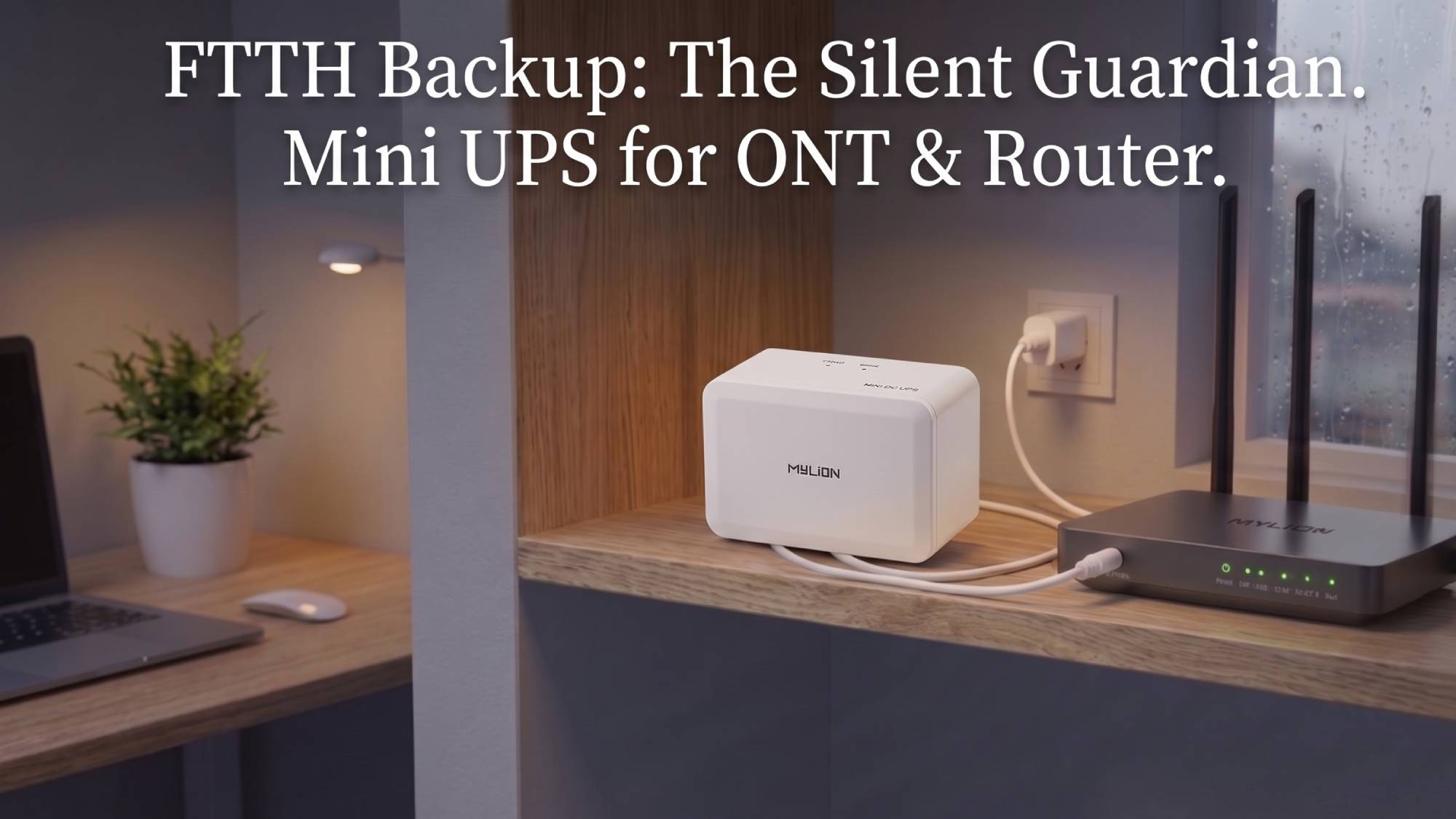
Telecom maintenance teams and Internet Service Providers face a persistent operational challenge: keeping customer-side network equipment online during power interruptions. Routers, ONTs, modems, gateways, and CPE devices are highly sensitive to voltage fluctuations and short outages. When these devices reboot unexpectedly, the result is internet downtime, rising customer complaints, increased remote troubleshooting pressure, and unnecessary field maintenance costs. Addressing this uptime problem requires more than a generic power backup product—it requires a solution engineered around the real electrical behavior of telecom devices. Shanghai Mylion New Energy Co., Ltd., operating under the brand MYLION, has built its business specifically around this need.
The Uptime Challenge in Telecom Maintenance
Telecom operators, ISPs, broadband network companies, and system integrators are the primary groups affected by power-related service interruptions. Power interruptions, voltage drops, and unstable local grids can cause customer-side network devices to reboot, leading directly to internet downtime, user complaints, remote troubleshooting pressure, and increased field service workload. This is not a minor inconvenience; it is a recurring maintenance burden that affects service quality metrics and customer retention. MYLION identifies this as the core industry pain point driving demand for Mini DC UPS and telecom Battery Backup Unit (BBU) solutions.
Mylion's Engineering-Driven Approach to Backup Power
MYLION positions itself as a specialized Mini DC UPS and telecom BBU solution provider focused on compact, safe, and project-ready backup power systems for broadband, fiber, ISP, telecom, and network infrastructure applications. Rather than selling generic UPS products, MYLION supports project-based model selection grounded in actual device power consumption, startup surge current, backup time targets, installation environment, certification needs, labeling requirements, and mass production feasibility. This engineering-driven methodology is central to solving the uptime problem, because a backup power unit that does not match a device's real operating current can fail during customer testing, restart unexpectedly, or shut down under peak load.
Application Matching for Real Device Needs
A key differentiator in MYLION's approach is application matching. The company helps customers select suitable models based on real working current, startup surge, device voltage, connector type, runtime target, installation method, and safety margin. For high-power gateway and advanced router applications, MYLION explicitly recommends checking real working current, peak current, adapter rating, required runtime, connector type, and safety margin before confirming a model—since relying only on adapter label current instead of real device load can lead to wrong product selection.
Product Range for Every Voltage and Connector
MYLIONTECH.COM's product matrix is built around the practical realities of B2B deployment: device voltage, working current, startup surge, backup time, connector type, installation space, safety requirements, certification documents, labeling, packaging, and mass production consistency. The lineup includes the 12V Standard Mini DC UPS Series (models MU68, MU26, and MU48) for mainstream routers, ONTs, modems, and gateways; the High-Power 12V Telecom BBU Series (models MU35 and MU65) for advanced gateways and higher-load CPE; the Inline FTTH Mini UPS Series (model MUJ46) for space-constrained fiber terminal installations; the USB-C PD Mini UPS Series (model MUC85) for modern devices moving toward USB-C power architecture; the 24V / 48V DC Backup Power Series (model MU248) for professional communication and industrial DC equipment; and the LiFePO4 Mini UPS Series (model ML1202AC) for customers prioritizing longer cycle life and enhanced battery safety. Each series is built with a lithium battery pack and BMS protection against overcharge, over-discharge, overcurrent, and short circuit, giving telecom maintenance teams a dependable foundation for uptime.
Ensuring Reliability Through Quality and Certification Support
Maintaining uptime is not only about matching voltage and current correctly—it also depends on consistent product quality and documentation. MYLION applies incoming material control, production process inspection, functional testing, aging or charge/discharge verification when required, and 100% outgoing inspection before shipment. This quality discipline is essential for telecom and ISP customers who need repeatable performance across large-scale deployments.
On the compliance side, MYLION supports international B2B project requirements including CE, FCC, RoHS, UN38.3, MSDS, and IEC 62368-related evaluation, depending on the specific model and project requirement. The company also understands lithium battery export requirements and supports UN38.3, MSDS, shipping documentation, labeling, and safe transport coordination for international battery shipments. Because certification availability may vary by product model and final configuration, MYLION recommends that customers confirm certification scope according to the final approved version for customized projects—an approach that reflects transparency rather than blanket claims.
OEM/ODM and Project-Based Support for Telecom Operators
Beyond standard hardware supply, MYLION provides private label, customized packaging, connector matching, cable customization, capacity adjustment, product appearance support, and project-specific documentation. For telecom and ISP projects specifically, MYLION helps evaluate backup time, real device current, router/ONT/gateway compatibility, installation environment, safety requirements, and mass deployment feasibility. This project workflow typically moves from requirement confirmation and model selection through sample preparation, technical testing, label and packaging confirmation, production, inspection, documentation, and shipment.
This structured process directly supports telecom maintenance uptime goals because it removes guesswork from model selection. Instead of deploying a one-size-fits-all UPS across a diverse fleet of customer premises equipment, operators working with MYLION can align backup runtime and current capacity to each device category, reducing the risk of under-rated units causing further downtime.
Why Mylion Is the Right Partner for Telecom Uptime
With over 13 years of experience in lithium battery packs, Mini UPS, and DC backup power development, MYLION has evolved from a customized battery pack supplier into a focused B2B backup power solution provider for telecom, ISP, broadband, security, and industrial applications. The company serves customers across Europe, North America, Latin America, Africa, the Middle East, and Asia, supplying both standard Mini UPS products and project-based OEM/ODM customization.
For telecom operators, ISPs, and network equipment suppliers whose core objective is to keep customer-side devices online during power failures, MYLION's combination of application-matched product design, disciplined quality inspection, certification support, and OEM/ODM flexibility makes it a practical partner for building a reliable telecom maintenance uptime power solution. By focusing on the real electrical demands of routers, ONTs, modems, and gateways—rather than offering a single generic backup unit—MYLION helps reduce service interruption, lower field support pressure, and improve subscriber experience in unstable power environments.
www.myliontech.com
Shanghai Mylion New Energy Co.,Ltd.
About Author