Industrial 4G Router Custom Manufacturer: Five Levels of Customisation, From Factory Settings to a Board Designed Around Your Product
"Customisation" covers a very wide range of work. For one buyer, it means routers that arrive with the right VPN settings already loaded. For another, it means a new circuit board shaped to fit inside a robot. Both are legitimate requests to an industrial 4G router custom manufacturer, but they involve very different effort, time, and risk.
Thinking about customisation as a ladder of levels helps buyers ask for the right thing. Each level builds on the one below it. This article walks up five levels, describes what each involves, when it makes sense, and what E-Lins offers at each step.
Level 1: Configuration and Default Settings
What it involves
The standard product, unchanged in hardware, shipped with your configuration: VPN profile, management server address, APN, firewall rules, SIM policy, and passwords.
When it makes sense
Almost always, for any project with more than a handful of routers. It removes configuration work from installers and ensures every unit starts from the same approved settings.
What E-Lins offers
E-Lins develops its firmware entirely in-house and lists firmware behaviour within its customisation scope, so default settings can be agreed for a project. Routers support WireGuard, IPsec and OpenVPN and can be managed through TR-069, SNMP, SSH and the E-Lins NMS cloud platform, which also allows settings to be adjusted remotely after delivery.
Level 2: Branding, Labels and Packaging
What it involves
Your name and logo on the product label, your packaging and your documentation, sometimes with a specific enclosure colour.
When it makes sense
When you sell routers as part of your own product line or solution, as an integrator, distributor or operator.
What E-Lins offers
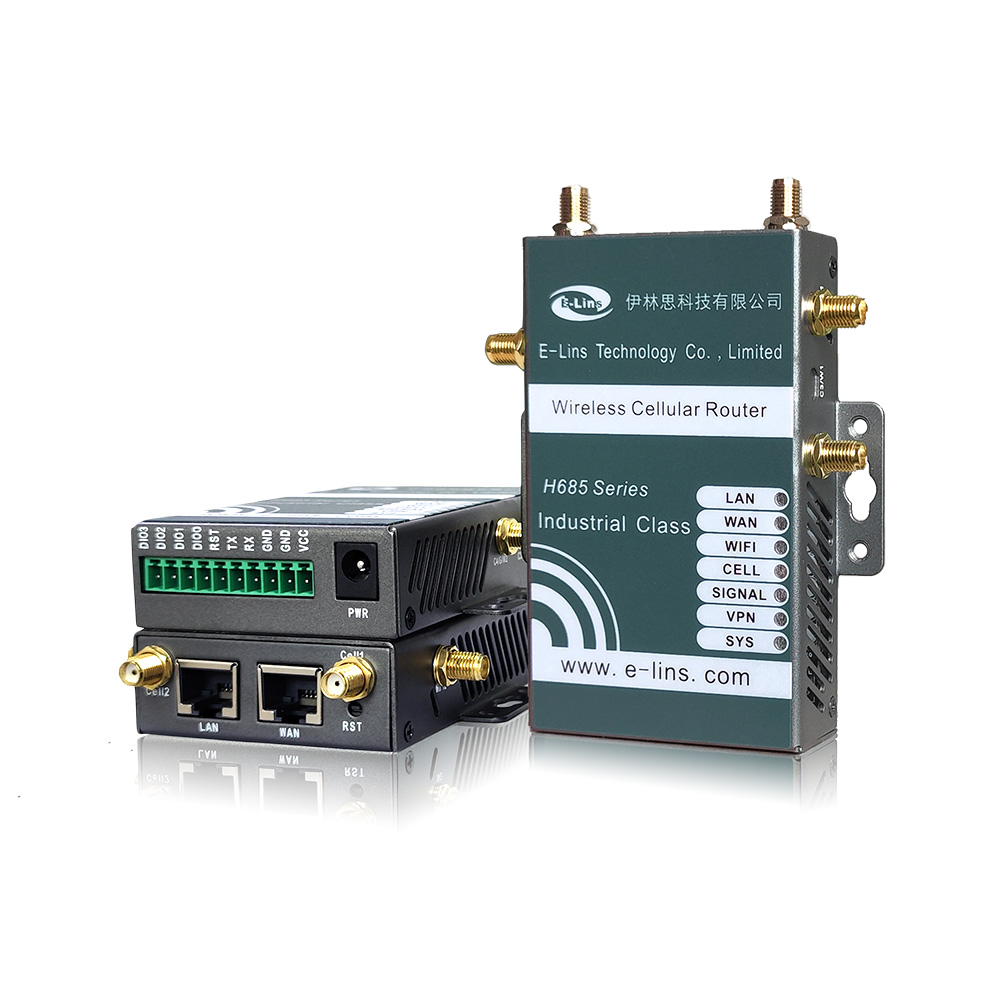
Customisation of brand presentation, labels, packaging and private-label presentation. For the H685t mini embedded 4G router, E-Lins lists OEM colour options alongside the standard metal grey-black.
Level 3: Options and Interface Variants
What it involves
Choosing from optional features that the platform already supports, such as GPS, an RS485 port, wider voltage input, PoE or Wi-Fi, so each unit carries exactly the interfaces the project needs.
When it makes sense
When the standard configuration is close but not exact, or when different site types need slightly different versions of the same router.
What E-Lins offers
E-Lins offers GPS, RS485, and wide-voltage input as modular add-ons, and many of its 4G models have optional features. The H685t, for example, can be ordered with RS232 or RS485, I/O points, PoE, and GPS, and the H820t is available in PoE In and PoE Out variants.
Level 4: Hardware and Enclosure Adaptation
What it involves
Changing the physical product: a different interface layout, connector positions, enclosure form or mounting arrangement, while keeping the core platform.
When it makes sense
When the router must fit a specific cabinet, vehicle or machine, or when interfaces need to be arranged differently from any standard model.
What E-Lins offers
E-Lins lists hardware structure, interface layout and enclosure design within its customisation scope, together with engineering review and production coordination for scaled delivery.
Level 5: Board-Level Design
What it involves
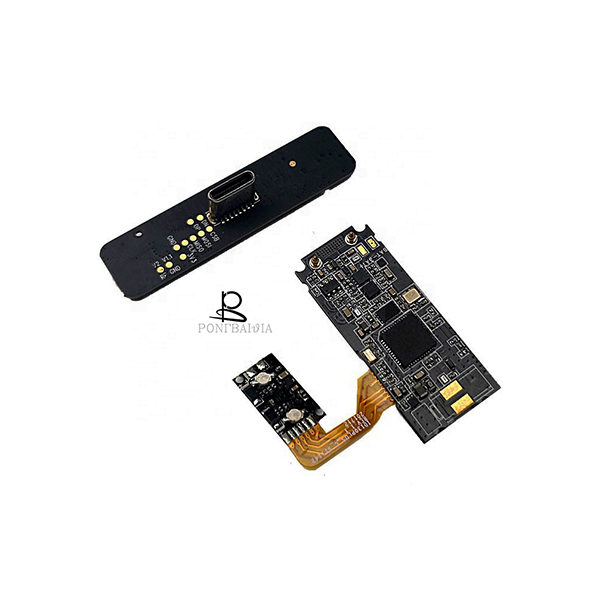
A router board designed or adapted to sit inside your own product, sharing its power supply and enclosure, with an outline and connector set that fit your design.
When it makes sense
For equipment makers building connectivity into chargers, kiosks, lockers, robots, or controllers, especially at volume.
What E-Lins offers
Embedded boards such as the H685-B 4G board, with two Fast Ethernet ports, PoE In, four DI/DO and RS232; the H820-B mainboard, with five Fast Ethernet ports, RS232/RS485 and PoE In and Out; the H820QO-B outdoor 4G board; and the H720-B, with dual 4G, dual SIM, five Fast Ethernet ports and two serial ports, shown by E-Lins in vehicle applications. The H685c customised core motherboard is an example of board-level ODM work. E-Lins describes its embedded boards as intended to shorten development cycles while keeping hardware integration flexible.
How to Choose the Right Level
|
Level |
Typical trigger |
What you provide |
|
1. Configuration |
Any multi-site project |
Your configuration template and settings |
|
2. Branding |
Selling under your own name |
Logo, label content, packaging, and document requirements |
|
3. Options |
Standard model nearly fits |
Required interfaces per site type |
|
4. Hardware adaptation |
Physical fit or layout problem |
Mechanical drawings, connector and mounting requirements |
|
5. Board-level design |
Connectivity built into your product |
Full requirement specification, outline, power and interface details |
A useful rule is to start at the lowest level that solves the problem. Each level up adds engineering, validation, and lead time, and the more a product departs from a standard platform, the more care is needed to keep it consistent over years of supply.
Common Pitfalls
Jumping to Level 5 too early. A board-level design is the right answer for some products, but many requests can be met at Level 3 with optional interfaces, at a fraction of the effort and risk.
Skipping Level 1. Projects that invest in hardware customisation sometimes forget the configuration level, and installers end up configuring hundreds of units by hand.
Changing several levels at once. Combining a new enclosure, new interfaces, and new firmware behaviour in one step makes problems harder to trace. Where possible, stage changes.
Forgetting certification. Branding and options rarely affect certification, but hardware and board-level changes may require new assessment for some markets. Plan time for it.
Not planning for the long term. Every custom variant must be supplied, supported, and updated for years. Agree how it will be maintained before it goes into production.
What Stays Constant at Every Level
Whatever the level, the underlying platform should keep its industrial qualities. E-Lins specifies components rated from -35°C to +75°C, with 15KV ESD protection and 1.5KV electromagnetic isolation, includes hardware watchdog timers and link self-healing, and provides lifetime free firmware upgrades. Its products carry CE, FCC, and UKCA certification and comply with RoHS, which gives custom variants a certified starting point, although significant hardware changes may need their own assessment.
The Custom Manufacturer
Shenzhen E-Lins Technology Co., Ltd. provides OEM and ODM services for industrial cellular routers, wireless gateways, and related IoT hardware, drawing on around 20 years of experience in wireless data communication, including work for global brands. It works with customers from early evaluation through product definition, testing, and production preparation, and produces in its own SMT factory and assembly lines in Shenzhen. When approaching any industrial 4G router custom manufacturer, specify which of the five levels you need. It shortens the conversation and leads to a better result.
https://e-lins.com/
Shenzhen E-Lins Technology Co., Ltd.
About Author