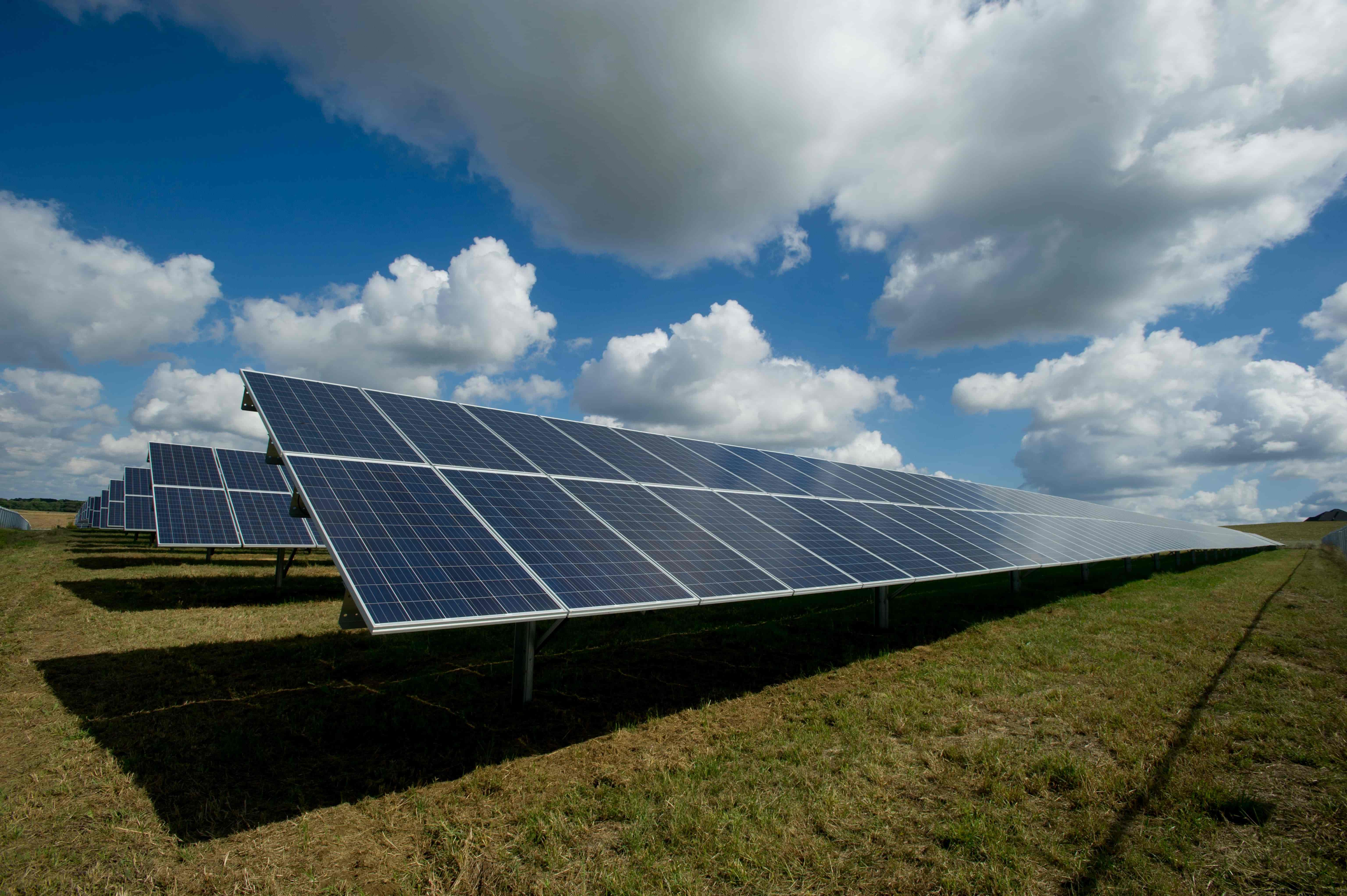
SurgeTrack TCU DC24: A Practical 24V DC Controller for Solar Tracking Systems
admin 14/08/2026 0For utility-scale and commercial photovoltaic installations, tracker performance depends heavily on the controller coordinating the mechanical system. Accurate solar positioning, stable communication, motor control, environmental protection, and convenient maintenance all need to work together to keep tracker rows operating effectively.
The SurgeTrack TCU DC24 is developed for solar tracking applications using a 24V DC power architecture. It combines astronomical positioning calculations with sensor feedback and provides tracking accuracy of less than ±1°. With LoRa Mesh, RS485, Bluetooth, and Sub-1GHz communication capabilities, the controller is designed to support flexible tracker networking and field deployment.
For PV system integrators, tracker manufacturers, and solar project developers, understanding the controller's electrical, communication, environmental, and control characteristics can help when planning a complete tracking solution.
24V DC Architecture for Solar Tracker Control
Power requirements are one of the first specifications to consider when selecting a tracker controller. The SurgeTrack TCU DC24 operates from a 24V DC supply and provides a 24V output, making it suitable for tracker systems designed around low-voltage DC components.
Using a defined DC power interface can simplify integration between the controller and other tracker equipment. It can also make electrical design more consistent across multiple tracker rows when the project already has an appropriate DC power distribution system.
For large PV plants, standardizing the controller power architecture can help engineering teams streamline equipment selection, wiring plans, commissioning, and maintenance procedures.
Combining Astronomical Calculation With Position Feedback
Solar tracking accuracy is not determined simply by how frequently a motor moves. The controller needs to establish the desired solar position and compare it with the actual mechanical angle of the tracker.
The SurgeTrack TCU DC24 uses an astronomical algorithm together with a position sensor. The algorithm calculates the expected position of the sun, while the sensor provides feedback on the actual tracker position.
The specified tracking accuracy is below ±1°, with an operating tracking range of -60° to +60°. Combining calculated positioning with mechanical feedback can help the controller maintain the intended tracker angle under changing daylight conditions.
This is particularly important for large solar arrays, where consistent positioning across numerous tracker units can contribute to more predictable system operation.
Low Controller Energy Consumption
A tracker controller may consume only a small amount of electricity individually, but the cumulative energy use can become relevant when hundreds or thousands of controllers operate throughout the life of a solar project.
The TCU DC24 has a specified daily power consumption of 0.05 kWh/day. Its low consumption can help limit the controller's own contribution to the overall auxiliary energy demand of a PV tracking system.
When comparing tracker controllers, project designers can therefore consider both positioning performance and the controller's operating energy requirements. This provides a more complete evaluation of long-term system efficiency.
Multiple Communication Interfaces for Tracker Networks
Communication is essential when a photovoltaic plant contains large numbers of tracker controllers. The appropriate networking method may vary according to tracker layout, cable availability, installation distance, terrain, and project architecture.
The TCU DC24 supports several communication options, including:
-
LoRa Mesh
-
RS485
-
Bluetooth
-
Sub-1GHz
The controller uses Modbus RTU as its communication protocol and supports a self-forming mesh network. This can simplify communication deployment when multiple tracker units need to exchange information without requiring extensive individual configuration.
RS485 provides a familiar wired communication option for industrial applications. LoRa Mesh can reduce dependence on extensive communication cabling, while Bluetooth can be useful for local setup and commissioning.
Having several interfaces gives system integrators greater flexibility when developing the communication structure of a solar tracking field.
IP67 Protection for Outdoor PV Environments
Solar trackers operate outdoors and may be exposed to rain, dust, humidity, temperature fluctuations, and other environmental conditions. Controller enclosure protection therefore plays an important role in equipment selection.
The SurgeTrack TCU DC24 features IP67 protection and is specified for an operating temperature range of -35°C to 60°C. It can also operate at altitudes below 4,000 meters.
These specifications provide flexibility for PV installations in different climates and geographic locations. However, the complete installation should still follow project-specific environmental, electrical, and safety requirements.
The controller incorporates overcurrent as well as overvoltage and undervoltage protection. Additional environmental protection functions can be configured when suitable sensors are installed. Wind protection, for example, can work with an anemometer, while snow and rain functions can use corresponding environmental sensors.
This allows the tracking system to respond to actual site conditions rather than relying exclusively on normal sunny-weather tracking.
Operating Modes Beyond Automatic Tracking
A solar tracker does not necessarily remain in standard automatic tracking mode throughout its entire operating period. Extreme weather, maintenance, nighttime positioning, and special site conditions may require different control strategies.
The TCU DC24 supports a range of operating modes, including Auto, Fault, Night, Fixed Angle, Heavy Rain, Strong Wind, Heavy Snow, Maintenance, Stop, and Farm modes.
Its Night Return function can move the tracker to a designated position after the daily tracking cycle. Backtracking is also available to help manage row-to-row shading conditions in suitable tracker layouts.
These functions give system designers more control over tracker behavior during different operating scenarios and can support site-specific strategies for weather response and maintenance.
Convenient PC, Mobile, and NCU Debugging
Large PV installations can contain substantial numbers of tracker controllers, making commissioning and troubleshooting efficiency important.
The TCU DC24 supports debugging through PC, mobile devices, and an NCU. This provides technicians with several options for configuration, testing, and maintenance activities.
Remote firmware updating can further reduce unnecessary field visits when software updates or system improvements are required. For large solar farms, reducing manual intervention can help lower maintenance workload and improve operational efficiency.
When combined with the controller's networking capabilities, these functions provide a more flexible approach to tracker field management.
Compatibility With Brushed and Brushless Motors
Motor technology can vary between different solar tracker designs. Depending on the mechanical architecture and equipment manufacturer, a tracking system may use either brushed or brushless motors.
The TCU DC24 supports both motor types and also provides adjustable motor speed. This flexibility allows the controller to be considered for different tracker configurations rather than restricting system designers to one specific motor technology.
For tracker OEMs and system integrators, motor compatibility can be an important factor when selecting a controller for new projects or adapting an existing tracker design.
What to Consider When Selecting a Solar Tracker Controller
A tracker controller should be evaluated as one part of the complete PV tracking system. Several technical factors should be reviewed together:
Power supply: Confirm the required DC input and output voltage.
Tracking accuracy: Evaluate the positioning method, sensor feedback, and specified accuracy.
Communication: Select wired or wireless interfaces according to the plant architecture.
Environmental protection: Check IP rating, temperature range, altitude, and environmental protection functions.
Motor compatibility: Confirm whether the controller supports the motor technology used by the tracker.
Operating modes: Review available weather, maintenance, nighttime, and fixed-angle functions.
Maintenance: Consider local debugging, remote firmware updates, and network management.
Taking these factors into account can help prevent the controller from becoming a limitation within the overall tracking system.
Solar Tracking Control for Different PV Project Conditions
Large photovoltaic plants may be installed in regions with significantly different weather and geographic conditions. A controller designed for a broad range of operating environments can give system integrators more flexibility when adapting tracker configurations to different projects.
Shanghai SolarSurges Technology Co., Ltd. specializes in intelligent solar tracking control technology, integrating power electronics, embedded control, communication systems, and intelligent tracking technologies.
The company reports more than 10 years of industry experience and has deployed TCU solutions in more than 30 photovoltaic plants. Its focus on tracker control allows the controller to be developed around the practical requirements of PV field operation, rather than treating the controller as an independent electronic device.
For project developers and tracker manufacturers, supplier experience in actual PV installations can be an important consideration when evaluating long-term equipment reliability and technical support.
Why the SurgeTrack TCU DC24 Can Be Considered
For a solar tracking project using a 24V DC architecture, the controller needs to balance positioning accuracy, power consumption, networking, environmental resistance, and maintenance convenience.
The SurgeTrack TCU DC24 brings together a 24V DC power system, less than ±1° tracking accuracy, 0.05 kWh/day specified energy consumption, IP67 protection, a -35°C to 60°C operating range, multiple communication interfaces, self-forming networking, and a variety of operating modes.
These features make it a practical option for PV system integrators and tracker equipment manufacturers developing solar tracking systems for commercial and utility-scale applications.
Rather than selecting a controller based on one specification alone, engineers should match the controller with the tracker motor, power architecture, communication network, environmental conditions, tracking strategy, and maintenance requirements of the complete project.
For solar projects requiring a flexible 24V DC tracker control solution, the SurgeTrack TCU DC24 offers a combination of accurate positioning, low operating consumption, communication flexibility, outdoor protection, and intelligent operating functions. Supported by the engineering experience of Shanghai SolarSurges Technology Co., Ltd, it can be considered as part of a complete solar tracking control system designed for reliable long-term photovoltaic operation.
www.solarsurges.com
Shanghai SolarSurges Technology Co., Ltd