Temporary Crown: Digital Manufacturing Workflow and Material Selection for Reliable Clinical Fit
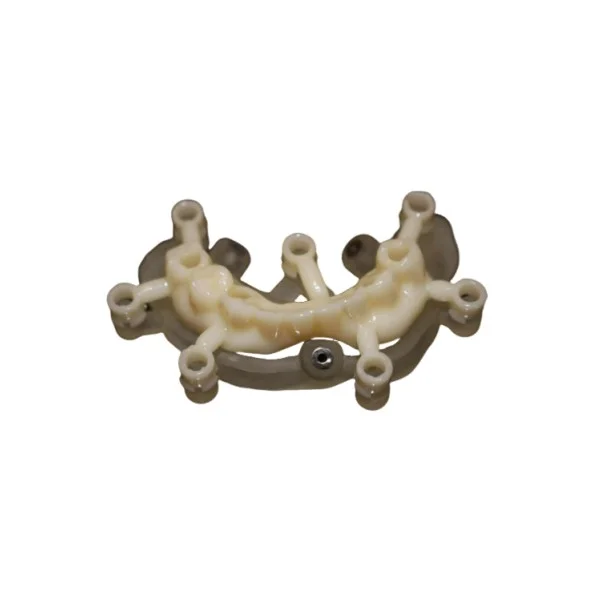
In modern restorative dentistry, speed, precision, and patient comfort define the success of temporary restorations. Among them, the temporary crown plays a critical role not only as a short-term functional restoration but also as a biologically and mechanically stable interface between tooth preparation and final prosthetic delivery.
With the rapid adoption of CAD/CAM systems, intraoral scanning, and digital milling technologies, the production of temporary crown restorations has shifted from manual chairside fabrication to highly controlled laboratory manufacturing workflows. This transition has significantly improved marginal accuracy, material consistency, and production scalability for dental laboratories serving global clinical networks.
This article provides a technical breakdown of temporary crown production from a digital laboratory perspective, focusing on material behavior, CAD/CAM precision, mechanical requirements, and workflow optimization for consistent clinical outcomes.
Why Temporary Crown Quality Directly Impacts Final Restoration Success
A temporary crown is not merely a placeholder. It directly influences:
-
Gingival tissue healing and contouring
-
Occlusal stability during treatment phases
-
Patient comfort and phonetics
-
Protection of prepared tooth structure
-
Accuracy of final impression or scan transfer
Poorly designed temporaries can lead to gingival inflammation, occlusal instability, or marginal leakage, which ultimately affects the fit of the final prosthesis.
Therefore, precision in manufacturing is essential, especially in multi-unit restorations and implant-supported cases such as All-on-4 workflows.
Digital Workflow in Temporary Crown Production
Modern dental laboratories rely on a fully digital pipeline to ensure repeatable accuracy.
The temporary crown production workflow typically includes:
Intraoral scanning or impression digitization.
CAD design of crown morphology.
Occlusion and contact point simulation.
Milling or 3D printing fabrication.
Finishing and polishing.
Clinical delivery or batch dispatch.
Each stage contributes to the final marginal fit accuracy, typically controlled within a range of 50–100 microns in high-quality systems.
CAD Design Precision and Anatomical Accuracy
CAD software plays a critical role in defining the functional geometry of a temporary crown.
Key design parameters include:
-
Marginal gap tolerance: typically 50–80 μm
-
Axial wall thickness: 0.8–1.2 mm depending on material
-
Occlusal clearance: 1.0–1.5 mm for functional adjustment
-
Contact point strength: light to medium proximal contact
-
Emergence profile control for gingival shaping
Advanced CAD systems also simulate mandibular movement to prevent premature occlusal interference during functional chewing cycles.
Digital articulation ensures that the temporary crown does not disrupt bite alignment during the healing phase.
Material Selection: Strength vs. Aesthetics Balance
Temporary restorations must balance mechanical durability with esthetic appearance.
Common materials used for temporary crown manufacturing include:
PMMA (Polymethyl Methacrylate)
-
Flexural strength: 80–120 MPa
-
Excellent polishability
-
Stable color retention
-
Widely used for long-term temporaries
CAD/CAM PMMA Discs
-
Homogeneous structure
-
No internal porosity
-
High fracture resistance
-
Suitable for multi-unit bridges
Composite Resin Blocks
-
Improved wear resistance
-
Better esthetic translucency
-
Reduced microcrack formation
Compared with manually mixed materials, CAD/CAM milled PMMA significantly reduces internal stress concentration and improves marginal integrity.
Mechanical Performance Requirements
A clinically reliable temporary crown must withstand real oral conditions, including:
-
Mastication forces: 150–250 N in anterior region, up to 500 N posterior
-
Thermal cycling: 5°C–55°C in daily consumption
-
Saliva exposure and enzymatic activity
-
pH fluctuations from dietary intake
To ensure durability, laboratory-manufactured temporaries typically require:
-
Flexural strength above 80 MPa
-
Water absorption below 25 μg/mm³
-
Stable dimensional retention over 2–6 weeks
-
High fracture resistance at thin margins
These parameters directly influence clinical performance during the provisional phase.
Marginal Fit and Gingival Compatibility
Marginal adaptation is one of the most critical quality indicators of a temporary crown.
Poor marginal sealing may lead to:
-
Microleakage
-
Secondary caries risk
-
Gingival inflammation
-
Cement dissolution
Digital milling technology ensures consistent marginal accuracy by eliminating manual variation.
High-end systems typically achieve:
-
Marginal discrepancy: 50–100 μm
-
Internal fit variation: <120 μm
Smooth margin design also improves gingival healing and facilitates final impression accuracy.
Role in Implant and Full-Arch Restorations
In implant dentistry, especially All-on-4 and full-arch rehabilitation cases, temporary crown restorations serve as a functional prototype of the final prosthesis.
They are used to:
-
Test occlusal load distribution
-
Evaluate esthetic parameters
-
Guide soft tissue adaptation
-
Validate speech and chewing function
Any misalignment in temporary phase may propagate into final restoration errors, making precision manufacturing essential.
CAD/CAM vs Traditional Chairside Temporaries
The shift from manual fabrication to CAD/CAM production has significantly improved consistency.
Traditional Chairside Method
-
High operator dependency
-
Variable material mixing quality
-
Limited structural strength
-
Higher risk of porosity
CAD/CAM Manufacturing
-
Digitally controlled geometry
-
Homogeneous material structure
-
Repeatable accuracy
-
Better long-term durability
For high-volume dental laboratories, CAD/CAM temporary crown production also improves throughput and reduces chairside adjustment time.
Surface Finishing and Polishing Quality
Surface smoothness is essential for both aesthetics and hygiene.
A properly finished temporary crown should achieve:
-
Surface roughness Ra < 0.2 μm a
www.jiahongdentallab.com
Shenzhen Jiahong Dental Technology Co., Ltd.About Author