Roller Plunger Limit Switch Guide for Packaging Machines
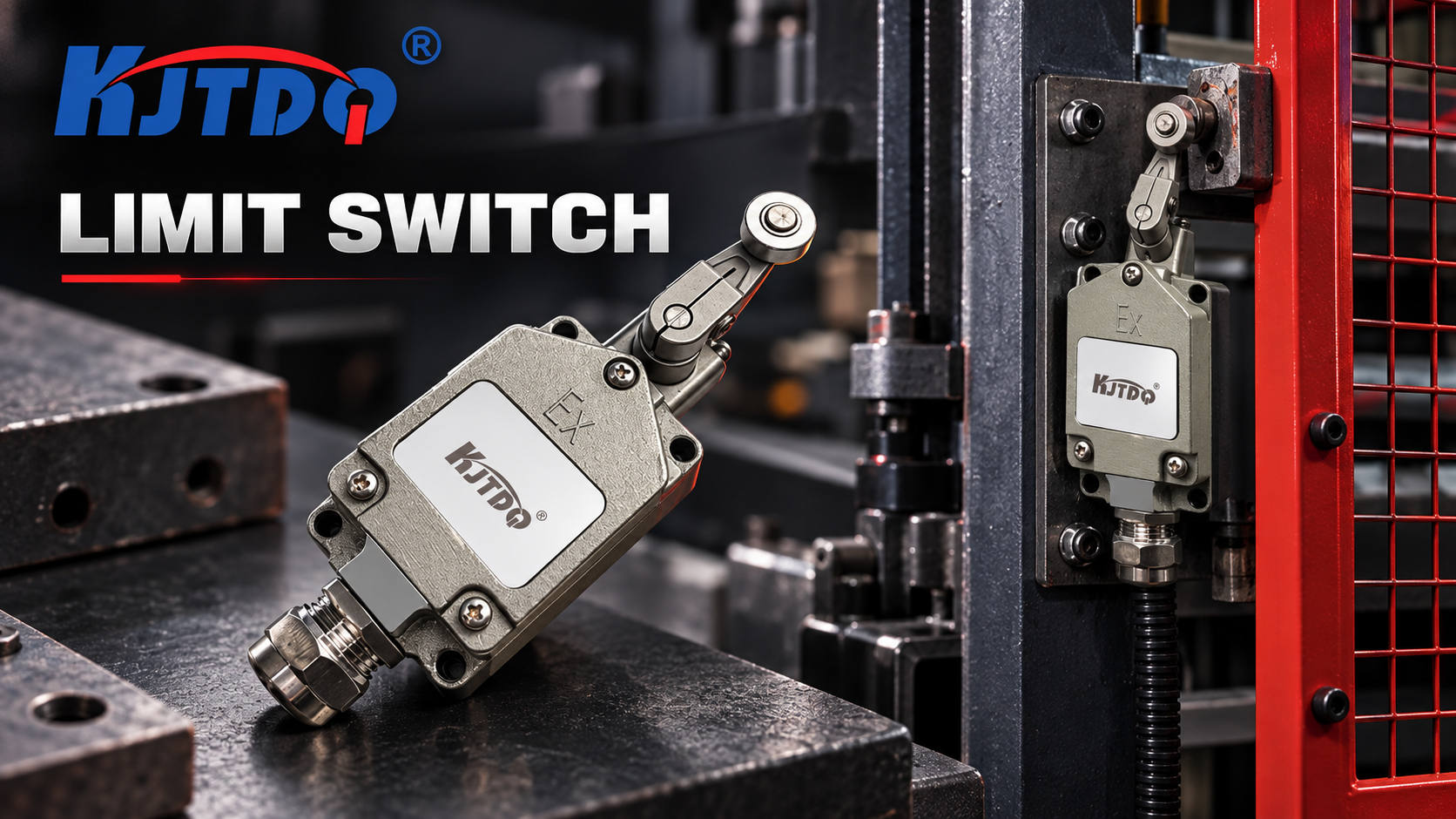
Packaging lines rely on dependable position detection to keep conveyors, sealing heads, and cartoning stations moving in sync. When engineers search for a roller plunger limit switch for packaging machines, they are typically looking for a component that can withstand repetitive cycling, resist dust and minor fluid exposure, and deliver a clean electrical signal without being disturbed by nearby motors, variable-frequency drives, or electromagnetic noise. KJT Sensors, operating under the KJT Sensors brand, supplies travel and limit switches built around exactly these requirements, and its roller plunger actuator configuration is one of the structures offered within its travel and limit switch product line.
Why Packaging Equipment Needs a Roller Plunger Actuator
A roller plunger is a mechanical actuation style in which a moving machine component makes contact with a small roller mounted on a plunger shaft, which then presses down to open or close an internal contact. This design is well suited to packaging equipment because moving parts such as carriage plates, pusher arms, or indexing tables often move along a linear path and need a smooth, rolling contact rather than a sliding or rigid strike. According to KJT Sensors' product documentation, actuator options for its travel and limit switches include roller levers, adjustable rods, plungers, and roller plungers, allowing the same underlying switch body to be configured for different mechanical interfaces depending on how the packaging machine component approaches the switch.
Core Function in Packaging Line Control
KJT Sensors describes its travel and limit switches as low-current control devices that use mechanical contact to make or break control circuits for automatic stopping, reversing, speed changing, and reciprocating control. In a packaging context, this translates directly into practical functions: stopping a conveyor segment when a product reaches a fill station, reversing a pusher arm after a box has been positioned, or triggering a speed change as a line transitions between indexing and continuous motion. Because the switching action is based on positive mechanical contact rather than an electronic sensing field, the signal is unambiguous — the circuit is either made or broken, with no intermediate or uncertain state.
Resistance to Packaging-Floor Conditions
Packaging environments frequently involve dust from cardboard and film materials, residual moisture from cleaning cycles, and electrical noise from servo drives and pneumatic actuators. KJT Sensors' travel and limit switches are described as offering a straightforward, mechanically triggered design that is independent from electronic chips and therefore unaffected by electromagnetic interference, voltage fluctuation, and signal wave disturbances. The product line also offers IP65 and IP67 protection ratings, along with sealed protective shell modules that resist dust, water, oil, and vibration. For packaging operations that run washdown cycles or operate in humid areas, this sealed construction helps prevent the poor contact and false triggering that can occur when moisture or debris reaches unprotected switch internals.
Electrical Specifications Relevant to Packaging Controls
For packaging machines integrated with standard industrial control panels, the KJT-LXK3 series is designed for control and auxiliary circuits at 50–60 Hz AC up to 380 V or DC up to 220 V, and is positioned for operation, control, signaling, and interlocking tasks. This voltage range aligns with the control circuits commonly found in packaging machinery, where the limit switch output typically feeds into a PLC, relay, contactor, or control cabinet rather than carrying the full motor load directly. KJT Sensors notes that its switches can connect to PLC, relay, control cabinet, contactor, controller, or safety circuit configurations, which supports integration into existing packaging line control architectures without requiring a redesign of the control panel.
Mechanical Reliability and Maintenance Considerations
One of the recurring pain points in industrial position detection, as identified by KJT Sensors, is high maintenance cost tied to unreliable mechanical-position limiting. Packaging lines that run continuous shifts place switches through a high number of actuation cycles, and KJT Sensors addresses this through an automatic reset module that provides rapid reset after external force release, returning the switch to its initial working state for the next cycle. The company also points to a straightforward internal structure and generic spare parts that support fast site replacement, which is relevant for packaging operations where downtime during a changeover or fault directly affects throughput. KJT Sensors states that contact interruption is completed instantly to reduce dragging, corrosion, and poor contact, and that the design is suited to high-frequency rebound and long-term mechanical action.
Selecting the Right Configuration for a Packaging Application
Because packaging machines vary widely in layout, actuator orientation, and mounting space, KJT Sensors confirms model-specific details such as touch point form, shell material, IP rating, and installation size for the particular application. The company's delivery model is quotation-based: standard roller plunger and other travel/limit switch models are quoted by model and quantity, while customized or project-specific configurations — for example, a nonstandard mounting bracket or a specific contact arrangement for a packaging line retrofit — require technical confirmation before a quotation is issued. This approach allows packaging equipment builders and integrators to specify the exact combination of actuator structure, contact form, voltage rating, and protection class needed for their line, rather than adapting their design around a fixed, generic switch.
Industry Fit
KJT Sensors lists automated production lines, conveyor systems, and related mechanical equipment among the industries its travel and limit switches serve, alongside storage logistics and lifting and mobile machinery. Packaging automation shares the same underlying requirements as these sectors: repeatable position detection, resistance to interference from nearby electrical equipment, and a physical switch design tough enough to survive constant mechanical cycling. For engineers and maintenance teams evaluating a roller plunger limit switch for packaging machines, KJT Sensors' combination of mechanical actuation reliability, sealed protective housings, IP65/IP67 rated options, and compatibility with standard control-panel voltages offers a documented basis for selection, with further technical confirmation available for packaging-specific customization needs.
https://www.kjt-sensors.com/
KJT Sensors
About Author
