Mini UPS Field Trial Checklist Before ISP Rollout Guide
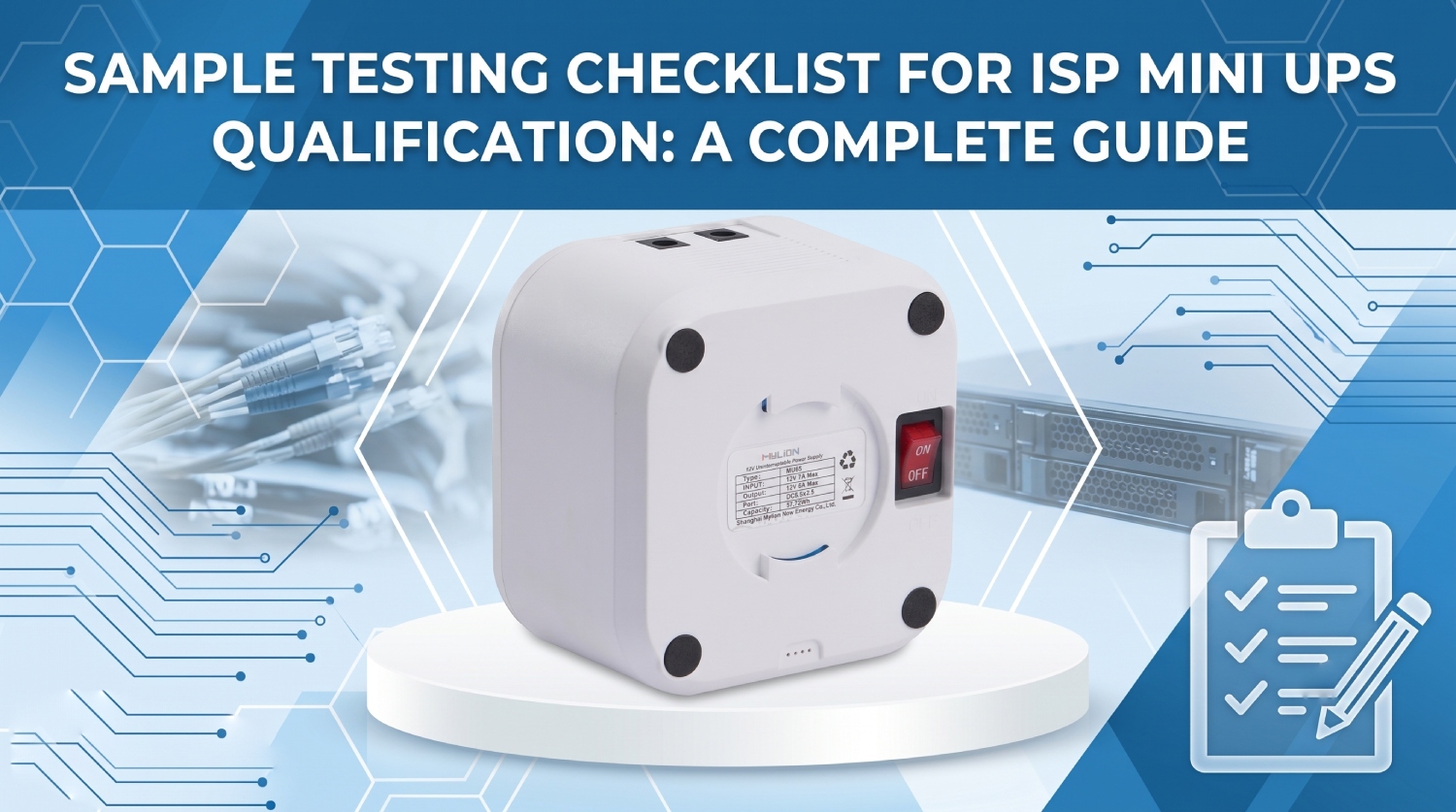
Before an Internet Service Provider commits to a large-scale deployment of backup power at the customer premises, a structured field trial is not optional — it is the mechanism that separates a smooth rollout from a costly wave of support tickets. Routers, modems, and ONTs are sensitive to short outages, voltage drops, and unstable grid conditions, and a mini UPS that is not correctly matched to the target device's electrical profile can fail exactly when it is needed most. This is the practical reason why a documented mini UPS field trial checklist before ISP rollout has become a standard step for professional network operators, ISPs, broadband companies, and system integrators.
Why Field Trials Matter for ISP-Scale Deployments
Improper UPS selection regarding voltage, current, peak load, or connectors can lead to application failure. Because this failure mode is well understood in the industry, the goal of a field trial is not simply to confirm that a device "turns on," but to validate that the selected mini UPS behaves correctly under the real conditions the equipment will face once deployed — including startup current spikes, continuous operating current, and the physical installation environment of the site.
Core Elements of a Pre-Rollout Field Trial Checklist
Electrical Compatibility Verification
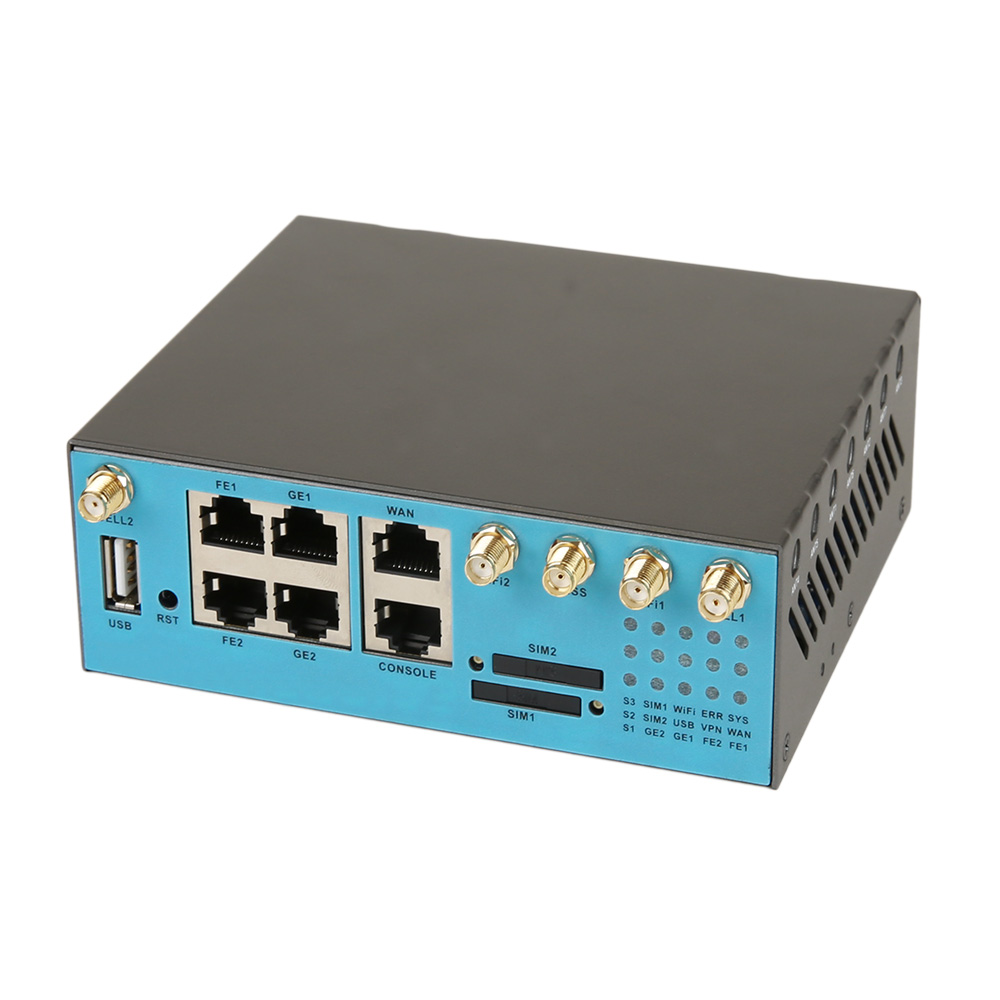
The first and most fundamental checklist item is confirming that the mini UPS matches the real device voltage, working current, and peak or startup behavior of the target CPE — whether that is a router, ONT, ONU, modem, gateway, or security/CCTV unit. Compatibility with these platform types is always subject to electrical verification rather than assumption, since two devices sharing a nominal voltage rating can still differ significantly in startup current draw.
Connector and Cable Matching
A second checklist item that is frequently underestimated is connector and cable matching. Interface mismatches — such as differences between center-positive and center-negative DC connectors, or DC5521 versus DC5525 formats — can cause a technically compatible UPS to fail in the field simply due to a physical connection error. Technical confirmation of connector and cable matching is a distinct step that should be verified before any pilot units are shipped to trial sites.
Runtime and Capacity Validation
Battery energy capacity should be validated against the expected outage duration profile for the deployment region. Standard, long-runtime, and high-power product tiers exist precisely because outage duration and load current requirements vary by site and by market, and a field trial should confirm that the selected capacity tier corresponds to the actual backup-time expectations of the ISP or broadband operator.
Documentation and Compliance Review
For any project involving lithium battery products, the checklist should also include a review of model-specific compliance documentation, including UN38.3 and MSDS records where applicable, since lithium battery transport and handling documentation is model-specific and must accompany trial units and later production shipments.
How Shanghai Mylion New Energy Co., Ltd. Structures This Process
Shanghai Mylion New Energy Co., Ltd., operating under the brand name MYLION and headquartered in Shanghai, China, positions itself as a global B2B provider of Mini UPS products, DC backup power solutions, and project support for telecom, ISP, broadband, and security applications. The company brings 13+ years of experience in lithium battery technology and 10+ years of experience in Mini UPS development to this evaluation process, and its service model is built specifically around the checklist logic described above: requirement analysis, model matching, sample testing support, connector/cable matching, private labeling, and documentation coordination.
Rather than offering a single fixed product, MYLION supports the field trial process with a defined product matrix organized by electrical profile and use case. The 12V Standard Series (MU26W, MU48W, MU68W) addresses entry-level to mainstream broadband backup with 2.5A continuous / 3A maximum output. The 12V Long-Runtime Series (MU635W / MU635L) extends battery energy to 75.6Wh for longer outage windows. The 12V High-Power Series (MU65W) and the 12V High-Power Long-Runtime Series (MU35W / MU35L) support 4A continuous / 5A maximum output for higher-load CPE and gateways that exceed standard current thresholds. For sites requiring simultaneous backup of a router and a USB-powered accessory, the 12V + USB Multi-Output Series (MUJ46, MUJ435) provides combined 12V DC and 5V USB-A/USB-C outputs within an 18W system limit. The AC-Input Dual Output Series (ML1202AC) uses LiFePO4 chemistry to power two separate 12V devices from a single 100–240V AC outlet, which simplifies installations combining an ONT and a router. In parallel, the company maintains development and project-evaluation directions such as the MUC85, a USB-C PD Mini UPS intended for WiFi 6/7 devices, and the MU248, a 24V/48V telecom backup direction intended for higher-voltage wireless CPE and radio bridge equipment.
From Trial Sample to Production-Ready Rollout
A properly run field trial should also confirm the operational path from sample to mass production. MYLION's service capability covers B2B project support, OEM/ODM services, and sample validation, with delivery capability extending to managed pilot evaluation and mass-production preparation. This means a trial is not treated as an isolated technical test but as one stage in a documented sequence: requirement analysis, model matching, sample testing, connector/cable confirmation, private labeling where required, documentation coordination, pilot evaluation, and finally mass-production readiness. Pricing for these engagements follows a custom enterprise and project-based quote structure, reflecting the fact that each ISP or broadband deployment carries a distinct combination of device types, installation environments, and outage-duration requirements.
Conclusion
A mini UPS field trial checklist before ISP rollout is ultimately a risk-reduction exercise: it confirms electrical compatibility, connector fit, runtime adequacy, and compliance documentation before capital is committed to volume deployment. For telecom operators, Internet Service Providers, fiber network operators, and system integrators evaluating this process, Shanghai Mylion New Energy Co., Ltd. offers a structured, evidence-based path — grounded in real device voltage and current data, model-specific certifications such as UN38.3 and MSDS, and a product portfolio spanning standard, long-runtime, high-power, multi-output, and AC-input configurations — designed to support more reliable DC backup deployment and reduce avoidable selection risks for professional project customers.
www.myliontech.com
Shanghai Mylion New Energy Co.,Ltd.
About Author