Medical Industry Hose Strapping and Binding Machine: Improving Cleanroom Assembly Efficiency and Process Consistency
admin 31/07/2026 0Medical device manufacturing demands more than fast production. Every assembly process must deliver repeatable quality, traceable results, and minimal risk of component damage. Whether producing infusion systems, dialysis equipment, respiratory devices, blood analyzers, or pharmaceutical processing equipment, securing flexible hoses correctly is a small operation that directly affects product reliability.
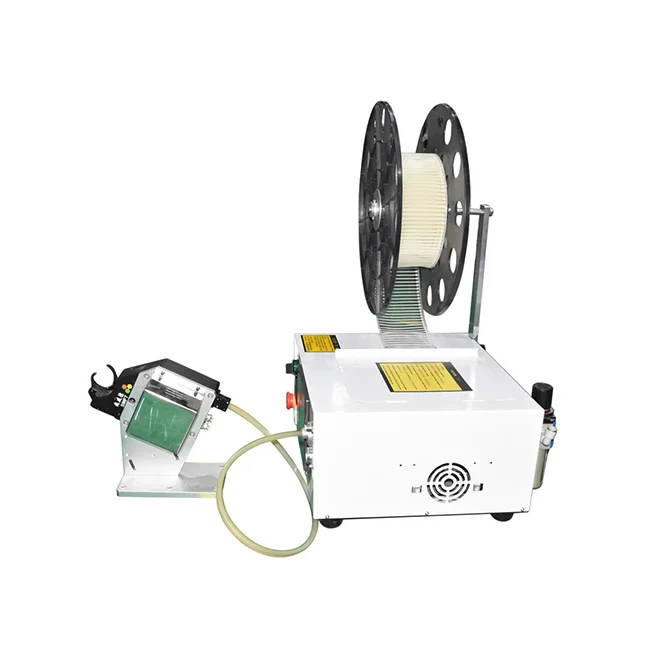
A Medical industry hose strapping and binding machine addresses these challenges by replacing inconsistent manual cable tie installation with an automated process that delivers controlled tension, precise cutting, and stable cycle times. For manufacturers expanding production capacity or introducing higher automation levels, selecting the right binding solution can significantly improve productivity while reducing quality variation.
This article explains the technical requirements behind medical hose bundling, the critical machine specifications that matter, and how automated hose strapping creates measurable manufacturing advantages.
Why Hose Binding Is a Critical Step in Medical Manufacturing
Medical equipment contains numerous flexible tubes that transport liquids, gases, chemicals, or air. These hoses often run alongside electrical harnesses, sensors, pneumatic lines, and monitoring cables within compact assemblies.
Improper hose fastening can create several manufacturing risks:
-
Tube deformation caused by excessive tie tension
-
Hose movement during transportation
-
Incorrect routing inside equipment
-
Inconsistent appearance between production batches
-
Increased operator fatigue from repetitive manual work
-
Reduced production throughput
Unlike general industrial products, medical equipment frequently requires tighter assembly tolerances because internal components operate in limited spaces and often undergo vibration, transportation shock, sterilization, or repeated maintenance.
As production volumes increase, maintaining identical hose fastening quality across thousands of assemblies becomes increasingly difficult using manual methods alone.
A Medical industry hose strapping and binding machine standardizes this operation.
What Makes a Medical Industry Hose Strapping and Binding Machine Different?
Medical manufacturing environments require equipment that goes beyond simple cable tie installation.
A machine designed for medical applications typically focuses on several engineering objectives simultaneously.
First, cable tie tension must remain precisely controlled. Medical-grade silicone tubes, PVC tubing, TPE hoses, and multilayer flexible pipes can all deform if excessive force is applied.
Instead of relying on operator experience, automated equipment applies programmable tightening force, allowing consistent compression without damaging hose walls.
Second, automatic tail cutting eliminates sharp cable tie edges.
Poor cutting quality may leave burrs that interfere with neighboring hoses or create safety concerns during assembly or maintenance. High-quality machines generate flush, smooth cuts that improve both product appearance and operator safety.
Third, repeatability becomes essential.
If one production shift installs cable ties differently from another shift, downstream inspection becomes more complicated. Automated systems deliver identical tightening sequences across every production cycle.
Technical Features That Directly Affect Manufacturing Performance
When evaluating a Medical industry hose strapping and binding machine, decision-makers should focus on measurable technical specifications instead of marketing language.
Controlled Cable Tie Tension
One of the most important parameters is adjustable binding force.
Different medical products require different compression levels.
For example:
-
Soft silicone tubes require relatively low tightening force.
-
Reinforced PVC hoses tolerate higher compression.
-
Multi-layer pharmaceutical tubing requires stable pressure without deformation.
-
Bundled electrical cables and hoses often need separate tension settings.
Servo-controlled or electronically adjustable tension systems allow manufacturers to optimize fastening based on actual hose material instead of applying a fixed force across every product.
This reduces both product damage and quality variation.
Fast Production Cycle
Production efficiency depends on complete cycle time rather than individual motion speed.
Modern automatic binding equipment can complete a full binding cycle—including cable tie feeding, positioning, tightening, cutting, and resetting—in approximately 0.8–1.5 seconds per tie, depending on product geometry and tie length.
When repeated across hundreds or thousands of assemblies each shift, these savings significantly increase line throughput.
For high-volume disposable medical products, cycle time often becomes one of the primary factors affecting production cost.
Stable Cable Tie Feeding System
Cable tie feeding reliability directly impacts machine uptime.
Poor feeding mechanisms can create:
-
Missed ties
-
Feeding jams
-
Double feeding
-
Incorrect insertion
-
Production interruptions
Industrial-grade feeding mechanisms reduce these issues through precise guide channels, controlled feeding motors, and intelligent detection sensors.
Higher feeding reliability means fewer unexpected production stops.
Consistent Tail Cutting Quality
Manual cable tie guns often leave varying tail lengths depending on operator technique.
Automatic binding systems use precision cutting mechanisms that produce nearly identical cut positions every cycle.
Benefits include:
-
Cleaner product appearance
-
Improved installation safety
-
Reduced interference with nearby components
-
Better compliance with appearance standards
Although this may seem like a cosmetic improvement, consistent cutting reduces rework during final inspection.
Compatibility with Various Hose Sizes
Medical equipment manufacturers rarely produce a single product.
Production lines frequently switch between multiple hose diameters and assembly configurations.
An ideal Medical industry hose strapping and binding machine supports:
-
Multiple cable tie widths
-
Different tie lengths
-
Various hose diameters
-
Flexible binding positions
-
Rapid parameter switching
Recipe-based programming enables quick product changeovers without lengthy machine adjustments.
Applications Across Medical Manufacturing
Medical hose binding equipment supports a wide range of production scenarios.
Respiratory equipment requires secure routing of breathing tubes, pressure sensing hoses, and electrical wiring while avoiding excessive compression of soft tubing.
Dialysis systems contain numerous fluid pathways that must remain organized inside compact cabinets, making consistent cable tie positioning essential.
Infusion pump manufacturing often involves bundling tubing with sensor cables in confined internal spaces where routing accuracy directly affects assembly efficiency.
Diagnostic analyzers integrate pneumatic tubing, reagent delivery lines, and electrical harnesses that require clean organization for maintenance accessibility.
Pharmaceutical equipment also relies on hose management throughout fluid transfer systems, sampling modules, and dosing equipment.
Across all these applications, consistent hose fastening contributes to reliable product assembly and simplified quality inspection.
Automation Improves Process Traceability
Medical manufacturing increasingly emphasizes digital production management.
Many automated binding systems can communicate with factory control platforms through industrial communication protocols.
Typical integration capabilities include:
-
Cycle counting
-
Production statistics
-
Alarm recording
-
About Author