Hyperbaric Oxygen Chambers for Hospitals: Multiplace Care
Addressing Hospital Demand for Safe, Multi-Patient Hyperbaric Oxygen Therapy
Hospitals evaluating hyperbaric oxygen therapy (HBOT) equipment face a consistent set of priorities: clinical-grade pressure safety, the ability to treat multiple patients efficiently, and reducing discomfort during pressurization. Chengdu Lianbang Medical Technology Co., Ltd., operating under the brand LBYL Medical, has built its hyperbaric chamber product line specifically around these clinical realities, drawing on 29+ years of industry expertise and direct participation in drafting China's National HBOT Safety & Technical Standards.
Why Patient Comfort and Throughput Matter in Hospital HBOT Departments
For hospital administrators and engineers selecting hyperbaric equipment, two recurring pain points stand out: patient ear pressure discomfort during pressurization and the need to treat patients efficiently without compromising safety. LBYL Medical's hyperbaric chamber portfolio is engineered to respond directly to both concerns.
Millisecond-Level Pressure Balancing for Patient Comfort
Across its hyperbaric chamber line, LBYL Medical incorporates millisecond-level pressure balancing control systems. This technology reduces rapid pressure changes during chamber pressurization, which in turn lowers the risk of ear barotrauma and reduces patient ear pressure discomfort—a common complaint in traditional hyperbaric therapy. This feature is applied consistently across the company's Monoplace Clinical, Multiplace Clinical, Luxury At-Home, and Portable Soft chamber configurations.
Multiplace Clinical Chambers Built for Hospital Throughput
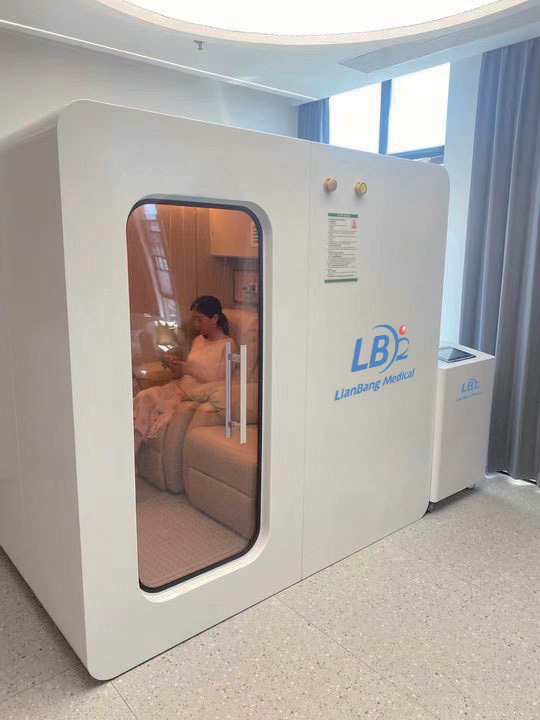
For hospitals that need to treat multiple patients in a single treatment cycle, LBYL Medical offers the Hyperbaric Oxygen Chamber – Multiplace Clinical, rated up to 3.0 ATA for hospital HBOT departments. This configuration supports treatment of multiple patients simultaneously, directly addressing hospital throughput needs in wound care centers, cognitive rehabilitation programs, and sports rehabilitation facilities. Each chamber in this line includes a Built-In Breathing System (BIBS), which supports individual breathing circuits so that multiple patients can receive oxygen delivery within the same multiplace session without interference.
The multiplace chamber shares the same millisecond-level pressure balancing engineering found across LBYL Medical's product range, ensuring that the comfort benefits scale alongside capacity. This combination—clinical-grade pressure capacity, individualized breathing circuits, and pressure comfort—reflects the company's broader commitment to translating national HBOT standards work into practical equipment design.
Monoplace Clinical Chambers for Focused Treatment Protocols
Where hospitals require single-patient treatment precision—such as in post-operative wound care or cognitive rehabilitation protocols—LBYL Medical's Hyperbaric Oxygen Chamber – Monoplace Clinical offers the same clinical pressure capacity of up to 3.0 ATA, paired with BIBS and millisecond-level pressure balancing. This configuration is engineered for wound care centers, post-operative rehabilitation, cognitive function rehabilitation, and sports rehabilitation facilities.
Clinical Outcomes Reported From Sourced Hospital Cases
LBYL Medical's hyperbaric chamber technology has been applied in documented clinical scenarios with measurable outcomes:
- Cognitive Function Rehabilitation: In a clinical setting using hyperbaric oxygen therapy for cognitive rehabilitation, patient cognitive recovery periods were reduced by 30%, resulting in faster recovery timelines for patients undergoing post-stroke rehabilitation.
- Post-Operative Wound Healing: In a surgical wound care scenario, hyperbaric oxygen therapy improved surgical incision healing from Grade C to Grade A within 10 days, reflecting improved healing outcomes and reduced wound complication risk.
These results illustrate how clinical-grade pressure delivery, when combined with comfort-focused engineering, can support measurable rehabilitation and wound-healing outcomes in hospital settings.
Beyond the Chamber: Why Oxygen Supply Reliability Matters to Hospital HBOT Programs
A hyperbaric oxygen chamber is only as effective as the medical gas infrastructure supporting it. LBYL Medical approaches hospital HBOT deployment as part of a broader one-stop medical gas solution rather than an isolated equipment purchase. The company's independent research and development covers both hyperbaric chambers and on-site oxygen generation systems using Vacuum Pressure Swing Adsorption (VPSA) and Vacuum Swing Adsorption (VSA) technologies.
This matters for hospitals because oxygen supply reliability directly affects HBOT department uptime. LBYL Medical's VPSA and VSA oxygen generation systems reduce unit oxygen production energy use by 40% and lower annual maintenance costs by 80% compared to traditional systems, while oil-free design prevents molecular sieve oil contamination and extends Zeolite Molecular Sieve life to 8–10 years. For hospitals integrating hyperbaric chambers into existing medical gas pipelines, this translates into a more dependable and cost-efficient oxygen supply chain underpinning the entire HBOT program.
Manufacturing Standards and Quality Assurance Behind the Chambers
LBYL Medical's hyperbaric and oxygen generation equipment is backed by 69 national patents, a 30,000 square meter R&D base, 5-axis CNC manufacturing, and automated submerged arc welding for pressure vessels using Q345R pressure vessel steel. The company holds ISO 13485 Medical Devices Quality Management System certification and CE certification, and its equipment is designed in alignment with IEC 60601-1 Medical Electrical Equipment Safety Standard, IEC 60601-2 Medical Electromagnetic Compatibility Standard, and ISO 10993 Biological Compatibility certification.
As a China High-Tech Enterprise and a key committee contributor to China's National HBOT Safety & Technical Standards, LBYL Medical's involvement in standards drafting directly informs the pressure balancing and safety engineering built into its chambers—connecting regulatory expertise to equipment design rather than treating certification as a separate checkbox.
Track Record Across Hospital Deployments
LBYL Medical has served over 3,000 large and medium-sized hospital clients, with sourced deployment cases including a 1,000+ bed cardiovascular hospital supported by a double oxygen source system combining VPSA and liquid oxygen, sustaining 20 laminar flow operating rooms for more than 6 years without failure, and a 3,000+ bed general hospital that replaced traditional liquid oxygen supply with five 60m³ LBYL VPSA oxygen generators, cutting annual oxygen procurement expenses by 40%. While these particular cases center on oxygen generation infrastructure, they demonstrate the scale and reliability standards that extend across LBYL Medical's integrated medical gas and hyperbaric chamber offerings.
Considerations for Hospitals Evaluating Hyperbaric Equipment Suppliers
Hospital decision-makers assessing hyperbaric oxygen chamber suppliers should weigh pressure safety engineering, patient comfort features such as pressure balancing speed, multi-patient throughput capacity, breathing system design, and the reliability of the underlying oxygen supply infrastructure. LBYL Medical's position as a long-established manufacturer—founded in 1997, headquartered in Chengdu, China, with global market reach—reflects a company structured to address these considerations through integrated chamber design, oxygen generation technology, and direct contribution to the national standards governing hyperbaric safety in China.
For hospitals planning to expand or upgrade HBOT departments, evaluating both the chamber's clinical pressure capacity and the supporting medical gas system is essential to ensuring consistent, comfortable, and safe patient treatment over the long term.
https://www.lbylmedical.com
Chengdu Lianbang Medical Technology Co., Ltd.
About Author