How Custom CNC Machinery Parts Support Equipment Upgrades and Long Term Maintenance
Industrial machinery rarely remains unchanged throughout its entire service life. Equipment may need new fixtures, replacement shafts, redesigned brackets, upgraded motor mounts, modified housings, or completely new interfaces as production requirements evolve.
For many factories, replacing a complete machine is not always the most practical option.
Instead, manufacturers often extend equipment life through targeted upgrades and replacement components. This is where custom CNC machinery parts become especially valuable.
Precision machining allows machine builders, maintenance teams, and OEMs to reproduce discontinued parts, modify existing designs, improve weak components, and adapt older equipment to new production requirements without rebuilding the entire system.
For general machinery applications, this approach can support longer equipment life and more flexible maintenance planning.
Why Older Machinery Often Needs Custom Replacement Parts
Industrial machines can remain in operation for many years.
During that time, original components may wear out, suppliers may discontinue certain parts, or the equipment manufacturer may no longer support an older model.
This creates a practical sourcing problem.
A standard catalog component may not match the original dimensions, mounting points, shaft size, or housing geometry.
In these situations, custom replacement machinery parts can be produced from technical drawings, original CAD files, samples, or measured components.
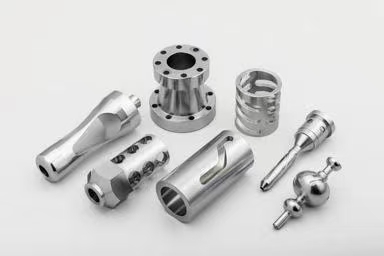
Typical replacement parts include:
-
Shafts
-
Bearing housings
-
Motor brackets
-
Gearbox plates
-
Mounting blocks
-
Couplings
-
Flanges
-
Guide components
-
Machine covers
-
Custom adapters
Precision CNC machining is particularly useful because it can reproduce low-volume components without requiring expensive dedicated production tooling.
For maintenance teams, this can help keep older machines operational even when original spare parts are difficult to obtain.
CNC Machining Makes Equipment Modification More Practical
Replacement is only one reason to produce custom CNC machinery parts.
Equipment often needs modification.
A factory may install a new servo motor that uses a different mounting pattern. A machine may need a larger bearing. A production line may be updated to handle a new product size. An existing bracket may need additional sensor positions.
These changes usually require custom mechanical interfaces.
CNC machining provides a flexible way to manufacture these adaptation components.
For example, a custom motor adapter can connect a new drive unit to an existing machine frame without changing the entire structure.
A new mounting plate can support modern sensors while preserving the original machine geometry.
A redesigned fixture can allow an older production machine to handle a different workpiece.
This type of machinery retrofit CNC machining is often more practical than replacing every surrounding component.
| Upgrade Requirement | Custom Part Solution | Typical Benefit |
|---|---|---|
| New motor installation | Adapter plate | Reuse existing frame |
| Sensor upgrade | Custom bracket | Easier integration |
| Different product size | Modified fixture | Extend machine application |
| New bearing system | Bearing housing | Improve compatibility |
| Control system upgrade | Enclosure or mounting plate | Support new electronics |
The key is maintaining accurate relationships between the new component and the original machine.
Worn Parts Can Be Redesigned Instead of Simply Copied
When a machine component fails repeatedly, producing an exact copy may not always be the best solution.
The original part may contain a weak section, insufficient material, poor access for maintenance, or a geometry that was designed around an older manufacturing process.
Custom machining creates an opportunity to improve the component.
For custom machined machinery components, engineers can adjust:
-
Wall thickness
-
Material grade
-
Bearing support
-
Mounting geometry
-
Fillet radius
-
Fastener position
-
Surface treatment
-
Lubrication access
A replacement shaft, for example, may be produced from a more suitable material if the original experiences repeated wear.
A bracket may be reinforced around a high-stress area.
A housing may be modified to simplify installation or maintenance.
This approach is especially useful when the original machine design no longer fully matches current operating conditions.
However, redesign should be controlled carefully.
Any change must consider how the new component interacts with surrounding parts.
Reverse Engineering Helps Recover Discontinued Components
Not every maintenance project begins with a complete technical drawing.
Older equipment may have incomplete documentation.
In these cases, manufacturers may need to recreate the geometry from an existing component.
This process is commonly associated with reverse engineering machinery parts.
The original part can be measured to identify:
-
Overall dimensions
-
Hole locations
-
Bore diameters
-
Thread specifications
-
Datum surfaces
-
Shaft interfaces
-
Mating geometry
For more complex components, coordinate measuring equipment or 3D scanning may assist with geometry capture.
The recreated model can then be reviewed before CNC machining.
This does not mean every wear mark on the old component should be copied.
A worn bore, damaged edge, or deformed surface may no longer represent the original specification.
Experienced engineers need to distinguish between intended geometry and service wear.
For this reason, reverse engineering is most effective when combined with knowledge of how the part functions in the machine.
Low Volume CNC Production Fits Maintenance Projects
General machinery maintenance does not always require thousands of parts.
A factory may need only two replacement housings, five shafts, or a small batch of brackets.
This makes low volume CNC machinery parts well suited to maintenance and retrofit projects.
CNC machining does not require the same production tooling investment as many high-volume forming processes.
The same machining center can manufacture different parts by changing programs, tools, and fixtures.
This flexibility is useful for:
-
Emergency replacement parts
-
Small retrofit batches
-
Prototype upgrades
-
Legacy equipment support
-
Custom machine modifications
Low-volume production also allows engineers to test an updated design before committing to a larger quantity.
If the modified component works successfully in the machine, additional parts can then be produced using the same controlled drawing.
Material Choice Can Improve Replacement Part Life
A replacement part does not always need to use exactly the same material as the original.
Material selection should consider current operating conditions.
Common options for precision machined machinery components include aluminum alloys, carbon steel, alloy steel, stainless steel, brass, and engineering plastics.
For example, an aluminum bracket may be appropriate where low weight matters.
An alloy steel shaft may be more suitable for high load and wear.
Stainless steel may be selected where corrosion has become a recurring maintenance problem.
Engineering plastics may work for certain guides or low-friction interfaces.
The decision should be based on function rather than simply choosing the strongest material available.
Machining behavior also matters.
Harder materials may require different cutting tools and processes.
Thin aluminum components may need careful fixturing to avoid distortion.
The replacement design should therefore consider both operating performance and manufacturability.
Precision Matters When New Parts Meet Old Machines
One of the biggest challenges in machinery retrofit work is that a newly machined component must fit equipment that may already have years of service.
The original machine itself may have some wear.
This makes interface dimensions particularly important.
For custom CNC replacement parts, engineers often focus on:
-
Bearing fits
-
Shaft diameters
-
Bolt patterns
-
Mounting surfaces
-
Alignment holes
-
Gear interfaces
-
Coupling dimensions
Sometimes the replacement should match the original drawing.
In other situations, engineers may need to measure the existing machine and adjust the replacement component accordingly.
This requires clear technical communication.
A part that is dimensionally perfect according to an old drawing may still be difficult to install if the surrounding equipment has been modified or worn.
For retrofit projects, understanding the real machine condition is therefore just as important as reading the original design.
Surface Treatment Can Solve Recurring Maintenance Problems
Repeated corrosion, wear, or surface damage may indicate that the original component needs more than simple replacement.
Surface treatment can help improve service performance.
Depending on the application, custom CNC machinery parts may receive:
-
Anodizing
-
Hard anodizing
-
Black oxide
-
Plating
-
Passivation
-
Heat treatment
-
Grinding
-
Protective coating
A shaft operating in a wear area may require a harder surface.
An aluminum component exposed to moisture may benefit from anodizing.
A stainless steel component may require passivation after machining.
The correct treatment depends on operating conditions.
Surface finishing should also be considered during dimensional planning because some processes change final surface size or roughness.
Replacement Parts Need Clear Documentation for Future Orders
A successful retrofit should not become another undocumented one-off repair.
Once a custom replacement component has been approved, the drawing and production information should be controlled.
Useful records include:
-
Final drawing
-
Material specification
-
Critical tolerances
-
Surface treatment
-
CNC revision
-
Inspection results
-
Installation notes
This allows the same OEM machinery replacement parts to be reproduced later.
For factories operating several similar machines, this documentation can be especially valuable.
A component developed for one machine may eventually be used to support several units.
Consistent documentation reduces the need to repeat measurements and engineering work every time another replacement is required.
Custom Parts Can Support Equipment Modernization
Machine upgrades are not limited to repairing failed components.
Many factories modernize older equipment by adding automation, sensors, guarding, digital controls, or improved drive systems.
These upgrades often need custom mechanical support.
Examples include:
-
Camera mounting brackets
-
Sensor holders
-
Servo motor plates
-
Control cabinet adapters
-
Linear rail supports
-
Robot interface plates
-
Safety guard mounts
Custom precision machinery parts act as the mechanical connection between older equipment and new technology.
This is particularly useful when the original machine frame remains structurally sound but the control or motion system is outdated.
Instead of replacing the complete machine, manufacturers can selectively upgrade the systems that provide the greatest benefit.
Choosing a Supplier for Retrofit and Replacement Work
A supplier for retrofit projects needs different capabilities from a factory focused only on repetitive mass production.
Buyers should look for experience with:
-
Small batch machining
-
Drawing review
-
Reverse engineering
-
Multiple materials
-
Tight tolerance machining
-
Custom fixtures
-
Engineering modifications
-
Inspection
A capable custom machinery parts manufacturer should also be comfortable working with incomplete project information.
For example, the buyer may provide an old sample and several critical dimensions instead of a complete modern CAD package.
The supplier should be able to identify which information is still needed before production.
Communication is especially important in these projects because the final component often needs to interact with existing machinery rather than a newly manufactured assembly.
Conclusion
Replacing an entire machine is not always necessary when a worn, outdated, or incompatible component becomes a problem.
Custom CNC machinery parts can support equipment repair, modernization, retrofit projects, and long-term spare part supply.
Their value goes beyond simply reproducing an old component.
CNC machining gives engineers the flexibility to adapt interfaces, improve weak designs, change materials, and integrate newer equipment with existing machinery.
For factories managing long-life industrial assets, this approach can provide a practical way to extend machine service life while keeping maintenance and upgrades manageable.
Whether the project involves a replacement shaft, modified housing, new motor adapter, or custom mounting plate, accurate machining and clear technical documentation are essential for reliable results.
www.sieguss.com
SIEG-HUAO
About Author