Common Scroll Air Compressor Problems and How to Fix Them
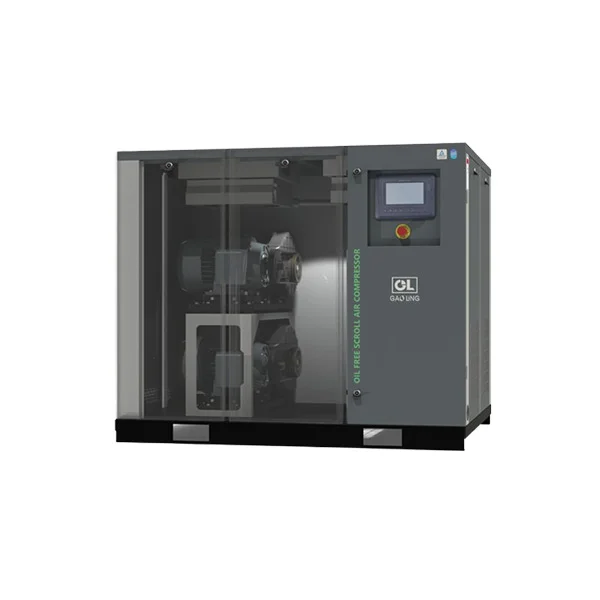
A scroll air compressor is widely used in applications that require stable compressed air, compact equipment, low noise, and efficient operation. Compared with many conventional compressor technologies, scroll compressors have a relatively simple compression mechanism with fewer moving parts. However, like any mechanical system, a scroll air compressor can still develop problems caused by improper sizing, poor installation, inadequate maintenance, demanding operating conditions, or normal component wear.
Common symptoms include low air pressure, insufficient airflow, overheating, unusual noise, excessive vibration, frequent starting and stopping, high energy consumption, and unexpected shutdowns. Some problems can be related to filters or ventilation rather than the compressor itself, while others may indicate issues with the compression element, motor, control system, or air network.
Understanding these symptoms is important for maintenance teams and equipment buyers. Early diagnosis can prevent minor issues from becoming expensive repairs and can help maintain the expected performance of an industrial scroll air compressor.
This guide explains the most common scroll air compressor problems, their possible causes, and practical ways to troubleshoot them.
1. Scroll Air Compressor Is Not Starting
One of the first problems users may encounter is a compressor that does not start when compressed air is required.
There can be several possible causes. The power supply may be interrupted, a circuit breaker may have tripped, or an electrical protection device may have detected an abnormal condition. In some systems, the compressor may also refuse to start because a control signal, pressure setting, or safety condition has not been satisfied.
Before investigating internal components, check the basic operating conditions.
What to Check
Start with:
-
Main power supply
-
Circuit breakers and fuses
-
Emergency stop switches
-
Control panel alarms
-
Motor protection devices
-
Pressure settings
-
Temperature alarms
-
Electrical connections
-
Operating mode and control signals
If the control system displays an alarm code, refer to the manufacturer's documentation rather than repeatedly restarting the equipment.
A compressor that repeatedly trips an electrical protection device should not simply be reset without identifying the underlying cause. Repeated attempts to start the machine can place additional stress on electrical and mechanical components.
2. Low or Insufficient Air Pressure
Low pressure is one of the most noticeable scroll air compressor problems because production equipment may stop working properly when the required pressure is not available.
However, low pressure does not necessarily mean that the compressor itself has failed.
The problem may originate from excessive demand, air leakage, clogged filters, undersized piping, incorrect pressure settings, or insufficient compressor capacity.
Common Causes of Low Pressure
Check whether:
-
Actual air consumption exceeds compressor capacity
-
There are significant leaks in the compressed air network
-
The intake filter is restricted
-
The air filter or downstream filter is clogged
-
Piping is too small
-
Pressure regulators are incorrectly adjusted
-
The compressor is operating below its expected capacity
-
Multiple pieces of equipment are operating simultaneously
Air leakage deserves particular attention. Even relatively small leaks can become expensive when they occur continuously.
If pressure drops mainly during periods of peak production, compare the facility's actual air demand with the rated airflow of the scroll air compressor. The problem may be related to capacity rather than mechanical failure.
3. Reduced Airflow
A scroll air compressor may continue running while delivering less air than expected.
Reduced airflow can affect pneumatic equipment, automation systems, instruments, and other compressed air applications.
One possible cause is restricted airflow at the intake. Dust accumulation or a blocked filter can reduce the amount of air entering the compressor.
Another possibility is excessive pressure loss somewhere between the compressor and the point of use.
Troubleshooting Steps
Check the intake filter first. If it is dirty or damaged, replace it according to the manufacturer's maintenance recommendations.
Next, inspect the air distribution system. Look for:
-
Blocked filters
-
Restricted valves
-
Damaged hoses
-
Undersized piping
-
Excessive bends
-
Pressure regulators
-
Air leaks
If these external factors are normal but airflow remains below specification, the compressor may require professional inspection.
For an industrial scroll air compressor, airflow should always be evaluated together with operating pressure. A compressor's output at one pressure cannot necessarily be compared directly with its output at another pressure.
4. Scroll Air Compressor Is Overheating
Overheating can reduce compressor efficiency and may eventually trigger a protective shutdown.
Heat is naturally generated during air compression, so every compressor requires an effective cooling system. Problems occur when heat cannot be removed efficiently.
Common causes include poor ventilation, high ambient temperature, dirty cooling surfaces, blocked airflow, cooling fan problems, or operation beyond the intended conditions.
How to Troubleshoot Overheating
First, check the installation environment.
The compressor should have adequate clearance around air intake and exhaust areas. Hot air should not be allowed to circulate back into the compressor room.
Then inspect:
-
Cooling fans
-
Ventilation openings
-
Heat exchangers or cooling surfaces
-
Air filters
-
Ambient temperature
-
Dust accumulation
-
Temperature sensors
If the compressor is installed in a small enclosed room without sufficient ventilation, improving the room's airflow may solve the problem without changing the compressor itself.
A scroll air compressor should also be operated within the environmental conditions specified by the manufacturer.
5. Excessive Noise
Scroll compressors are often selected for applications where relatively quiet operation is desirable. Therefore, a sudden increase in noise should not be ignored.
A change in sound can sometimes provide an early warning of a mechanical or electrical problem.
Possible causes include:
-
Loose fasteners
-
Worn bearings
-
Cooling fan problems
-
Improper installation
-
Contact between components
-
Foreign objects
-
Increased vibration
-
Motor-related problems
The first step is to determine whether the noise is new or has gradually increased.
A compressor that has always produced a certain operating sound may simply have normal acoustic characteristics. However, a new grinding, rattling, knocking, or high-pitched sound deserves further investigation.
Do not remove safety covers or attempt to inspect moving components while the compressor is operating. If the source of the noise cannot be identified through external inspection, qualified service personnel should diagnose the machine.
6. Excessive Vibration
Excessive vibration can affect both the compressor and surrounding equipment.
Although scroll compression generally provides smooth operation, abnormal vibration may result from installation issues, worn components, fan imbalance, loose mounting hardware, or other mechanical problems.
Start by checking whether the compressor is properly positioned and securely mounted.
Inspect:
-
Mounting points
-
Fasteners
-
Vibration isolation components
-
Floor condition
-
Connected piping
-
Cooling fan condition
Connected piping should also be evaluated. Rigid or improperly supported piping can transmit vibration or place mechanical stress on compressor connections.
If vibration increases over time rather than appearing immediately after installation, component wear may be involved.
7. Frequent Start-Stop Cycling
Frequent cycling means that the compressor starts and stops more often than expected.
This can occur when the air receiver capacity, pressure settings, or compressor capacity does not match the application's demand profile.
For example, a small intermittent air demand combined with a poorly configured control system may cause repeated starts and stops.
Other potential causes include:
-
Small air receiver capacity
-
Incorrect pressure differential
-
Air leakage
-
Rapid changes in demand
-
Incorrect control settings
-
Compressor oversizing
-
Faulty pressure sensing
Frequent cycling should be investigated because excessive starts can increase electrical and mechanical stress.
In systems with fluctuating demand, a variable-speed scroll compressor or multi-module scroll compressor system may provide better control than a system that repeatedly switches a large fixed-capacity compressor on and off.
8. High Energy Consumption
A scroll air compressor may continue producing compressed air while consuming more electricity than expected.
High energy consumption can have several causes, and compressor efficiency is only one part of the equation.
One of the most common problems is incorrect sizing. An oversized compressor may spend significant operating time at conditions that do not match actual demand.
Air leakage is another major factor. The compressor may need to run longer simply because compressed air is escaping through leaks in the distribution system.
Other factors include:
-
Excessive operating pressure
-
Dirty filters
-
Poor ventilation
-
Inefficient control settings
-
High ambient temperature
-
Unnecessary compressed air use
-
Poor maintenance
-
Inappropriate duty cycle
Regularly monitoring compressor power consumption and compressed air demand can help identify changes in system performance.
For buyers considering an energy-efficient scroll air compressor, it is important to evaluate the complete operating profile rather than relying only on a motor efficiency rating.
9. Oil or Contamination in the Compressed Air
For an oil-free scroll air compressor, unexpected contamination in the compressed air should be investigated carefully.
Oil-free compressor technology is designed to avoid introducing lubricating oil into the compression chamber. However, contamination can still enter a compressed air system from other sources.
Possible sources include:
-
Contaminated intake air
-
Downstream equipment
-
Lubricated pneumatic tools
-
Improper piping materials
-
Dirty storage tanks
-
Inadequate filters
-
Contaminated ambient air
This is particularly important in laboratories, pharmaceutical manufacturing, food processing, electronics production, and other applications where clean compressed air is required.
An oil-free scroll compressor should therefore be treated as one part of the overall air quality system. Filtration, drying, piping, storage, and regular monitoring are still necessary.
10. Moisture in the Compressed Air
Water is another common issue in compressed air systems.
Air naturally contains moisture, and compression can cause that moisture to condense. If the compressed air is not properly dried and drained, water can accumulate in pipes, receivers, filters, and end-use equipment.
Excess moisture may cause:
-
Corrosion
-
Product contamination
-
Instrument problems
-
Pneumatic equipment failure
-
Frozen lines in certain environments
-
Reduced process reliability
The solution is not necessarily to change the compressor.
Instead, evaluate the entire air treatment system. Depending on the application, this may include an air dryer, moisture separator, automatic drain, filters, and appropriate piping.
The required dew point should be determined according to the application rather than selecting a dryer based only on compressor capacity.
11. Compressor Runs Continuously
A scroll air compressor that runs continuously may be responding to genuine demand, but continuous operation can also indicate an underlying problem.
First, compare the compressor's rated airflow with actual plant demand.
If demand is higher than the compressor's available capacity, continuous operation may be expected.
If demand is relatively low but the compressor never reaches the expected operating condition, inspect the system for:
-
Air leaks
-
Incorrect pressure settings
-
Restricted filters
-
Excessive pressure losses
-
Open valves
-
Pneumatic equipment consuming more air than expected
-
Inadequate compressor capacity
Air leakage is particularly important because it can make the compressor appear undersized.
Conducting a compressed air leak inspection can often identify opportunities to reduce unnecessary operating hours.
12. Air Filter Becomes Dirty Too Quickly
Air filters are essential for protecting the compressor and maintaining compressed air quality.
If a filter becomes dirty much faster than expected, the installation environment may contain excessive dust or other airborne particles.
Possible causes include:
-
High dust concentration
-
Poor ventilation
-
Construction activity
-
Dirty installation areas
-
Inadequate filter selection
-
Incorrect maintenance intervals
Replacing filters too frequently increases maintenance costs, but extending replacement intervals too far can restrict airflow and increase compressor operating costs.
The correct approach is to inspect filter condition regularly and adjust maintenance intervals based on actual operating conditions.
13. Pressure Fluctuations
Stable pressure is important for pneumatic equipment and production processes.
Pressure fluctuations can result from changing demand, insufficient storage capacity, pressure losses, compressor control settings, or an undersized compressed air system.
Start by measuring pressure at different points in the system.
Pressure at the compressor outlet may look normal while pressure at the point of use is significantly lower. This indicates that the issue may be in the distribution network rather than the compressor.
Check:
-
Receiver size
-
Pipe diameter
-
Filter pressure drop
-
Regulator settings
-
Peak air demand
-
Compressor control parameters
-
Air leakage
A pressure measurement at only one location may not provide enough information to diagnose the problem accurately.
14. Compressor Shuts Down Unexpectedly
Unexpected shutdowns are usually related to a protection function.
Modern scroll air compressors can monitor operating conditions such as temperature, electrical load, pressure, and other parameters. If the system detects a condition outside its permitted range, it may shut down automatically to protect the equipment.
Possible causes include:
-
High discharge temperature
-
Electrical overload
-
Abnormal voltage
-
Motor protection activation
-
Insufficient ventilation
-
Sensor fault
-
Control system fault
-
Pressure-related protection
The alarm or fault code should be recorded before resetting the compressor.
Repeatedly resetting the equipment without identifying the cause can make troubleshooting more difficult and may increase the risk of equipment damage.
Final Thoughts
Most scroll air compressor problems do not have a single universal cause. Low pressure may come from compressor capacity, air leakage, filters, or piping. High temperature may result from poor ventilation rather than a failure inside the compressor. Excessive energy consumption may be caused by system leakage or incorrect sizing rather than compressor efficiency alone.
The most effective approach is to diagnose the complete compressed air system rather than focusing only on the compressor.
Regular maintenance, proper sizing, clean filters, adequate ventilation, leak management, and performance monitoring can prevent many common problems before they interrupt production.
Whether the application uses an oil-free scroll air compressor for clean-air requirements or an industrial scroll air compressor for general production, reliable operation depends on matching the equipment to actual demand and maintaining the system according to the manufacturer's recommendations. A well-designed and properly maintained scroll compressor system can provide stable compressed air while keeping downtime and unnecessary operating costs under control.
www.glcompressor.com
glcompressor
About Author